
Total Phase, Inc
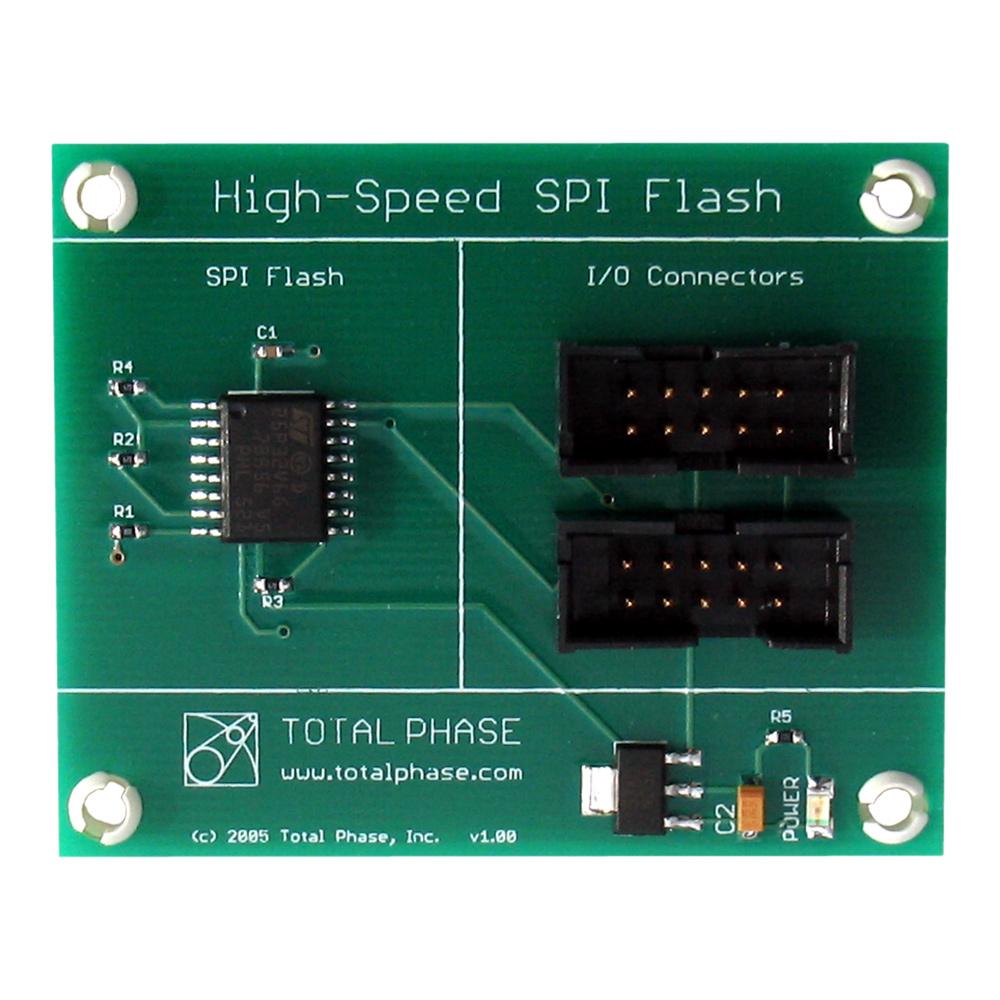
Total Phase TP280210 High-Speed SPI Flash Demo Board
Total Phase TP280210 High-Speed SPI Flash Demo Board
SKU: TP280210
Couldn't load pickup availability
Key Features
Overview
High-Performance SPI Flash Development Made Simple
The Total Phase TP280210 High-Speed SPI Flash Demo Board is an essential development tool for engineers working with high-speed SPI flash memory applications. This professional-grade demonstration board features a proven Winbond W25Q32JV 32Mb (4MB) serial flash memory device, capable of reliable communication at speeds up to 50MHz.
Designed for seamless integration with Total Phase's industry-leading host adapters, this demo board enables rapid prototyping, testing, and debugging of SPI flash memory interfaces. The board provides dual connectors for simultaneous connection of programming and analysis tools, allowing engineers to program memory whilst monitoring bus activity in real-time.
Compatible Tools and Applications
The TP280210 works effortlessly with the Total Phase Aardvark I2C/SPI Host Adapter, Cheetah SPI Host Adapter, Promira Serial Platform, and Beagle I2C/SPI Protocol Analyser. This versatility makes it ideal for firmware development, memory characterisation, and production testing environments.
Whether you're developing embedded systems, IoT devices, or industrial automation solutions, this demo board accelerates your development cycle by providing a reliable, known-good SPI flash memory target for testing your communication protocols and timing requirements.
Downloads
Why Engineers Choose The Total Phase TP280210 High-Speed SPI Flash Demo Board
Quick Protocol Validation
Real-Time Development Debugging
Production Testing Integration
Features
- Provides known working SPI flash memory for testing and debugging purposes.
- Allows an easy connection between a Cheetah™ SPI Host Adapter and an Aardvark™ I2C/SPI Host Adapter or a Beagle™ I2C/SPI Protocol Analyser.
Target
-
SPI Flash Memory
M25P32 32 Mbit, Low Voltage, Serial Flash Memory With 50MHz SPI Bus Interface (Numonyx)
Questions and Answers
-
Does the Board Require External Power Supply?
No, the board is powered directly through the connected Total Phase host adapter's target power output. The integrated power LED confirms proper power delivery to the board. -
What Advantages Does This Board Offer Over Discrete W25Q32JV Chips?
The TP280210 gives you a professional PCB layout designed for signal integrity, standardised connectors, dual-tool connectivity and guaranteed compatibility with Total Phase tools. That avoids breadboard limitations and unreliable connections. -
Is the Board Suitable for Production Programming Applications?
No. It is a demonstration board with a single SPI flash device, for evaluating SPI flash programming with Total Phase adapters and Flash Center software. For production, Flash Center can program through several Total Phase adapters at once, each connected to your own target. -
What Memory Operations Can Be Performed Using This Demo Board?
The board supports all standard SPI flash operations including read, program, erase (sector, block, and chip), status register access, and device identification using Total Phase software tools. -
How Does This Compare to More Expensive SPI Flash Development Solutions?
Compared with dedicated flash programmers, the TP280210 costs a fraction as much and offers software-configurable parameters, real-time monitoring and integration with multiple development tools. -
What Flash Memory Device Is Included on the TP280210 Demo Board?
The board has a Winbond W25Q32JV 32Mb (4MB) serial NOR flash, supporting standard SPI, Dual SPI and Quad SPI at up to 50MHz. -
Which Total Phase Host Adapters Are Compatible with This Demo Board?
The TP280210 works with these Total Phase tools:
- Aardvark I2C/SPI Host Adapter
- Cheetah SPI Host Adapter
- Promira Serial Platform
- Beagle I2C/SPI Protocol Analyser
-
Can I Connect Multiple Total Phase Tools Simultaneously to This Board?
Yes. The board has dual connectors, so you can connect two tools at once, for example programming with a Cheetah adapter while monitoring bus activity with a Beagle analyser. -
What Is the Maximum SPI Communication Speed Supported?
The demo board supports SPI speeds up to 50MHz, so you can test timing-critical flash memory operations.


No questions match your search.