
Tag-Connect, LLC
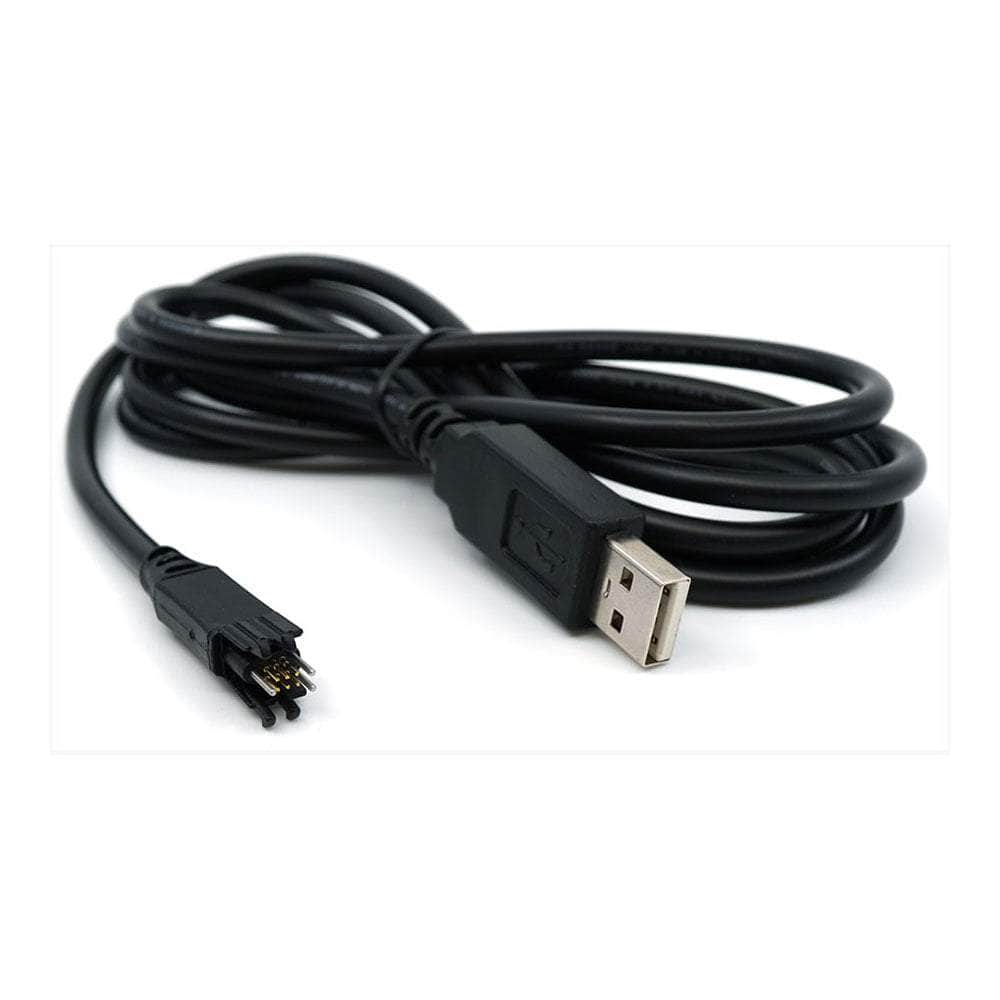
Tag Connect TC2030-FTDI-TTL-232RG-VIP USB to Serial Cable
Tag Connect TC2030-FTDI-TTL-232RG-VIP USB to Serial Cable
SKU: TC2030-FTDI-TTL-232RG-VIP
Couldn't load pickup availability
Key Features
Overview
The TC2030-FTDI-TTL-232RG-VIP combines FTDI's industry-leading USB-to-serial technology with Tag Connect's revolutionary solderless connector system. This professional debugging cable automatically adapts to target voltage levels from 1.8V to 5.25V, making it perfect for modern mixed-voltage designs.
The integrated FT232RQ chip handles all USB protocols and provides robust serial communication up to 3 Mbaud. The cable's VIP (Voltage Input Power) technology eliminates voltage level concerns by using your target system's power rail to set the appropriate logic levels.
Compatible with TC2030-CLIP retaining boards for hands-free debugging sessions. Also available as TC2030-NL version for production programming applications.
Downloads
Why Engineers Choose The Tag Connect TC2030-FTDI-TTL-232RG-VIP USB to Serial Cable
Voltage Flexibility
Space Efficiency
Cost Reduction
Revolutionary Debugging Cable with Voltage-Adaptive TTL Interface
The Tag Connect TC2030-FTDI-TTL-232RG-VIP represents a groundbreaking fusion of FTDI's advanced voltage-adaptive TTL-232RG-VIP technology with Tag Connect's patented space-saving connector system. This professional debugging cable eliminates the need for permanent connectors on your PCB whilst offering complete voltage flexibility from 1.8V to 5.25V.
VIP Technology: Voltage Input Power for Ultimate Flexibility
Unlike fixed-voltage cables, the VIP (Voltage Input Power) version adapts to your target system's voltage level. The cable's UART signal output levels automatically match the VCCIO input voltage supplied by your target device, ensuring perfect logic level compatibility across the entire 1.8V to 5.25V range.
TC2030 Connector: Maximum Space Efficiency
The TC2030 "Legged" Tag-Connector features four precision alignment pins that snap securely into a tiny PCB footprint measuring just 0.09 square inches. This revolutionary connector eliminates expensive mating components whilst providing reliable spring-pin contact for extended debugging sessions.
| TC2030 Pin | Signal | Type | Wire Colour | Description |
|---|---|---|---|---|
| 1 | VCCIO | Input | Red | VCC input from target system (1.8V to 5.25V) |
| 2 | CTS/TMS | Input | Brown | Clear to Send control input |
| 3 | RXD/TDI | Input | Yellow | Receive data input to FTDI |
| 4 | TXD/TCLK | Output | Orange | Transmit data output from FTDI |
| 5 | GND | Ground | Black | Ground reference |
| 6 | RTS/TDO | Output | Green | Request to Send control output |
Wiring Quick-Start
Connection to your target microcontroller requires only three essential signals plus power and ground:
Target MCU TC2030 Pin Wire Colour VCC (1.8-5.25V) ←→ Pin 1 Red (VCCIO Input) GND ←→ Pin 5 Black (Ground) MCU TX ←→ Pin 3 Yellow (RXD) MCU RX ←→ Pin 4 Orange (TXD) Professional Tip
For production programming, consider the TC2030-NL version, with no legs for rapid board-to-board operations.
PCB Footprint Requirements
The TC2030 footprint requires six contact pads and four alignment holes on a 0.05" × 0.1" grid. No mating connector is required, saving both cost and PCB real estate.
Which cable fits your debugger? See our Tag-Connect cable guide.
| General Information | |
|---|---|
Part Number (SKU) |
TC2030-FTDI-TTL-232RG-VIP
|
Manufacturer |
|
| Other | |
EAN |
5055383614233
|
Questions and Answers
-
Can I Power My Target Device From This Cable?
No. The VIP version takes power from your target system, and the VCCIO pin is an input that sets the logic levels. For a cable that can supply power, consider the TC2030-FTDI-TTL-232RG-VREG3V3.
-
What PCB Footprint Is Required for the TC2030 Connector?
The TC2030 footprint needs six contact pads on a 0.050 in pitch, three alignment holes and four leg holes (see Tag-Connect's TC2030-IDC footprint drawing).
Item Legged footprint No-legs footprint Contact pads 6, 0.031 in (0.79 mm) diameter, 0.050 in (1.27 mm) pitch, 2 x 3 Same Alignment-pin holes 3, 0.039 in (0.99 mm) diameter Same Leg latch holes 4, 0.0935 in (2.375 mm) diameter None Solder paste None on the pads None on the pads Tag-Connect supplies footprint libraries for Altium, PADS and EAGLE; KiCad's own library also includes the TC2030 footprints.
-
Is the Cable Suitable for Production Programming?
Yes, though the no-legs (NL) version is quicker to connect and disconnect for high-volume programming; the legged version is self-retaining for longer sessions.
The NL version also suits automated test fixtures.
-
What Applications Is This Cable Designed For?
It's designed for:
- microcontroller debugging
- firmware upload
- serial console access
- any application needing USB-to-TTL conversion with flexible voltage levels
-
How Long Is the Cable and What's the Build Quality?
1.8 metres (6 feet). It's RoHS compliant, FCC/CE approved and rated for -40°C to +85°C operation.
-
What Voltage Levels Does the VIP Version Support?
Any voltage between 1.8V and 5.25V. The TC2030-FTDI-TTL-232RG-VIP adapts automatically to the voltage your target supplies on the VCCIO pin, so its logic levels match your target.
-
How Does the TC2030 Connector Attach to My PCB?
The TC2030 uses spring-loaded pogo pins that contact plated pads on your PCB. The legged version has four plastic legs that latch into holes in the board, and three alignment pins that locate the contacts on the pads.
-
What's the Difference Between TC2030 and TC2030-NL Versions?
The standard TC2030 has four legs that snap into the PCB for secure attachment during development. The NL (No Legs) version has a smaller footprint and suits production programming, where quick connection and disconnection matter.
-
Do I Need Special Drivers for the FTDI Chip?
Only FTDI's free drivers. FTDI provides the VCP (Virtual COM Port) driver for Windows, Mac OS X and Linux, and the D2XX driver for Windows and Linux. The cable appears as a standard COM port for terminal software and development tools.
-
What's the Maximum Data Rate Supported?
The FT232RQ chip supports data rates from 300 baud up to 3 Mbaud with full hardware handshaking via RTS/CTS signals.
No questions match your search.