
LIN Bus (ISO 17987)
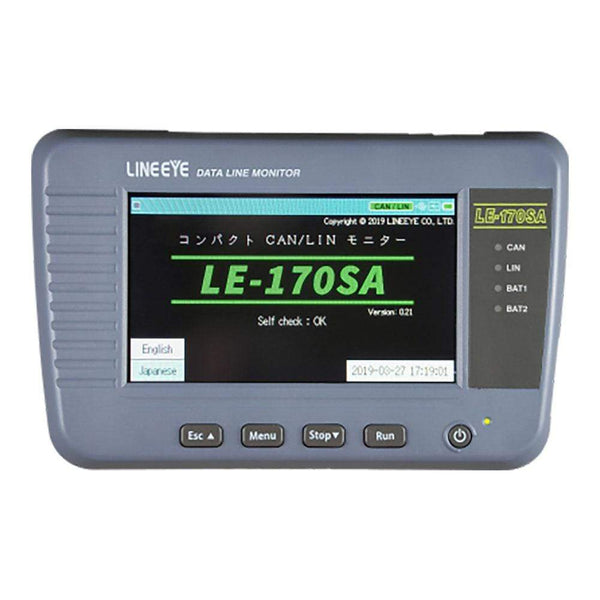
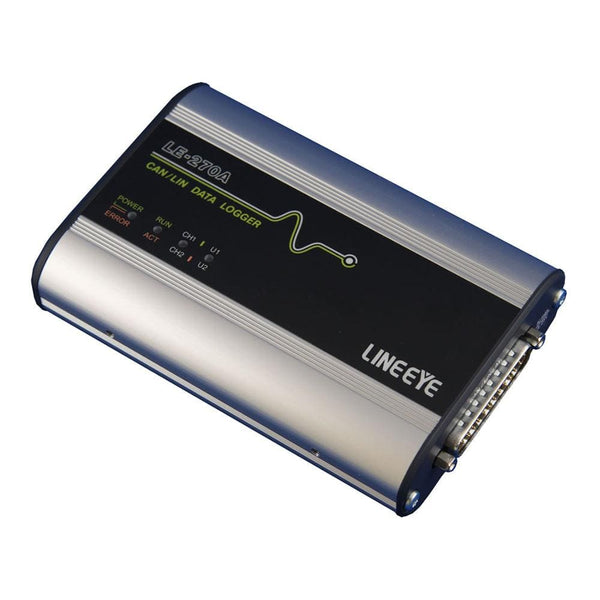
LIN (Local Interconnect Network) is a low-cost, single-wire vehicle bus, standardised as ISO 17987, where one commander node polls up to 15 responders on a fixed schedule at up to 20 kbit/s. It handles the slow, simple jobs in a car body, such as windows, mirrors, seats and switch panels, usually as a sub-network of a CAN ECU. To capture and decode it, use a CAN/LIN analyser such as the Lineeye LE-170SA handheld or the LE-270AF logger, both of which can also act as the commander or a responder.
How a LIN Bus Is Wired
LIN uses one signal wire referenced to vehicle ground. The commander pulls the line up to the battery supply through a 1 kΩ resistor and a diode; responders have a much weaker internal pull-up of about 30 kΩ. A node sends a 0 by pulling the line to ground, so the idle line sits near the battery voltage. Because each node uses a simple UART and a LIN transceiver, a responder can be a small, cheap microcontroller, often with no crystal.
How a LIN Frame Works
- Break: the commander holds the line low for at least 13 bit times, longer than any normal byte, so every node knows a new frame is starting.
- Sync: the byte 0x55, alternating 1s and 0s, lets a responder without a crystal measure the bit rate and trim its own clock.
- Protected identifier: a 6-bit frame ID (0 to 63) plus two parity bits. The ID says which signals the frame carries, not which node it goes to.
- Response: one node, chosen at design time for that ID, sends 1 to 8 data bytes. Every interested node reads them.
- Checksum: the classic checksum covers the data bytes only; the enhanced checksum used from LIN 2.0 also covers the protected identifier.
The commander runs a schedule table, sending headers in a fixed order and timing, so LIN traffic is predictable. IDs 60 and 61 (0x3C and 0x3D) are reserved for diagnostic and configuration frames. The commander can put the cluster to sleep with a go-to-sleep command, and any node can wake it with a wake-up pulse.
LIN Compared with CAN
| LIN | Classical CAN | |
|---|---|---|
| Wiring | Single wire plus ground | Twisted pair, terminated |
| Speed | Up to 20 kbit/s | Up to 1 Mbit/s |
| Access | Commander polls responders on a schedule | Multi-master with arbitration |
| Node cost | UART and LIN transceiver, often no crystal | CAN controller, transceiver and accurate clock |
| Typical use | Windows, mirrors, seats, switches, rain and light sensors | Powertrain, chassis, body controllers, gateways |
The two are used together: a body controller on CAN acts as the LIN commander for the motors and switches in a door or seat. See the CAN page for the backbone network.
Where LIN Is Used
- Doors and seats: window lifters, mirror adjustment and folding, seat motors and heaters.
- Climate and comfort: HVAC flap actuators, blower control, interior lighting.
- Sensors: rain, light and humidity sensors, battery sensors, steering wheel switches.
- Beyond cars: some industrial and white-goods designs reuse LIN as a cheap, simple single-wire bus.
Common LIN Faults and How to Find Them
| Symptom | Likely Cause | What to Check |
|---|---|---|
| Headers on the bus, no response | Responder unpowered, asleep or not configured for that ID | Check supply and wake-up; confirm the node ID and the LDF schedule |
| Checksum errors from one node | Classic checksum on one side, enhanced on the other | Compare the checksum type each node expects for that frame |
| Sync or framing errors | Responder clock drift beyond what it can trim | Measure the bit time of the sync byte and the response |
| No traffic at all | Commander unpowered or not running its schedule, or the line shorted to ground | Measure the idle level: it should be close to battery voltage; then confirm the commander is powered and sending headers |
| Intermittent missing frames | Two nodes answering the same ID, or a schedule overrun | Capture the response bytes and timing for that ID |
Tools for Analysing and Decoding LIN
Watch tools listen and decode headers, responses and checksums. Drive tools can also act as the commander, to run a schedule when the real ECU is missing, or as a responder, to stand in for a node.
CAN/LIN Analysers and Loggers
| Product | Role | Capability | Price ex VAT |
|---|---|---|---|
| Lineeye LE-170SA CAN/LIN Line Monitor | Watch Drive | Handheld with 4.3 inch touch screen: one LIN channel (400 bit/s to 26 kbit/s, LIN 1.1 to 2.1) plus one CAN channel; triggers on LIN errors; commander or responder simulation with up to 16 frames | £1,165 |
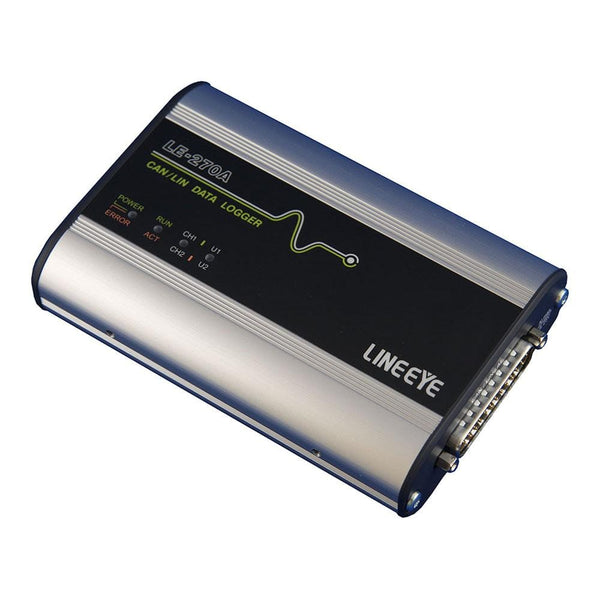
| Lineeye LE-270AF CAN/LIN Data Logger | Watch Drive | Two channels, each LIN, CAN or CAN FD; logs to SD card in the vehicle without a PC, or streams to a PC over USB (Wi-Fi where enabled for the country of shipment) | £995 |
| Lineeye LE-270GF CAN/LIN Data Logger | Watch Drive | As the LE-270AF, plus GPS and a 3-axis accelerometer recorded with the bus traffic | £1,125 |
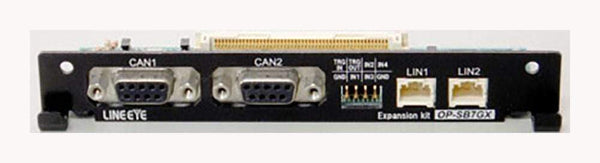
| Lineeye OP-SB7XL Expansion Kit for the LE-3500XR(V2) | Watch Drive | Adds two channels of LIN, CAN or CAN FD to the multi-protocol analyser, with commander and responder simulation | £515 |
Logic Analysers and Oscilloscopes with LIN Decoding
| Product | Role | Capability | Price ex VAT |
|---|---|---|---|
| Saleae Logic 8 | Watch | LIN decoder in the Logic 2 software; probe the RX pin of the LIN transceiver at logic level | £405 |
| Saleae Logic Pro 8 | Watch | Higher sample rates and faster analogue capture with a wider ±10 V range, to check edges and timing at the transceiver's logic-side pins alongside the decoded frames | £830 |
| Micsig TO Series tablet oscilloscope | Watch | LIN decoding as standard, probing the bus directly at battery level | From £520 |
Browse every tool in our protocol decoders collection, or tell us whether you need to simulate the commander and we will recommend one.
Frequently Asked Questions
What Is the Difference Between LIN and CAN?
LIN is a single-wire, commander-controlled bus at up to 20 kbit/s for simple, low-cost nodes. CAN is a differential multi-master bus at up to 1 Mbit/s for the vehicle backbone. A CAN ECU often acts as the LIN commander for a group of motors and switches.
Why Does a LIN Frame Start with a Break and 0x55?
The break is longer than any normal byte, so every node can recognise the start of a frame. The sync byte 0x55 gives a known pattern of edges that lets a responder without a crystal measure the bit rate and correct its clock.
What Is an LDF File?
The LIN Description File defines the cluster: the nodes, frame IDs, signals in each frame, checksum types and the schedule tables. Analysers use it to turn raw bytes into named signals.
Can a Logic Analyser Decode LIN?
Yes. Probe the logic-level RX pin of a LIN transceiver and use the LIN decoder; do not connect a 12 V bus straight to logic-level inputs unless the analyser's input rating allows it. To act as the commander or a responder you need a LIN interface or analyser that can transmit.
How Many Nodes Can a LIN Bus Have?
One commander and up to 15 responders is the limit set by the LIN specification. The 6-bit ID allows 64 frame IDs, which is separate from the number of nodes.
Where to Start with LIN
More Protocols
By John Legg CEng, Director, Debug Store. Updated 3 November 2026.
