
DMX512, RDM and DALI Lighting Protocols
DMX512 is the standard control link for stage, studio and entertainment lighting: a controller sends up to 512 channel levels, over and over, on an RS-485 pair at 250 kbit/s. RDM adds two-way configuration on the same cable. DALI is the separate two-wire bus used to control architectural lighting in buildings. For quick checks on site, a pocket tester such as the Artistic Licence NanoScope shows whether a DMX line is healthy; for full RDM and DALI commissioning, use a handheld such as the Commissioner Multi.
How DMX512 Works
- Break: the controller holds the line in the low state for at least 88 µs (92 µs or more when transmitting), longer than any valid character, so every receiver knows a new packet is starting.
- Mark after break (MAB): at least 8 µs high (12 µs when transmitting).
- Start code: 0 for normal dimmer data; other values identify other data types, such as CCh for RDM and alternate start codes for text or test packets.
- Channel slots: up to 512 bytes, one per channel, 0 to 255. A full packet takes about 23 ms, so a full universe refreshes about 44 times a second; shorter packets refresh faster.
DMX512 uses a daisy-chained RS-485 line with a 120 Ω terminator at the far end. The standard connector is a 5-pin XLR; 3-pin XLR and RJ45 are common in practice.
RDM: Remote Device Management
RDM (ANSI E1.20) turns the one-way DMX line into a half-duplex link. Between normal DMX packets, the controller sends RDM packets with start code CCh, addressed to a fixture's 48-bit unique ID, and the fixture replies on the same pair. Discovery finds every RDM device by a binary search over the ID space, during which several fixtures may answer at once by design. Once found, the controller can set a fixture's DMX start address, personality and mode, and read sensors and status. Splitters and opto-isolators on the line must be RDM-capable, or they block the replies.
DALI
DALI (Digital Addressable Lighting Interface, IEC 62386) controls LED drivers, ballasts and sensors in buildings. It is a two-wire bus, polarity free, powered by a bus power supply limited to 250 mA, and runs Manchester-coded frames at 1200 bit/s. Each bus has up to 64 control gear with short addresses, 16 groups and 16 scenes. A controller sends forward frames (16 bits for control gear, 24 bits for DALI-2 control devices such as sensors) and gear may reply with an 8-bit backward frame. DALI-2 adds certified interoperability and input devices on the same bus.
Common Lighting Control Faults and How to Find Them
| Bus | Symptom | What to Check |
|---|---|---|
| DMX512 | Fixtures flicker or jump | Missing terminator or a long stub; check for a 120 Ω terminator and look for reflections |
| DMX512 | Some fixtures ignore data | Break or MAB shorter than the fixture accepts; measure them against 88 µs and 8 µs |
| DMX512 | Channels offset by one | Fixture start address wrong, or a non-zero start code ignored by the controller |
| RDM | Discovery finds no fixtures | A non-RDM splitter or merger in the line blocking replies |
| DALI | Lights do not respond to a group | Group membership not stored in the gear; re-run commissioning |
| DALI | Whole bus dead | No bus power supply, or bus supply overloaded or shorted |
Tools for Testing and Analysing DMX512, RDM and DALI
Watch tools check signal health and decode traffic. Drive tools send test patterns and configure fixtures.
DMX512, RDM and DALI Testers
| Product | Role | Capability | Price ex VAT |
|---|---|---|---|
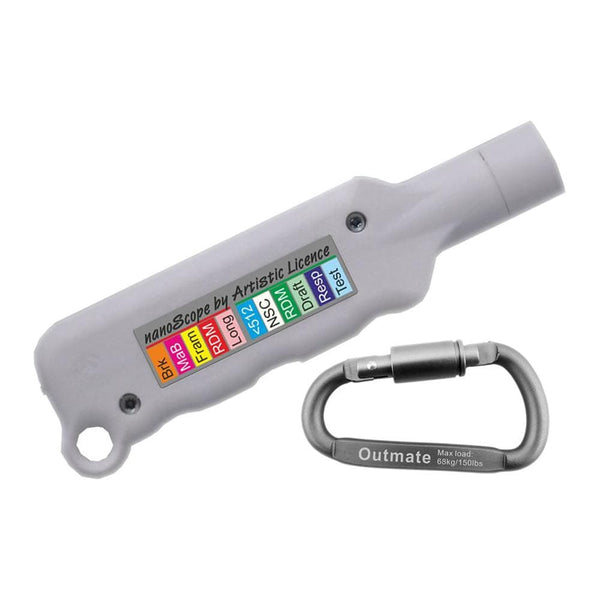
| Artistic Licence NanoScope Analyser | Watch | Pocket DMX512 checker: colour codes for break and MAB timing, framing errors, packet length and RDM presence; also shows the first three channels as an RGB mix | £82 |
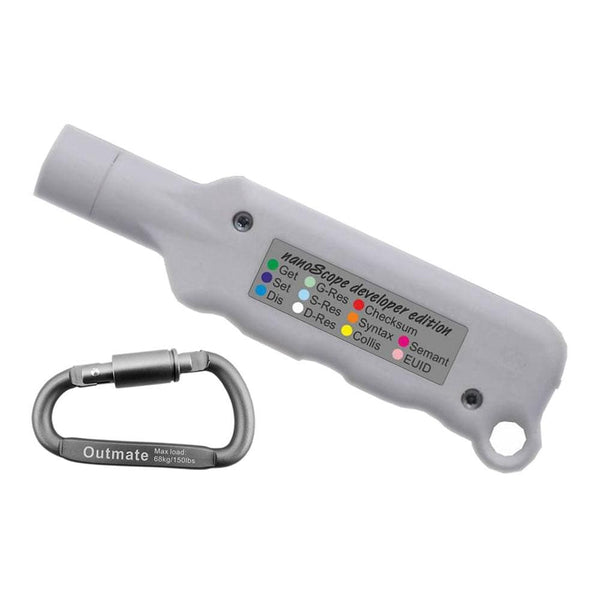
| Artistic Licence NanoScope Developer | Watch | Pocket RDM checker: Pixel mode shows the first three channels as an RGB mix; RDM mode shows the six command classes, discovery collisions, EUIDs and checksum, syntax and semantic errors | £104.71 |
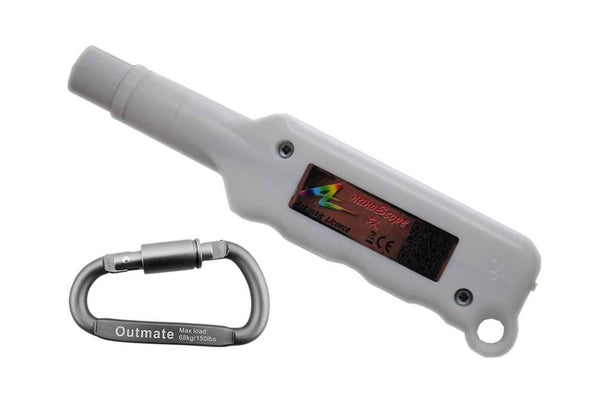
| Artistic Licence NanoScope DMX512 Transmitter | Drive | Pocket DMX512 source with six test patterns, including fade, alternate, ramp and rig-check walks | £99.52 |
| Artistic Licence Commissioner RDMX | Watch Drive | Handheld DMX512 and RDM tester: transmit test patterns with variable timing, read and display DMX and its timing, get and set RDM parameters, cable test | £476.67 |
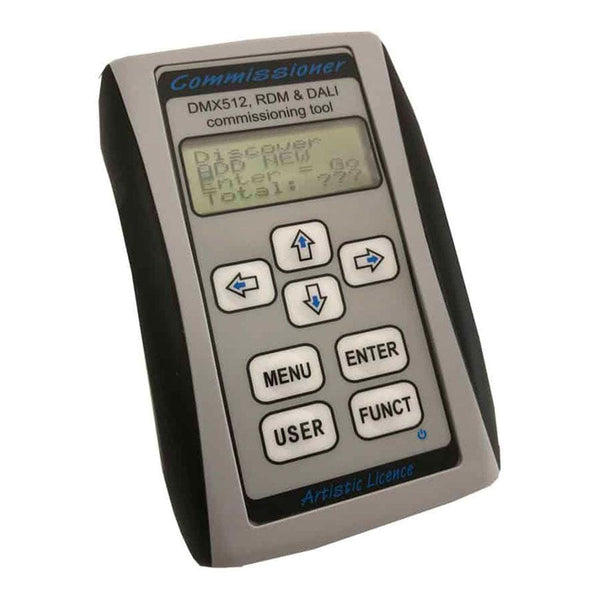
| Artistic Licence Commissioner Multi | Watch Drive | DMX512, RDM and DALI in one handheld, including DALI discovery, addressing, group and scene programming | £520 |
Bench Analysis
| Product | Role | Capability | Price ex VAT |
|---|---|---|---|
| Artistic Licence DMX-Breakout Module | Scope and meter test points on a DMX line for termination and common-mode checks, and for connecting a logic analyser | £193.81 | |
| Saleae Logic 8 | Watch | 8 channels, digital and analogue; DMX-512 decoder in the Logic 2 software | £405 |
| ZeroPlus LAP-C Pro Series | Watch | Logic analyser with DMX512 and DALI protocol analysis | £925 |
| Acute TravelLogic 34-Channel | Watch | Logic analyser running Acute's decoder library, which includes DMX512 and DALI | £1,161.65 |
Every DMX line needs a terminator: the Artistic Licence XLR5 DMX Terminator (£20.95) or XLR3 DMX Terminator (£20.95). For RS-485 wiring and bias, see our RS-485 guide. Tell us about your rig or installation and we will recommend a tester.
Frequently Asked Questions
How Many Fixtures Can One DMX Universe Control?
One universe has 512 channels. A fixture uses as many channels as its mode needs, from one for a dimmer to dozens for a moving head, so the fixture count depends on the mix. RS-485 also limits a line to 32 standard unit loads without a splitter.
Do I Really Need a DMX Terminator?
Yes. Without a 120 Ω terminator at the end of the line, signals reflect and fixtures may flicker or respond randomly, especially on long runs or at the end of a chain. It costs very little and removes a common fault.
What Is the Difference Between DMX512 and RDM?
DMX512 is one-way: the controller sends levels and fixtures listen. RDM adds replies on the same cable, so a controller can discover fixtures, set their addresses and read their status without climbing a ladder.
Is DALI the Same as DMX?
No. DALI is a slow, bus-powered, two-wire building lighting protocol with addressing, groups and scenes stored in each device. DMX512 is a fast, continuous stream of levels for entertainment lighting. They need different testers, though the Commissioner Multi handles both.
Can I Use a Logic Analyser on DMX512?
Yes. Probe the logic side of the RS-485 transceiver, or a breakout with test points, and use a DMX512 decoder. You will see break and MAB timing and every channel level, which helps when designing a fixture or controller.
Where to Start with DMX512, RDM and DALI
More Protocols
By John Legg CEng, Director, Debug Store. Updated 12 November 2026.
