
Tag-Connect, LLC
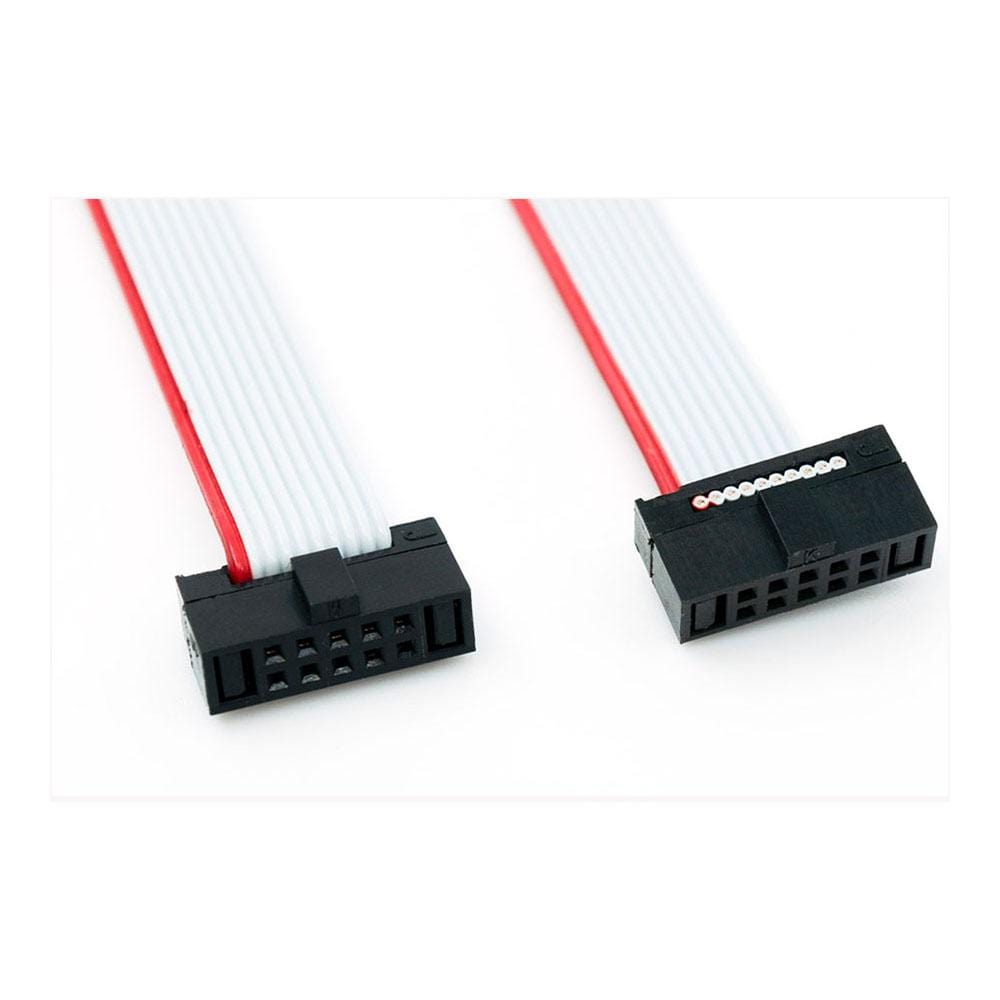
Tag Connect Reversed 10-Pin ARM Cortex Debug Cable for Atmel ICE
Tag Connect Reversed 10-Pin ARM Cortex Debug Cable for Atmel ICE
SKU: CORTEXRIBBON10-L
Couldn't load pickup availability
Key Features
Overview
The Tag Connect Reversed 10-pin Cortex Ribbon Cable -LEMTA addresses the unique requirements of Atmel ICE users who need reliable connectivity to ARM Cortex-based targets. Unlike standard cables, this version features reversed pin mapping to compensate for Atmel ICE's non-standard connector orientation, preventing signal conflicts and ensuring proper debugging functionality.
The cable utilises 50mil (1.27mm) pitch connectors compatible with FTSH-105-01 style headers commonly found on ARM development boards. Its 4-inch length provides optimal signal integrity while maintaining workspace flexibility. Engineers working with ARM Cortex-M, Cortex-R, and Cortex-A processors will find this cable essential for professional debugging workflows.
Related products: Tag Connect TC2030-CTX ARM Cortex Cable, TC2050-IDC-050 Debug Cable, and Atmel ICE Debugger
Downloads
Why Engineers Choose The Tag Connect Reversed 10-Pin ARM Cortex Debug Cable for Atmel ICE
Atmel ICE Essential
Professional Reliability
Time-Saving Setup
Professional ARM Cortex Programming Cable
The CORTEXRIBBON10-L is a specialised reversed 10-pin ribbon cable engineered for ARM Cortex debugging and programming applications. This cable features the LEMTA (reversed) configuration specifically designed for use with Atmel ICE debuggers, which require pin-reversed connectivity to maintain correct signal mapping.
Wiring Quick-Start
| Pin | Signal | Description |
|---|---|---|
| 1 | VTRef | Target reference voltage |
| 2 | SWDIO/TMS | Serial Wire Data I/O / Test Mode Select |
| 3 | GND | Ground |
| 4 | SWCLK/TCK | Serial Wire Clock / Test Clock |
| 5 | GND | Ground |
| 6 | SWO/TDO | Serial Wire Output / Test Data Out |
| 7 | KEY | Not connected (keying pin) |
| 8 | NC/TDI | Not connected / Test Data In |
| 9 | GND | Ground |
| 10 | nRESET | Reset signal (active low) |
Connection Instructions
Connect the female IDC connector to your ARM Cortex programmer/debugger 10-pin male header. The reversed LEMTA orientation corrects for Atmel ICE's non-standard pin numbering where pin 1 is physically located at pin 10 position.
Compatible Interfaces
- Serial Wire Debug (SWD) - 2-wire debugging protocol
- JTAG - 4-wire IEEE 1149.1 standard interface
- Serial Wire Output (SWO) trace support
This cable bridges the gap between your Atmel ICE debugger and target boards featuring the standard 10-pin 50mil (1.27mm) FTSH-style headers, enabling seamless programming and debugging workflows.
Which cable fits your debugger? See our Tag-Connect cable guide.
| General Information | |
|---|---|
Part Number (SKU) |
CORTEXRIBBON10-L
|
Manufacturer |
|
| Physical and Mechanical | |
Weight |
0.1 kg
|
| Other | |
EAN |
5055383644131
|
Questions and Answers
-
Is the 4-inch Cable Length Sufficient for Most Applications?
Usually, yes. The cable is nominally 100 mm (4 in) long, which is Tag-Connect's standard length for this 10-pin Cortex ribbon, and Tag-Connect offers a shorten/lengthen service if you need another length.
As a rule of thumb (our advice), use the shortest ribbon that reaches comfortably, because longer cables are more exposed to noise on fast signals. Tag-Connect states no length limit.
-
Does This Cable Provide Power to the Target Board?
No. This is a straight-through signal ribbon, so it does not supply power to the target; your target board needs its own supply.
Tag-Connect labels pin 1 "VCC" on its pin-out. On the Arm 10-pin Cortex header, pin 1 is normally VTref, a voltage reference that the debugger reads to set its signal levels (this is Arm's definition rather than a Tag-Connect statement).
-
What Happens If I Use a Standard Cable with Atmel ICE?
A standard cable plugged into an Atmel-ICE connects the pins the wrong way round and shorts the power lines. Tag-Connect's Atmel-ICE page puts it this way: "If you plug in a standard (correct) Cortex cable you're going to short power and stuff out."
Use LEMTA. Tag-Connect says LEMTA cables have the same reversed connector as the Atmel-ICE's own cable, so they should be used with the Atmel-ICE. -
Can This Cable Handle Trace Data Output?
Yes. Pin 6 carries SWO (Serial Wire Output) when the probe is in SWD mode, using the standard Cortex 10-pin numbering.
Whether you get usable trace depends on your probe and on the microcontroller's SWO/ITM support, not on the cable.
-
What's the Maximum Programming Speed Supported?
Tag-Connect publishes no speed rating for this cable, so there is no maximum figure we can quote. The speed you can use is set by your debugger and target board design, not by the cable.
-
Which ARM Processors Are Supported by This Cable?
It fits any target with the standard 10-pin, 0.05 in (1.27 mm) Cortex debug header. With the Atmel-ICE, which is the probe this LEMTA cable is made for, that means Microchip SAM (Arm Cortex-M) devices, the family Tag-Connect names on its Atmel-ICE page.
Targets from other makers with the same header will fit physically, but check that your probe supports the chip.
-
Can I Use This Cable with Debuggers Other Than Atmel ICE?
Yes, but only with a debugger that needs the reversed LEMTA orientation; the cable is designed for the Atmel-ICE.
Probe Cable it needs Atmel-ICE This LEMTA reversed ribbon Keil ULINK2, Black Sphere, generic Cortex-10 / MIPI-10 probes Normal-orientation 10-pin cable, not this one SEGGER J-Link Has a 20-pin 0.1 in header, so this ribbon does not fit. Use an ARM20-CTX or TC2050-ARM2010 adapter -
What's the Difference Between SWD and JTAG on This Cable?
SWD needs two signal wires (SWDIO and SWCLK) and is more common on Cortex-M devices. JTAG uses four (TDI, TDO, TMS, TCK) and supports boundary scan. Being a straight-through 10-way ribbon, this cable carries all ten header pins, so either protocol can be used if your probe and target support it.
SWD JTAG Signal wires SWDIO, SWCLK TDI, TDO, TMS, TCK Boundary scan No Yes Typical use Cortex-M devices Wider range of devices -
What Does the 50mil Pitch Specification Mean?
50 mil is 50 thousandths of an inch, which is 1.27 mm spacing between pins. The connectors on this cable mate with FTSH-105 style micro-headers, the Samtec FTSH family (Tag-Connect cites Harwin M50-3300542 or equivalent connectors).
-
What Makes This Cable Different From Standard ARM Cortex Cables?
The LEMTA version has reversed pin mapping for Atmel ICE compatibility. The Atmel ICE uses non-standard pin numbering, with pin 1 at the pin 10 position, so a standard cable would create signal conflicts.
No questions match your search.