
Tag-Connect, LLC
Tag Connect TC2050-IDC-NL | 10-Pin No-Legs Programming Cable
Tag Connect TC2050-IDC-NL | 10-Pin No-Legs Programming Cable
SKU: TC2050-IDC-NL
Couldn't load pickup availability
Key Features
Overview
Ultra-Compact Programming Solution
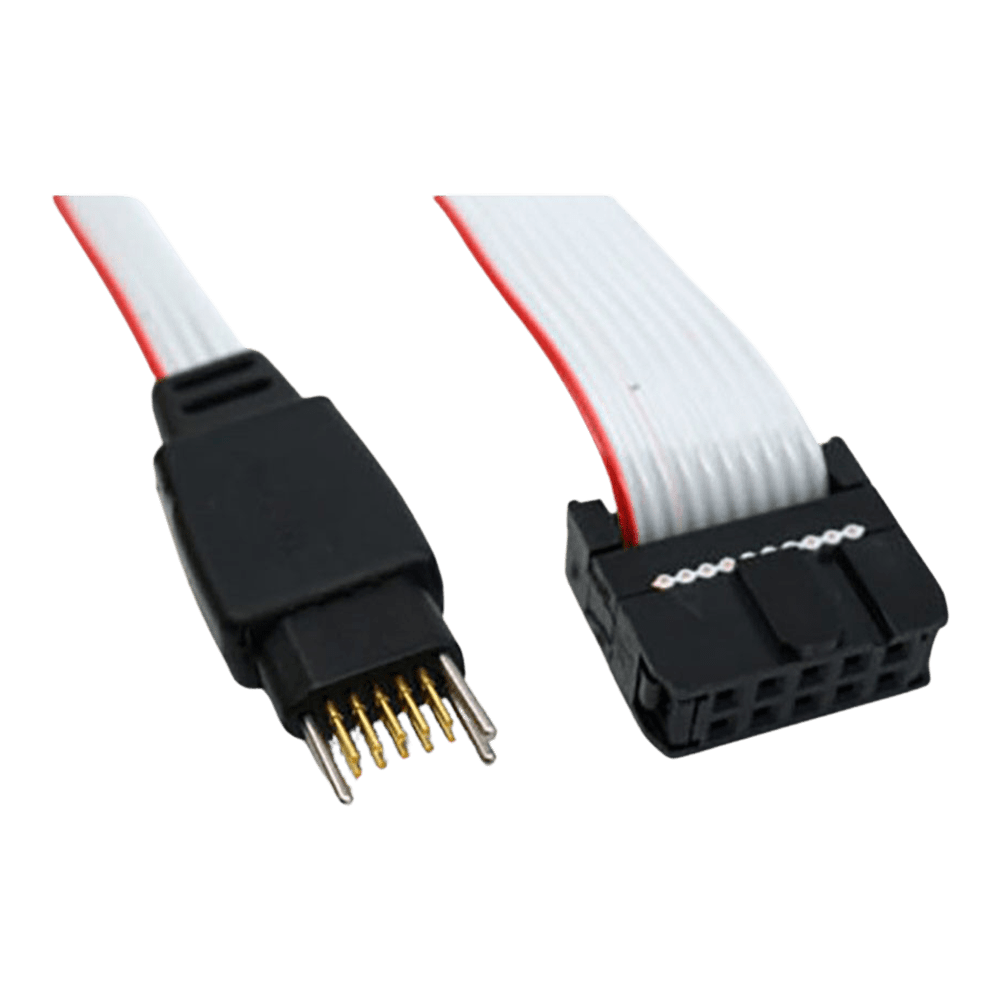
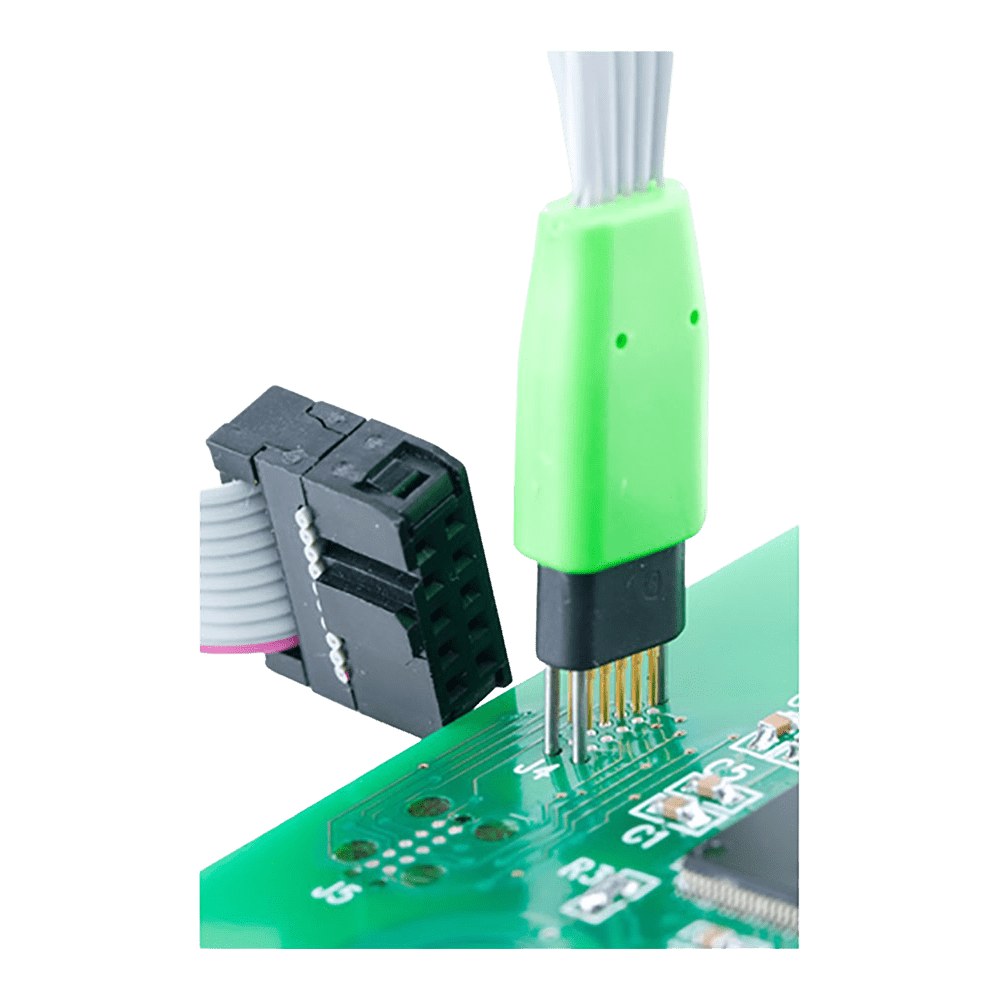
The Tag Connect TC2050-IDC-NL represents a revolutionary approach to PCB programming and debugging interfaces. This 10-conductor cable features Tag-Connect's patented Plug-of-Nails™ spring-pin connector that plugs directly into your PCB without requiring any mating connector or header component.
Ultra-Compact Footprint Design
With an incredibly small 0.03 square inch footprint—approximately the same board space as two SMT resistors—the TC2050-IDC-NL enables programming access virtually anywhere on your PCB. The "No Legs" design eliminates the need for plastic retention clips, making it ideal for high-volume production programming where speed and efficiency are paramount.
Professional-Grade Reliability
The cable incorporates high-reliability spring pins rated for over 100,000 operations, ensuring consistent electrical contact throughout extended development cycles. Each pin features tried-and-tested pogo pin technology with spring-loaded mechanisms that maintain secure connections under varying pressure conditions.
Versatile Connectivity Solutions
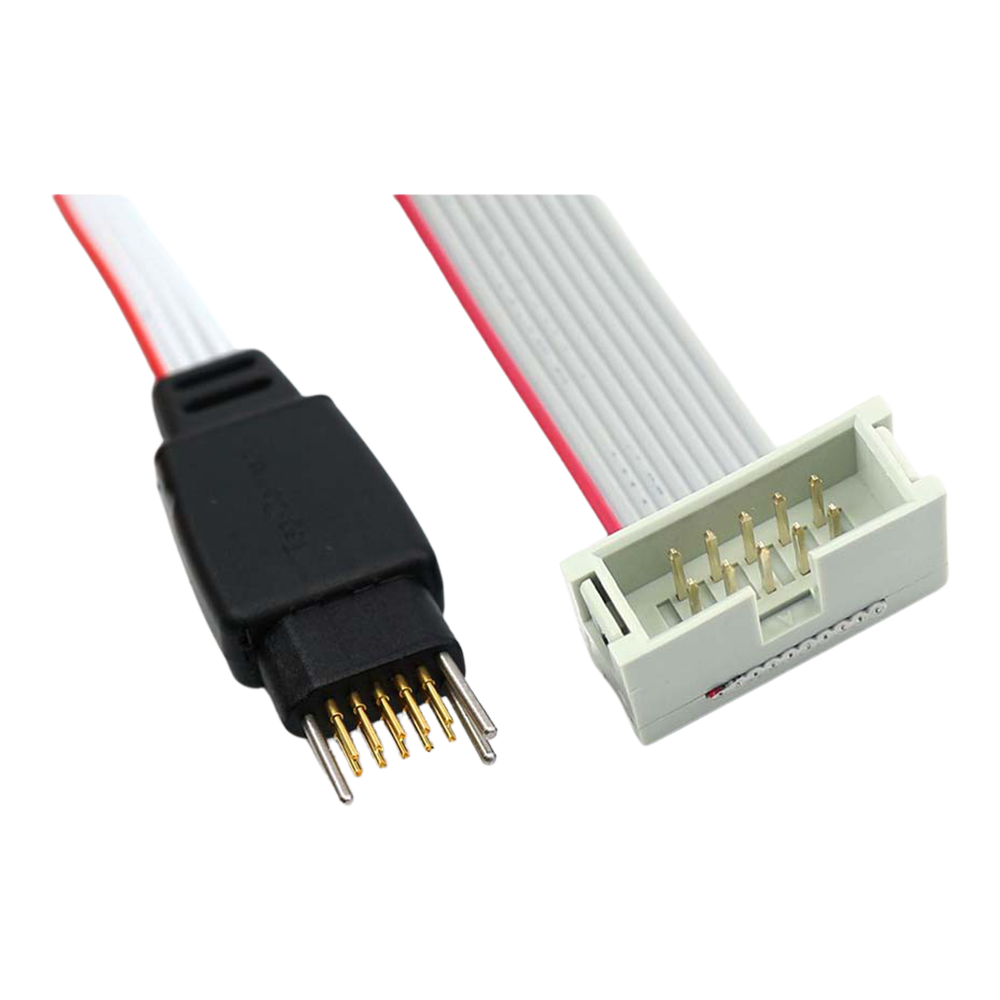
The TC2050-IDC-NL terminates in a standard 0.1" ribbon connector, providing compatibility with numerous JTAG programmers, debuggers, and test equipment. The cable supports MCU, FPGA, and DSP programming applications across multiple architectures, with extensive adapter solutions available for specific debugger interfaces.
Production-Ready Implementation
For applications requiring hands-free operation, the cable works seamlessly with TC2050-CLIP retaining boards that secure the connection from the PCB's reverse side. This combination delivers the space efficiency of the no-legs design whilst providing the stability needed for extended debugging sessions.
The TC2050-IDC-NL is also available as the TC2050-IDC legged version for applications where built-in retention is preferred.
Downloads
Why Engineers Choose The Tag Connect TC2050-IDC-NL | 10-Pin No-Legs Programming Cable
Rapid Production Programming
Maximum Space Efficiency
Long-Term Development Investment
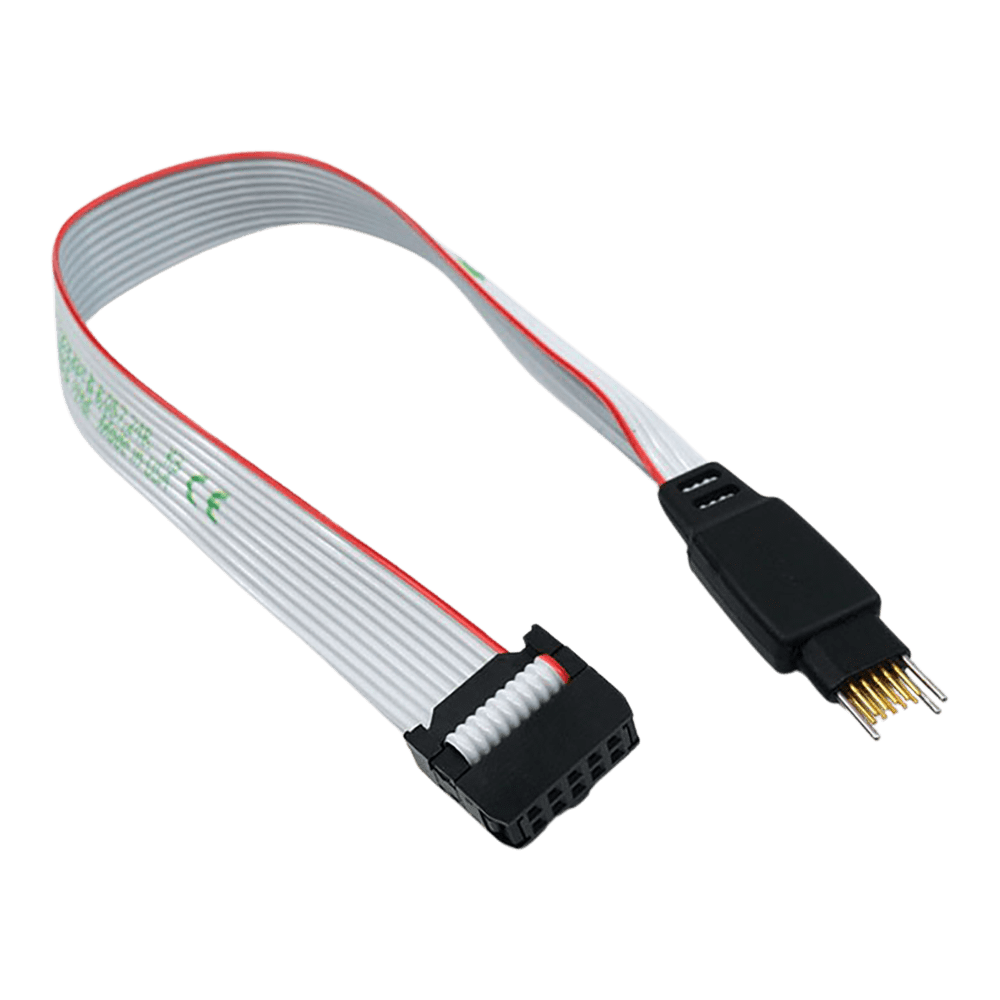
Tag-Connect's TC2050-IDC-NL "No Legs" Plug-of-Nails™ programming cable is a 10-conductor cable fitted with a spring-pin Tag-Connector that conveniently plugs directly into your PCB and terminates in a 0.1″ ribbon connector.
- Plugs straight to your PCB – No mating connector or header required!
- Requires only a tiny 0.03″ footprint of pads and locating holes in your PCB.
- Zero Cost Per Board!
- Tiny Footprint!
- High-Reliability Spring-Pins make a Secure Connection and are rated for over 100,000 operations.
- Footprint has no height and can reduce the size and space requirements of your PCB.
- A great way to make test and debug signals available at no cost and with minimal board space.
- Can be retained in place using a TC2050-CLIP board.
Tag-Connect cables provide a simple, reliable means of connecting Debuggers and Programmers or other test equipment to your PCB's while lowering board costs and facilitating efficient production programming. Tag-Connect uses a specially designed (Patent Pending) connector which eliminates the need for putting a programming header or other mating connector on every PCB. Instead, Tag-Connect uses tried and tested spring-pins rated for over 100,000 operations to make a secure connection to a special footprint pattern of pads and locating holes in your PCB.
The tiny "No Legs" footprint takes only 0.03 square inches (about the same board space as a couple of SMT resistors) which means you can locate the footprint right next to the MCU if desired.
This 10-conductor cable has a TC2050-NL Tag-Connector on one end and a standard 0.1″ ribbon connector on the other and is suitable for use with most many MCUs / FPGAs and JTAG programming and debug operations.
A growing range of adaptors are available for specific and generic applications such as Xilinx SPARTAN and VERTEX FPGAs, TI MSP430 (TC2050-IDC-430), etc
Also available in self-retaining "legged" version TC2050-IDC.
Which cable fits your debugger? See our Tag-Connect cable guide.
| General Information | |
|---|---|
Part Number (SKU) |
TC2050-IDC-NL
|
Manufacturer |
|
| Physical and Mechanical | |
Weight |
0.1 kg
|
| Other | |
EAN |
5055383606740
|
Questions and Answers
-
What Cable Length Is Supplied with the TC2050-IDC-NL?
The standard TC2050-IDC-NL cable is 8 inches (203mm) long.
-
How Does the Spring Pin Mechanism Work in the TC2050-IDC-NL?
The connector uses precision pogo pins with internal springs that compress against the PCB pads to make contact. The springs take up minor PCB variations and keep the contact pressure consistent.
-
Can the TC2050-IDC-NL Be Used for High-current Applications?
No. The cable is designed for programming and debug signals, not power delivery. Use a separate power connection for higher currents.
-
What PCB Design Considerations Are Required for TC2050-IDC-NL?
The footprint needs specific pad patterns and alignment holes, set out in Tag-Connect's TC2050-IDC-NL footprint drawing.
Feature Requirement Contact pads 10 pads, 0.031″ diameter, 0.050″ pitch Alignment holes 3 holes, 0.039″ diameter Leg holes None (no-legs footprint) Keep-out No tracks or vias in the keep-out area Solder paste None on the contact pads -
Are There Alternatives to Tag-Connect Cables for Space-constrained Applications?
Alternatives include SKEDD connectors, edge connectors and custom pogo-pin solutions. Tag-Connect is widely supported; it lists cable and adapter solutions for most major debuggers.
-
Will This Be Compatible with the Lattice HW-USBN?
Yes, with Lattice's HW-USBN-2B via the TC-LATTICE-10 adapter, which mates the HW-USBN's 12-pin (2×6) connector to a 10-pin (2×5) header for the TC2050 cable.
-
What Is the Footprint Size of the TC2050-IDC-NL Connector?
The TC2050-IDC-NL needs only 0.03 square inches of PCB space, about the same area as two SMT resistors.
-
How Many Connection Cycles Can the TC2050-IDC-NL Withstand?
The spring pins are rated for over 100,000 operations, for both development and production programming.
-
Can the TC2050-IDC-NL Be Held in Place During Debugging Sessions?
Yes. It works with TC2050-CLIP retaining boards, which secure the connection from the underside of the PCB. This gives hands-free debugging while keeping the small no-legs footprint.
-
What Is the Difference Between TC2050-IDC-NL and TC2050-IDC Cables?
The TC2050-IDC-NL has a "No Legs" design for a minimal footprint and fast programming. The TC2050-IDC has plastic retention legs that hold it in place during longer debugging sessions.
-
Which Programmers and Debuggers Are Compatible with TC2050-IDC-NL?
The cable's 0.1″ ribbon connector works with many JTAG programmers and debuggers, often through an adapter. Tag-Connect lists adapters for SEGGER J-Link, ST-LINK, ARM debuggers and Xilinx programming tools. See how to choose the correct Tag-Connect cable.


No questions match your search.