
Picotest
Picotest J2101A Wideband Injection Transformer 10Hz–45MHz
Picotest J2101A Wideband Injection Transformer 10Hz–45MHz
SKU: J2101A
Couldn't load pickup availability
Key Features
Overview
Overview
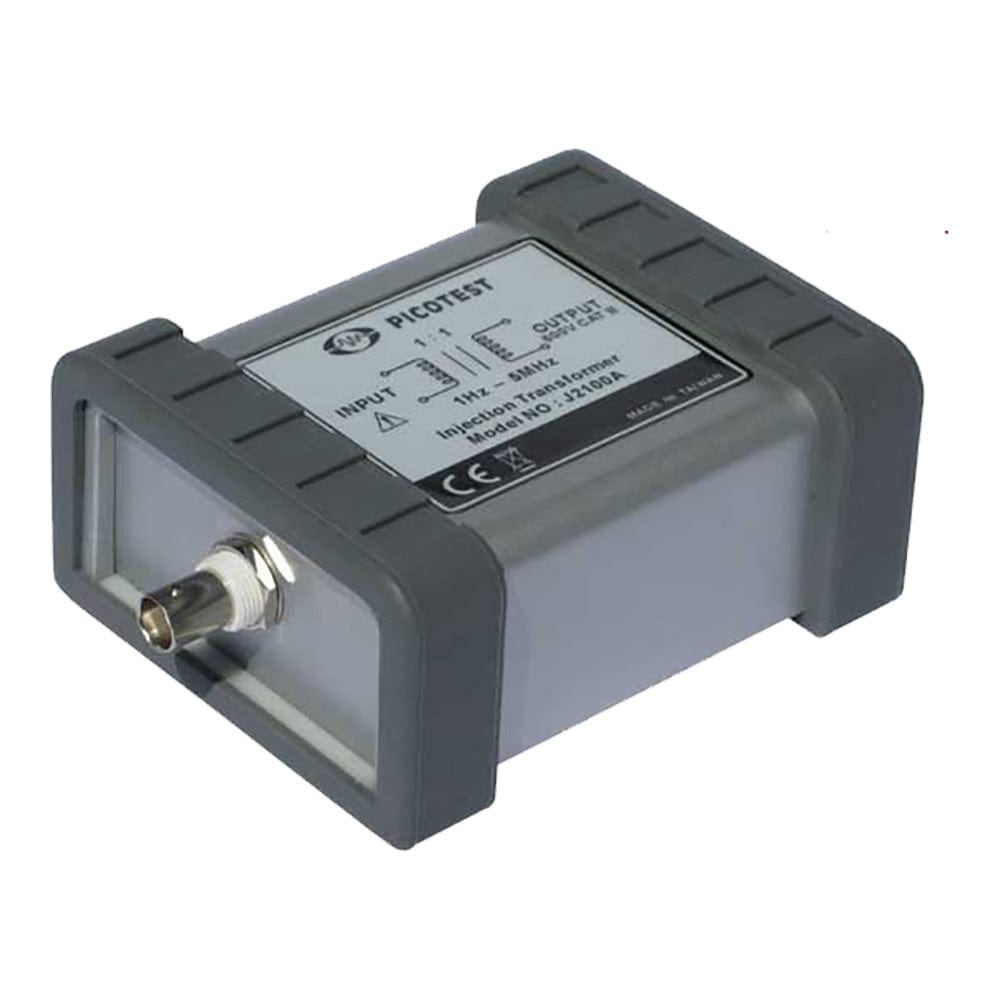
The Picotest J2101A Wideband Injection Transformer (SKU: J2101A) enables safe and precise injection of test signals into the control loops of DC-DC converters and power supply systems, making it invaluable for stability, gain, and phase margin measurements. Spanning a frequency range from 10Hz to 45MHz and supporting off-line power supplies, the J2101A suits both low- and high-frequency power integrity testing scenarios.
Application
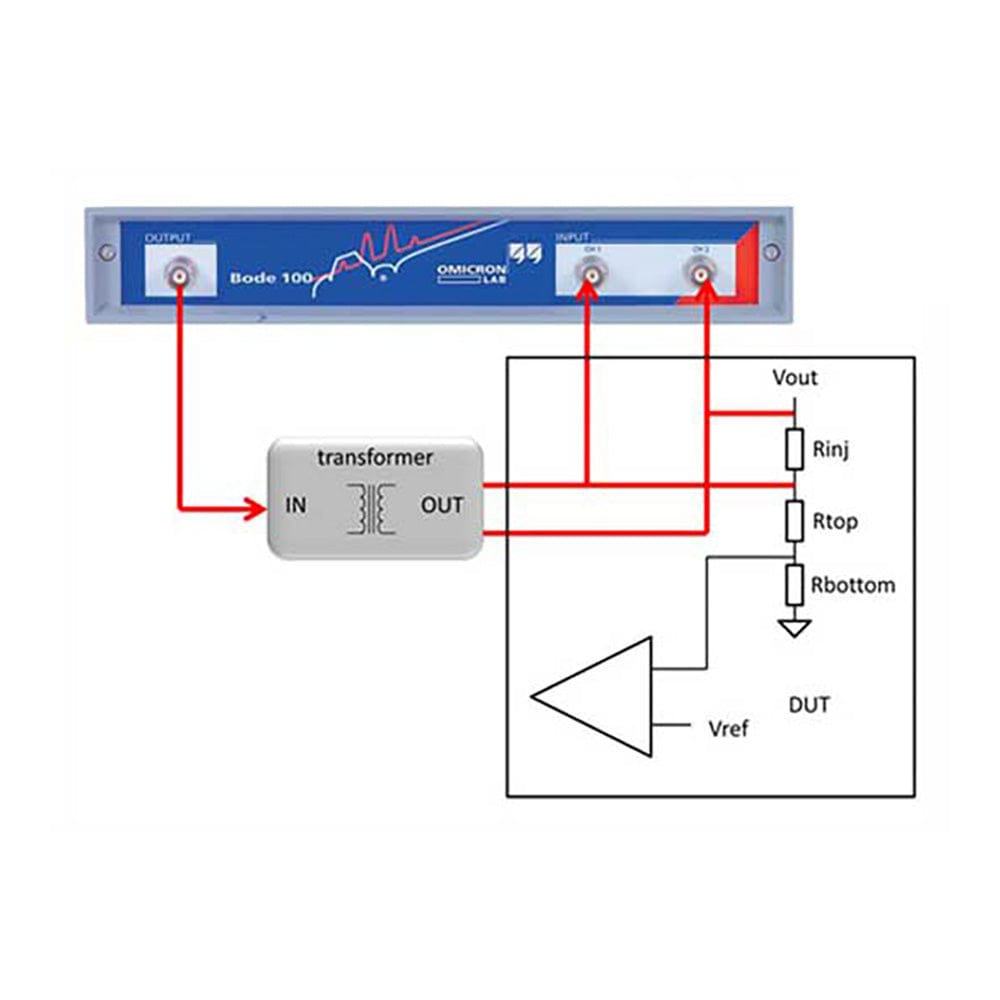
Primarily used for Bode plot and loop response analysis, the J2101A provides a low-distortion, galvanically isolated signal path between a network analyzer and the device under test. Its 1:1 ratio, 600V isolation voltage, and robust 5 Ohm termination assure compatibility with most analyzers and power electronics, including power factor correctors (PFCs), switching regulators, and LDOs.
Product Range
The J2101A forms part of Picotest’s comprehensive injector family. Consider the J2100A for ultra-low frequency needs, or the J2110A Solid State Injector for DC to 45MHz bandwidth with ultra-low noise and higher precision.
Why Choose J2101A?
Its unmatched balance of wide bandwidth, robust isolation, and low distortion ensures reliable performance and minimal impact on the circuit. Engineers who require accurate, repeatable measurement of control loop stability in modern high-speed designs consistently value the J2101A.
Downloads
Why Engineers Choose The Picotest J2101A Wideband Injection Transformer 10Hz–45MHz
Precision Stability Analysis
Versatile Frequency Coverage
Safety and Ease of Use
Product Information
The J2101A Injection Transformer is presently the prevalent method for connecting the network analyzer to the circuit being tested, and is primarily used for control loop stability measurements. The goal of the transformer is to inject a signal into the control loop being measured, without impacting the performance of the loop. In order to accomplish this to a reasonable degree, The transformer is isolated and therefore is capable of floating on a high voltage, such as a Power Factor Corrector (PFC), which is often close to 400VDC. Measuring voltages that exceed the voltage rating of the FRA inputs require attenuation probes.
The usable bandwidth of an injection transformer is generally significantly greater than the 3dB frequency limits. This is because the transformer itself is outside of the measurement, leading many to incorrectly believe that the transformer is a non-critical element.
The bandwidth of the transformer is strongly related to the terminating impedance. The most network analyzers provide a 50 Ohm oscillator source impedance. Assuming this impedance the optimal termination resistor is 5 Ohms. This significantly attenuates the injection signal, which is generally beneficial, as a common error in Bode measurements is using a signal which is too large, and therefore not a small signal measurement. An added benefit of this low value is that it can generally be left in circuit at all times, simplifying the connection to the network analyzer without appreciably impacting the output voltage of the circuit being tested.

Detailed Specifications
| Performance at -10dBm input level | |
| Characteristic | Rating |
| DCR | |
| Ratio | 1:1 |
| Termination Impedance | 5 Ohms |
| Usable Bandwidth | 10Hz - 45MHz (Terminated into 5 Ohms) 60Hz - 45MHz (Terminated into 50 Ohms) |
| Isolation Voltage | 600V |
| Isolation Capacitance | 150pF@1KHz |
| DC Current | 10mA |
| Temperature Range | 0 ~ 50°C |
| Maximum Altitude | 6000 Ft |
Note: The upper end of the bandwidth is heavily dependent on the interconnect between the Injector and the DUT.
Questions and Answers
-
Is the J2101A Compatible with All Network Analyzers?
Not all, but it works with most mainstream network analysers.
-
What’s the Benefit of 1:1 Transformer Ratio?
A 1:1 ratio means the transformer itself neither steps the signal up nor down. The 5 Ω termination then attenuates the injected signal to keep the measurement small-signal.
-
Are There Solid-state Options in the Picotest Range?
Yes. The J2110A Solid State Injector gives DC to 45MHz bandwidth.
-
What Is the Maximum DC Current Rating?
The J2101A supports up to 10mA DC current before inductance drops 10%.
-
What’s the Recommended Alternative for Ultra-low Frequency Injection?
The Picotest J2100A is suited for frequencies as low as 1Hz.
-
What Is the Frequency Range of the Picotest J2101A Injection Transformer?
The J2101A operates from 10Hz to 45MHz, supporting a broad range for DC-DC converter and regulator measurements.
-
Can the J2101A Be Used for Offline Power Supply Stability Testing?
Yes. With 600V isolation, it suits high-voltage and offline PSU applications.
-
What Terminations Are Recommended for the J2101A?
The transformer uses a 5 Ω termination, which Picotest specifies as optimal for the 50 Ω source impedance of most standard analysers.
-
How Does the J2101A Compare to Picotest’s J2100A?
The J2100A covers lower frequencies down to 1Hz; the J2101A spans higher frequencies up to 45MHz for faster regulators.
-
Can the J2101A Be Left Permanently In-circuit?
Generally, yes. Its low termination value means it can usually stay in-circuit without appreciably affecting the output voltage.


No questions match your search.