
I3C Protocol
I3C (Improved Inter-Integrated Circuit) is the MIPI Alliance two-wire bus that replaces I2C for sensors and other on-board devices. It keeps the two pins, SCL and SDA, but drives data push-pull at up to 12.5 MHz, assigns addresses at start-up and lets targets interrupt the controller over the data line. To watch an I3C bus you need a logic analyser with an I3C decoder and a sample rate well above the clock: an I2C decoder will misread most of the traffic.
How I3C Differs From I2C
| Feature | I2C | I3C |
|---|---|---|
| Signalling | Open drain with pull-ups on both lines | Push-pull for data; open drain only during arbitration and acknowledge |
| Clock rate | Up to 1 MHz (Fm+) on most buses, 3.4 MHz in High-speed mode | Up to 12.5 MHz in SDR mode, plus HDR modes |
| Addresses | Fixed, set by the device or strap pins; two parts with the same address cannot share a bus | Assigned dynamically by the controller (ENTDAA), or from a static address |
| Interrupts | Separate interrupt wire per device | In-band interrupt on SDA, with priority by address |
| Clock stretching | Allowed | Not allowed for I3C targets |
| Bus management | None defined | Common Command Codes (CCCs), hot-join, controller handover |
Push-pull data is what makes I3C faster and lower power: the controller no longer waits for a pull-up resistor to charge the bus capacitance on every rising edge. The bus still has one pull-up on SDA, enabled by the controller, for the phases where devices arbitrate or acknowledge.
How an I3C Bus Comes Up and Talks
- Dynamic address assignment: after reset, the controller broadcasts to address 0x7E and sends the ENTDAA command. Each I3C target replies with its 48-bit provisioned ID, bus characteristics and device characteristics; arbitration on SDA settles which target wins each round, and the controller hands out a 7-bit dynamic address.
- Private transfers: the controller reads or writes a target at its dynamic address, much like an I2C transfer, but with push-pull data and a parity bit (T-bit) in place of the acknowledge after each data byte written.
- Common Command Codes: broadcast or directed commands, sent after the 0x7E address, manage the bus: enable or disable events (ENEC, DISEC), set maximum read and write lengths (SETMWL, SETMRL), reset addresses (RSTDAA), enter HDR modes and more.
- In-band interrupts: when the bus is idle, a target pulls SDA low to request a Start, then puts its address on the bus. The lowest address wins arbitration, so address order sets interrupt priority. The controller can accept the interrupt and read a payload byte.
- Hot-join: a target powered up after the bus is running sends the reserved hot-join address, and the controller runs address assignment again.
Data Rates and HDR Modes
| Mode | What It Does | Notes |
|---|---|---|
| SDR | Single data rate, one bit per clock on SDA | Up to 12.5 MHz; the mode every I3C device supports |
| HDR-DDR | Double data rate: data on both clock edges | Roughly doubles throughput over SDR |
| HDR-TSP and HDR-TSL | Ternary symbol coding using both SCL and SDA | Optional; TSL is for buses that still carry legacy I2C targets |
| HDR-BT | Bulk transport over multiple data lanes | Added in version 1.1 for large transfers |
I3C Basic is the subset MIPI publishes free of charge for use outside MIPI members; it drops some optional features such as HDR-TSP and HDR-TSL. Check which version and which HDR modes your devices support before choosing a decoder.
Mixing I3C and I2C Devices
Legacy I2C targets can share an I3C bus if they are Fast-mode or Fast-mode Plus devices with a 50 ns spike filter on SCL. They do not see the short I3C clock pulses as valid clocks. They keep their static addresses, cannot use in-band interrupts or hot-join, and must not stretch the clock. Many I3C targets also start as I2C devices at a static address until the controller assigns them a dynamic one, which lets an I2C host use them at lower speed.
Where I3C Is Used
- Phones and wearables: sensor hubs connecting accelerometers, gyroscopes, magnetometers and pressure sensors with fewer pins and lower power than I2C plus interrupt lines.
- DDR5 memory modules: the sideband bus to the SPD hub and temperature sensors on DDR5 DIMMs runs I3C Basic, with I2C fall-back.
- Servers: management buses where many devices and hot-plug make dynamic addressing useful.
- Cameras: MIPI CSI-2 camera sensors can carry their CCI control traffic over I3C in place of I2C.
Common I3C Faults and How to Find Them
| Symptom | Likely Cause | What to Check |
|---|---|---|
| Target never gets a dynamic address | Target held in reset, wrong supply level, or it expects SETDASA from a static address instead of ENTDAA | Capture the ENTDAA sequence and look for the target's provisioned ID |
| Legacy I2C device corrupts I3C traffic | Device has no 50 ns spike filter, so it sees I3C clock pulses | Check the I2C device datasheet; move it to a separate bus if needed |
| Interrupts lost or delayed | Events disabled with DISEC, or a lower-address target always wins arbitration | Decode the CCCs sent at start-up and the IBI arbitration |
| Errors only at full SDR speed | Bus capacitance or trace length too high for push-pull at 12.5 MHz | Look at SCL and SDA edges on an oscilloscope; lower the SDR clock rate in the controller settings, and check each target's limits with GETMXDS |
| Decoder shows nonsense during transfers | Bus switched to an HDR mode the decoder does not support | Look for the ENTHDR command, and check the decoder handles that HDR mode |
Tools for Analysing and Decoding I3C
Watch tools capture the bus and decode it into addresses, CCCs and data. Sample at least four to five times the SCL rate, so 50 to 100 MS/s or more for a 12.5 MHz bus, and use short ground leads: push-pull edges are fast.
Logic Analysers With I3C Decoding
| Product | Role | Capability | Price ex VAT |
|---|---|---|---|
| ZeroPlus LAP-C Pro Series | Watch | Logic analyser with I3C protocol analysis | €1.157,95 |
| ZeroPlus LAP-F 40/64-Channel | Watch | 40 or 64 channels; same I3C protocol analysis, room for the rest of a sensor hub's signals | €1.689,95 |
| Acute TravelLogic 34-Channel | Watch | 34 channels running Acute's decoder library, which includes MIPI I3C | €1.453,95 |
| Acute LA4000 Series | Watch | 68 or 136 channels for large systems; same Acute decoder library | €8.883,95 |
Total Phase I2C tools such as the Beagle I2C/SPI and Aardvark do not support I3C. They remain useful for the legacy I2C devices on a mixed bus, and for I3C targets still at their static I2C address. See our I2C protocol guide for those.
Browse our logic analysers, or tell us your I3C version, HDR modes and bus rate and we will check decoder support before you buy.
Frequently Asked Questions
Is I3C Backward Compatible With I2C?
Partly. An I3C controller can talk to I2C Fast-mode and Fast-mode Plus targets on the same bus, if they have a 50 ns spike filter and do not stretch the clock. An I2C controller cannot run I3C features, though many I3C targets answer as plain I2C devices at a static address.
How Fast Is I3C?
SDR mode runs at up to 12.5 MHz, about 12 times I2C Fast-mode Plus and about 30 times Fast-mode, at lower energy per bit because data is push-pull. HDR modes go further for bulk transfers. Real throughput depends on how often the controller sends CCCs and addresses between data.
Can I Decode I3C With an I2C Decoder?
Only the slow, open-drain parts. Push-pull data, parity bits in place of acknowledges, CCCs and HDR modes all confuse an I2C decoder. Use a logic analyser with a real I3C decoder.
What Is I3C Basic?
A subset of the full MIPI I3C specification that MIPI makes available without membership, so it can be used in non-MIPI products such as DDR5 memory modules. It keeps SDR, dynamic addressing, in-band interrupts and hot-join; version 1.1.1 added HDR-DDR and HDR-BT, but HDR-TSP and HDR-TSL remain full-I3C only.
What Sample Rate Do I Need to Capture I3C?
At least four to five samples per clock period, so 50 to 100 MS/s for a 12.5 MHz SDR bus, and more if you want to see edge timing. HDR-DDR needs more again because data changes on both edges.
Where to Start with I3C
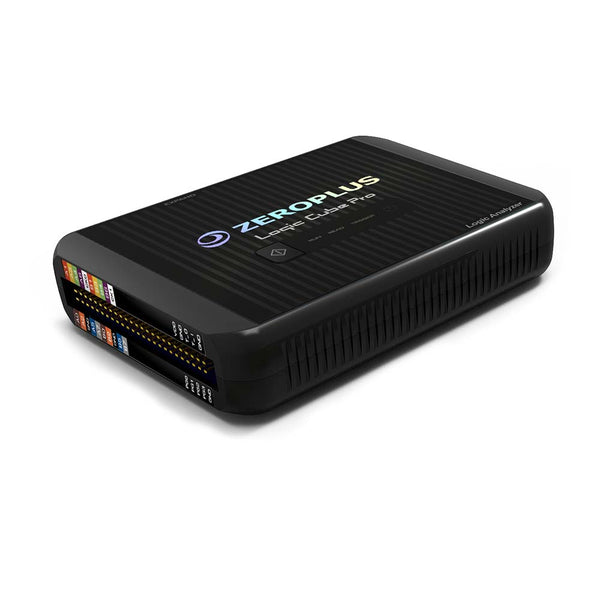 ZeroPlus LAP-C Pro Series Logic Analyser
From €1.157,95
ex VAT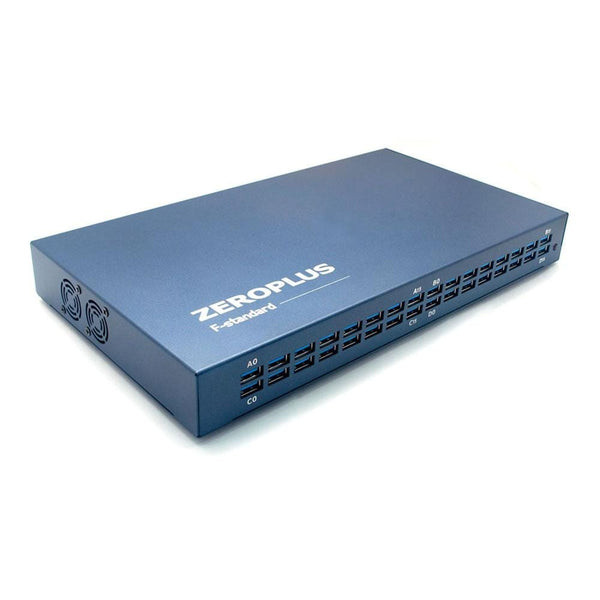 ZeroPlus LAP-F High-Performance PC-Based Logic Analyser 40/64 Channel
€1.689,95
ex VAT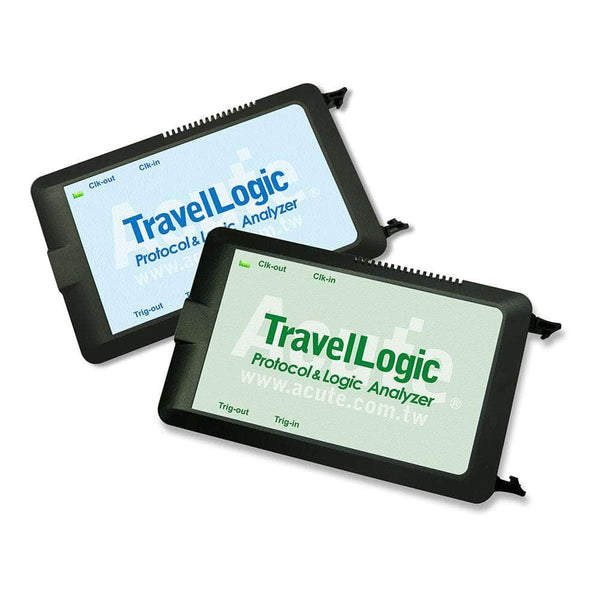 Acute Technology TravelLogic 34-Channel Logic Analyser
From €1.453,95
ex VAT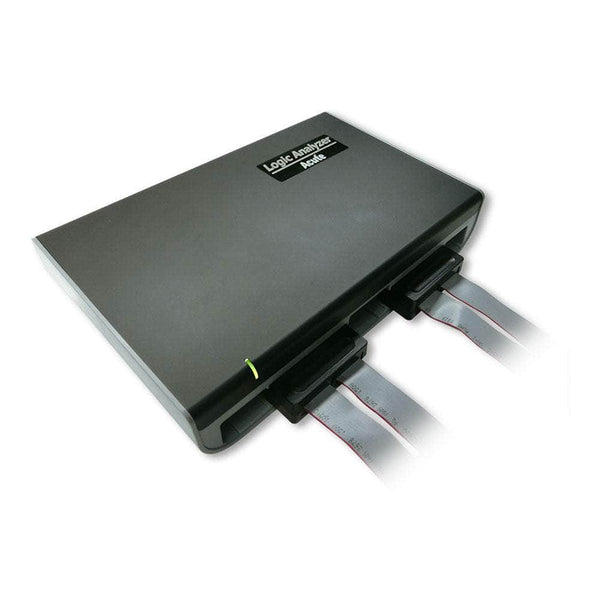 Acute Technology LA4000 Series 68/136 Ch Logic Analyser
From €8.883,95
ex VAT
More Protocols
By John Legg CEng, Director, Debug Store. Updated 12 November 2026.
