
Acute Technology, Inc
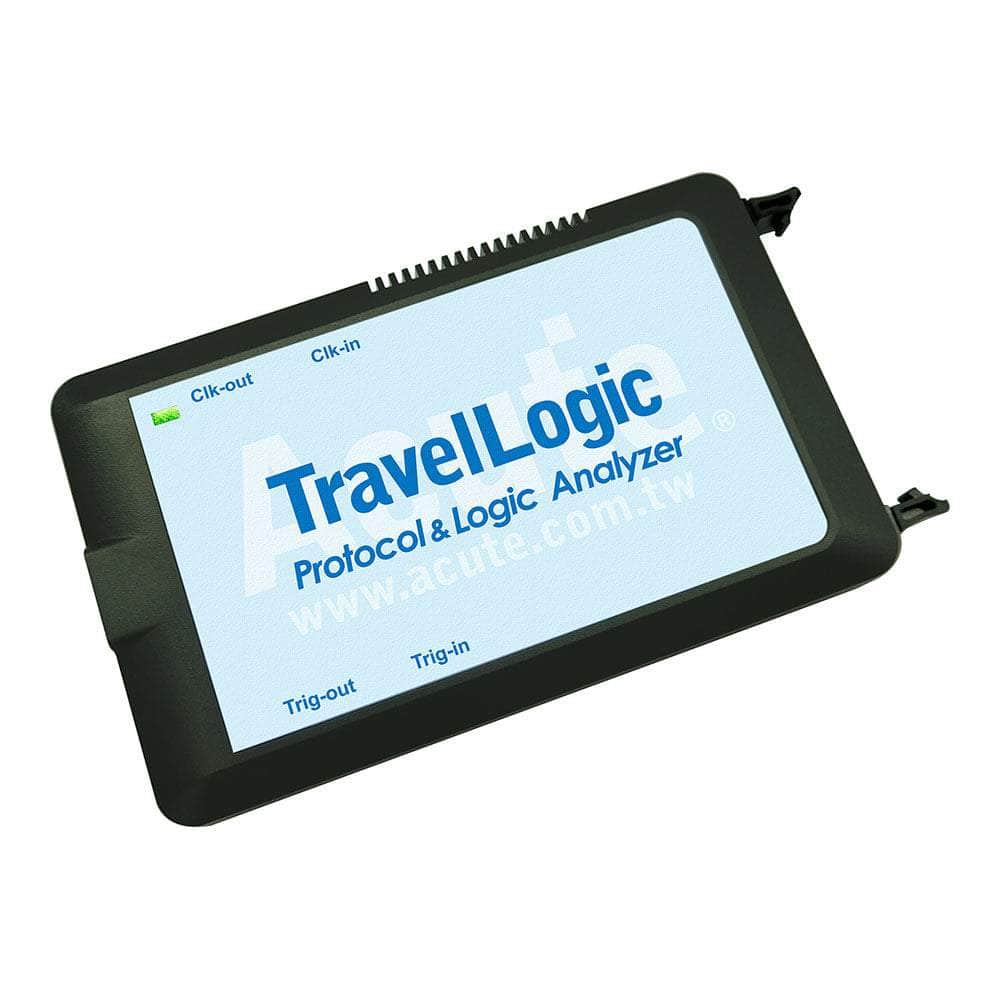
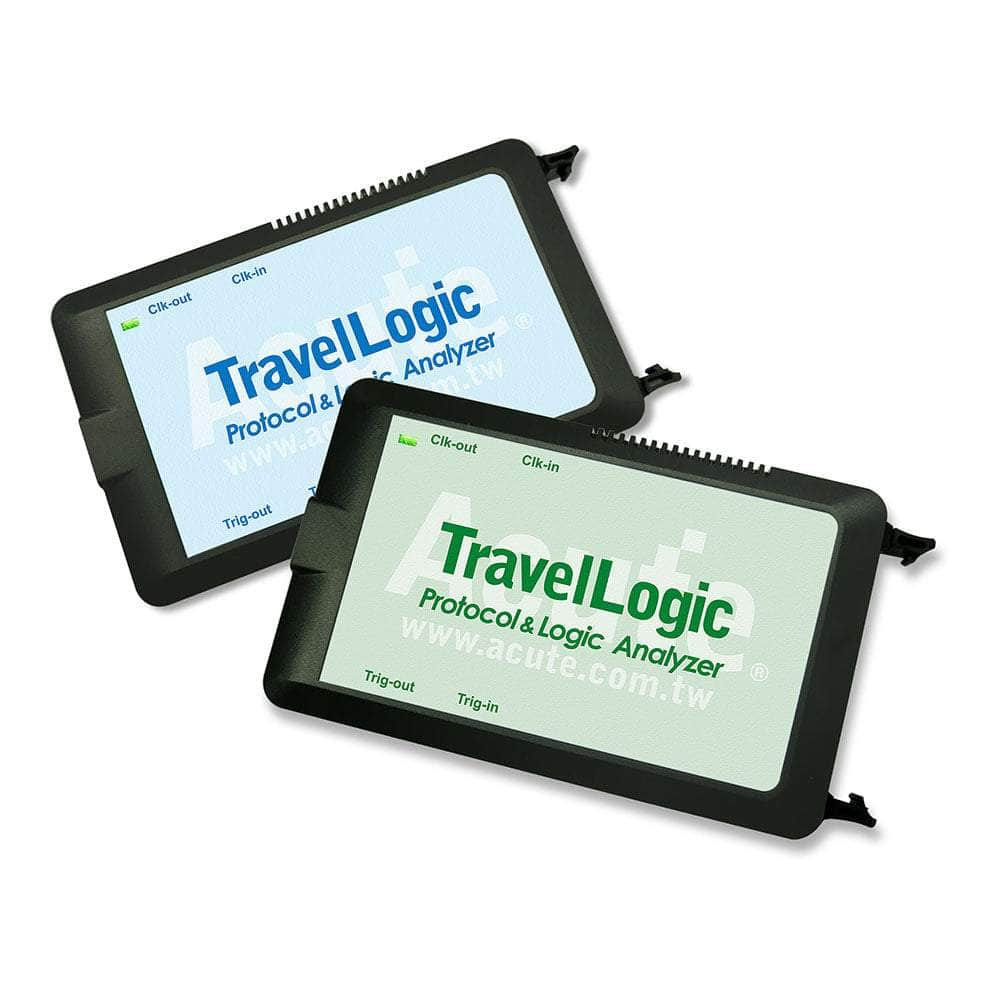
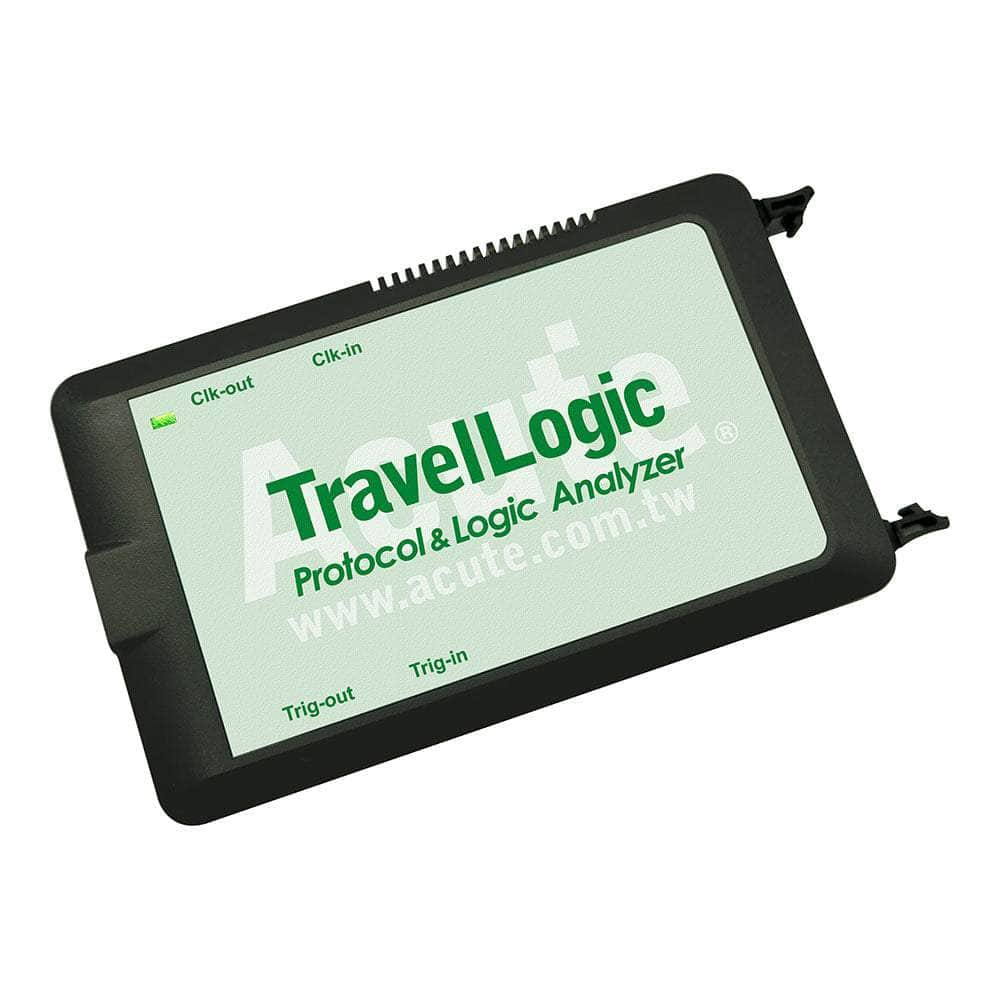
Acute Technology TravelLogic 34-Channel Logic Analyser
Acute Technology TravelLogic 34-Channel Logic Analyser
SKU: TL4134E
Couldn't load pickup availability
Key Features
Overview
Unleash Your Design Potential with the TravelLogic Logic Analyser
Are you an electronic design engineer looking to debug and optimize your latest creations? The Acute Technology TravelLogic Logic Analyser is the ultimate tool to take your designs to the next level.
Blazing Fast Performance
With a lightning-fast sample rate of 2 GHz across 34 digital channels, TravelLogic captures every intricacy of your high-speed signals. Its memory depth lets you record signal behaviour over long periods to gain valuable insights.
Intuitive Software and Setup
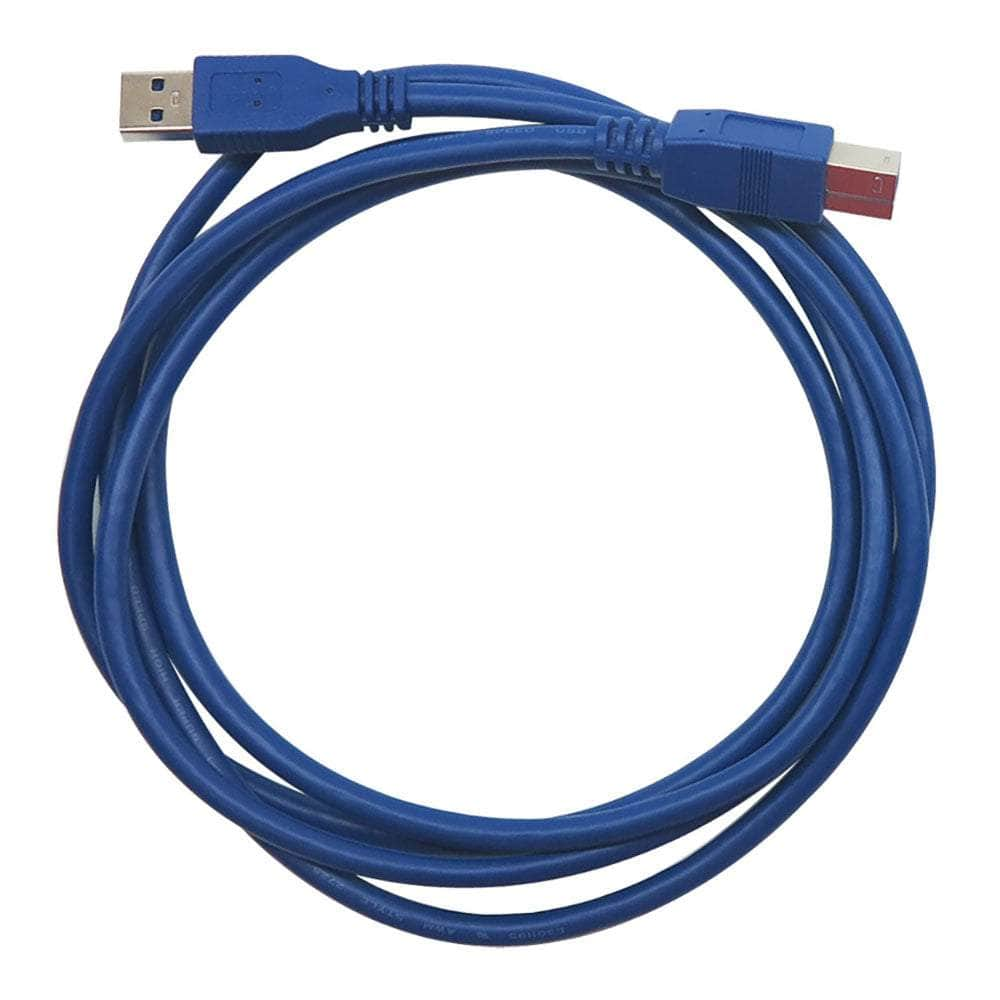
The TravelLogic integrates seamlessly with your workflow through its intuitive PC-based software. Setting up triggers, decoding buses, and analyzing data is straightforward with a user-friendly interface - the USB 3.0 connectivity offers true plug-and-play functionality.Comprehensive Debugging Capabilities
This logic analyzer can decode over 100 serial protocols, including I2C, SPI, CAN, and automotive buses. With advanced triggering on bus events, you can zero in on communication errors and signal anomalies quickly.
Flexible Analog Inputs
The two analogue inputs let you correlate digital signals with analogue waveforms for a complete system view. You can even stack the TravelLogic with an oscilloscope to create a mixed signal debugging station.
Robust Design for Demanding Environments
The compact TravelLogic withstands vibration, shock, and extreme temperatures from lab benches to field testing. Its rugged construction and small form factor make it perfect for portable troubleshooting. Take your designs to the next level with the Acute Technology TravelLogic Logic Analyser. Request a demo unit today to experience its unmatched performance and usability.Downloads
Model |
Channels |
Sample Rate |
Memory |
Bus Trigger |
Protocol Analyzer |
| TL4134E | 34 | 2GHz | 4Gb | I | I |
| TL4134B | 34 | 2GHz | 4Gb | I, II | I, II |
| TL4234B | 34 | 2GHz | 8Gb | I, II, III | I, II, III |
• PC-based
• USB 3.0 Interface
• 34 Channels
• 2 GHz Timing / 250MHz State Analysis
• 8Gb Memory (Max.)
• Data logger saved to hard disk drive
• Analog Inputs (2) for Protocol Analyzer
• Stacks with Acute or another DSO to form as an MSO
• Bus Decode : BiSS-C, CAN 2.0B/CAN FD, DP_Aux¹, DMX512, EDID, eMMC 4.5, eSPI, I²C, I²S,
MII, MIPI DSI LP, MIPI I3C 1.1, NAND Flash, NEC IR, Profibus, SD 3.0 (SDIO 2.0),
Serial Flash, SPI, SVID², SWD, UART (RS232), USB1.1, USB PD 3... (100+)
Options
• Bus Trigger I : BiSS-C, CAN2.0B/CAN FD, DP_Aux¹, I2C, I2S, MIPI I3C 1.1, SPI, UART, USB PD 3, ...
• Bus Trigger II : DALI, LPC, Mini/Micro LED, MIPI I3C 1.1, Profibus, SMBus, SVI2, USB1.1, ...
• Bus Trigger III : eMMC 4.5, eSPI, MII, RGMII, RMII, NAND Flash, SD 3.0 (SDIO 2.0), SVID³, ...
• Protocol Analyzer I : BiSS-C, CAN2.0B/CAN FD, DP_Aux¹, I2C, I2S, MIPI I3C 1.1, SPI, USB PD 3, ...
• Protocol Analyzer II : DALI, MDIO, MIPI RFFE 3, Modbus, PMBus, Profibus, SMBus, USB1.1
• Protocol Analyzer III : eSPI, MII, RGMII, RMII, SVID³
| General Information | |
|---|---|
Part Number (SKU) |
TL4134E
|
Manufacturer |
|
| Physical and Mechanical | |
Weight |
0.5 kg
|
| Other | |
EAN |
5055383616404
|
Questions and Answers
-
How Does the TravelLogic's Portability Compare with Traditional Logic Analysers?
The TravelLogic is powered from the USB 3.0 bus, so it needs no external power supply.
It measures 123 × 76 × 21 mm and fits in a shirt pocket, while traditional bench analysers are much larger and run from mains power. Plug-and-play connection means quick setup at different test locations, which suits field service, customer-site debugging and multi-location teams.
-
What Triggering Capabilities Does the TravelLogic Offer for Complex Debugging?
The TravelLogic offers single and multi-level triggering on channel, pattern, width, timeout and external inputs.
For bus protocols, its 8-state flowchart trigger with counter/timer detects complex sequences, which helps with intermittent protocol issues. A pass counter (0 to 1,048,575) captures a specific occurrence of an event.
-
Can the TravelLogic Integrate with Existing Test Equipment?
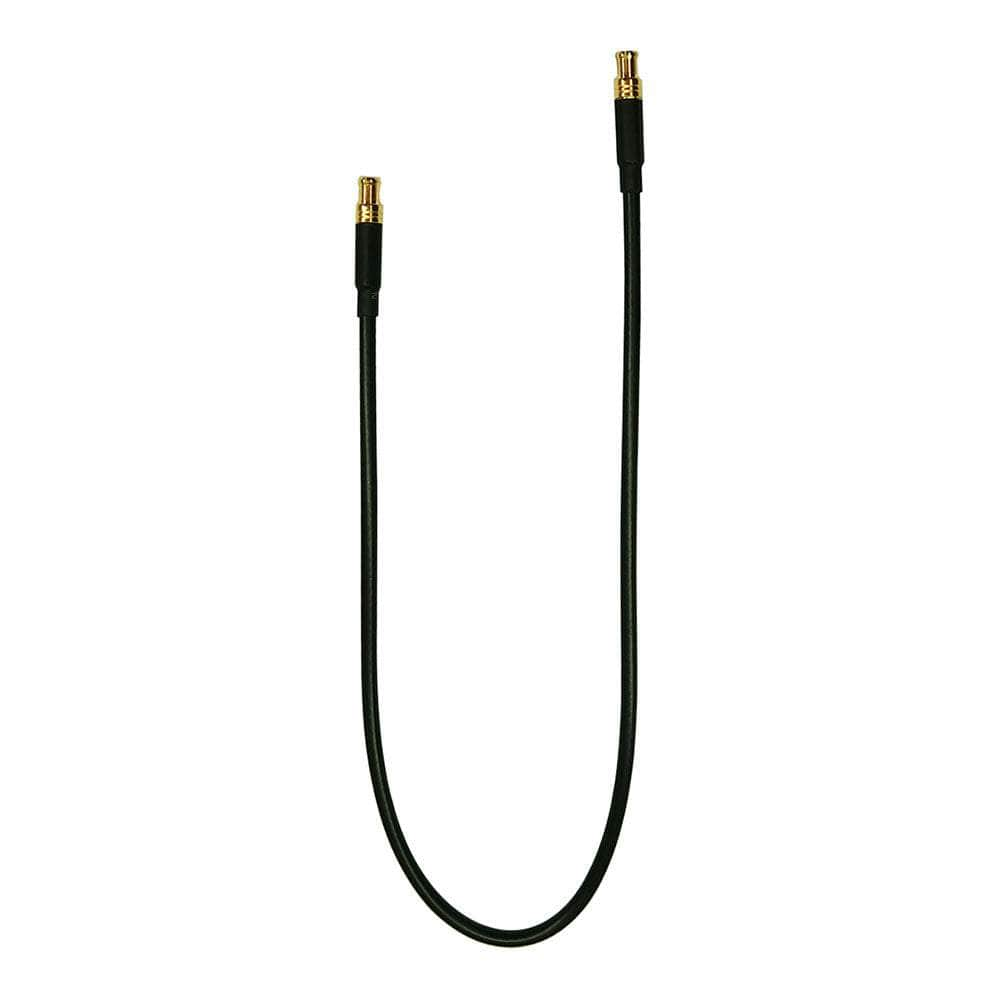
Yes. The TravelLogic stacks with oscilloscopes from Keysight, R&S, Tektronix and other makers through its MCX trigger ports (a BNC-to-MCX cable connects third-party scopes), forming a mixed-signal analysis station.
Acute's Protocol Decode SDK also lets you develop custom decoders as Dynamic Link Libraries (DLLs) for proprietary protocols.
-
What Software Features Enhance the Debugging Workflow?
The TravelLogic software includes:
- logic analyser and protocol analyser modes, with real-time protocol data display
- protocol logging mode, which saves large datasets to SSD for extended analysis
- protocol monitor mode, which captures trigger events over long periods, like an automotive dash camera
- search and filter functions with data statistics
- waveform annotation
- text export (.TXT and .CSV)
-
How Does the TravelLogic Address Signal Integrity Requirements?
The TravelLogic keeps circuit loading low and handles a wide range of logic levels:
- 200kΩ input impedance with <7pF loading
- ±30V DC maximum input voltage, protecting against accidental overvoltage
- adjustable thresholds (±5V range, 50mV resolution) for TTL, CMOS and LVTTL signals
- 0.25Vpp input sensitivity at 50MHz, for low-amplitude signals in low-power designs
-
What Makes the TravelLogic Different From Other Logic Analysers?
The TravelLogic packs bench-class logic analysis into a much smaller unit.
- Streaming: its streaming storage mode sends data to PC RAM or disk at up to 250MHz for long captures.
- Pocket size: 123×76×21mm, so it works in the field.
- Stacking: works with oscilloscopes from several makers, including Keysight, R&S and Tektronix, for mixed-signal analysis.
-
How Many Protocols Can the TravelLogic Decode and Analyse?
The TravelLogic supports over 100 protocol decoders. Optional Bus Trigger packages come in three tiers:
- Bus Trigger I: essential protocols such as I²C, SPI, UART, CAN 2.0B/CAN FD and USB PD 3.0
- Bus Trigger II: specialised protocols including DALI, LPC and SMBus
- Bus Trigger III: advanced protocols such as eMMC 4.5, eSPI and SD 3.0
-
Can the TravelLogic Handle High-Speed Signals Effectively?
Yes. The TravelLogic offers timing analysis at up to 2GHz on 8 channels (1GHz on 16, 500MHz on 32) and 250MHz state analysis, with sub-1ns channel-to-channel skew for accurate setup and hold debugging. Its 500ps trigger resolution helps capture glitches and timing anomalies.
-
What Are the Memory Capabilities, and How Do They Benefit Debugging?
The TravelLogic TL4234B has 8Gb (gigabit) of internal memory, allocated according to the active channels and sample rate. At 2GHz, 8 channels get 1Gb each; at 1GHz, 16 channels get 512Mb each; at 500MHz, 32 channels get 256Mb each.
Streaming to PC RAM or disk gives long captures at up to 250MHz, limited by your PC's performance. You can trade channel count against capture depth to suit the job.
No questions match your search.