
UART Serial Protocol
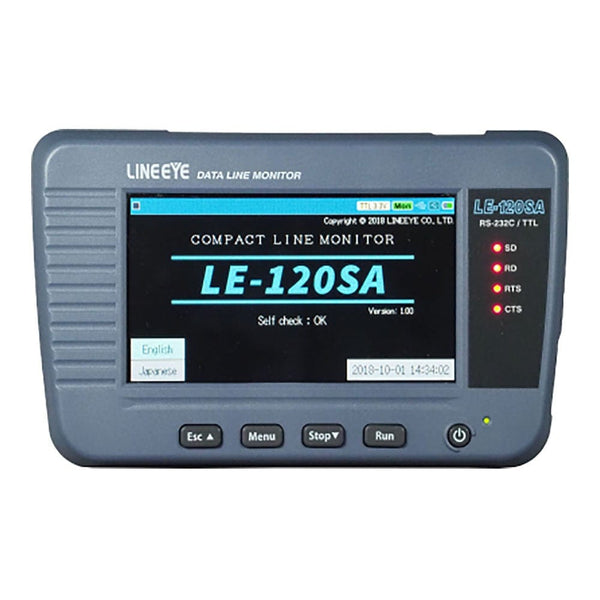
A UART (universal asynchronous receiver-transmitter) sends serial data one character at a time with no clock line: each frame is a start bit, 5 to 9 data bits, an optional parity bit and one or two stop bits, at a baud rate both ends agree in advance. To watch a link, use a line monitor such as the Lineeye LE-120SA, which captures RS-232C and TTL-level UART with timestamps, or a logic analyser with an asynchronous serial decoder. A UART is the hardware; RS-232, RS-485 and TTL serial are the electrical layers it most often drives.
How a UART Link Is Wired
Each device has a transmit output and a receive input. TX of one goes to RX of the other, and both share ground. Getting TX and RX the wrong way round is the most common wiring mistake, and usually nothing is damaged at logic level, though the two TX outputs then drive each other; the link simply stays silent. Optional RTS and CTS lines add hardware flow control, letting a receiver pause the sender when its buffer is full.
At the chip, a UART uses logic levels: 3.3 V or 5 V for a 1, 0 V for a 0, sometimes called TTL serial. RS-232 inverts and shifts those levels to roughly ±5 V to ±15 V for cables between equipment, and RS-485 sends the same frames differentially over long multi-drop lines. Connecting an RS-232 port straight to a 3.3 V UART pin can damage the pin.
How a UART Frame Works
- Idle: the line sits high (mark) when nothing is being sent.
- Start bit: the transmitter pulls the line low for one bit time. The receiver detects the falling edge and starts its own timer.
- Data bits: 5 to 9 bits, least significant first. The receiver samples each one near the middle of its bit time, using its own clock.
- Parity (optional): one bit set so the count of 1s is even or odd, which catches single-bit errors.
- Stop bit: the line returns high for one or two bit times before the next start bit can begin.
Because each frame resynchronises on its start bit, the two clocks only need to agree for about ten bit times. A mismatch of a few percent is tolerated; beyond that the last bits are sampled in the wrong place and framing errors appear.
Common Settings
| Setting | Typical Values | Notes |
|---|---|---|
| Baud rate | 9600, 19200, 38400, 57600, 115200, 230400, 460800 | Both ends must match; 115200 is the usual default for consoles |
| Data bits | 8 (sometimes 7, rarely 5, 6 or 9) | 7 data bits with parity is common on older industrial kit |
| Parity | None, Even, Odd | Shown as N, E or O in shorthand such as 8N1 or 7E1 |
| Stop bits | 1 or 2 | 1.5 exists for 5-bit data |
| Flow control | None, RTS/CTS, XON/XOFF | XON/XOFF uses characters in the data stream, so it is unsuitable for binary data |
Where UARTs Are Used
- Debug consoles: boot logs and shells on microcontrollers, Linux boards and routers, usually 115200 8N1 at 3.3 V.
- Modules: GPS receivers, cellular and Bluetooth modules driven by AT commands or binary protocols.
- Industrial and legacy equipment: RS-232 and RS-485 ports on instruments, PLCs, barcode readers, POS terminals and Modbus RTU networks.
- Bootloaders: many microcontrollers accept firmware over a UART from the factory ROM bootloader.
Common UART Faults and How to Find Them
| Symptom | Likely Cause | What to Check |
|---|---|---|
| Nothing received at all | TX and RX not crossed, or no common ground | Check with a monitor that data appears on the line you expect, and that grounds are joined |
| Random characters, mostly garbage | Baud rate mismatch | Measure one bit time on a scope or analyser: 115200 baud is about 8.68 µs per bit |
| Occasional framing or parity errors | Clock error near the limit, or a wrong frame format such as 7E1 against 8N1 | Compare the measured bit time with the nominal one; confirm data bits, parity and stop bits at both ends |
| Data lost at high rates | Receiver buffer overrun with no flow control | Enable RTS/CTS, or look for gaps where the sender ignores CTS |
| Inverted or no data on an RS-232 port | Logic-level UART connected directly to RS-232 levels | Fit an RS-232 transceiver; never connect ±12 V to a 3.3 V pin |
Tools for Analysing and Decoding UART
Watch tools listen to an existing link and record traffic in both directions with timestamps. For a line monitor or analyser, the key questions are the electrical levels it accepts and the highest baud rate you need.
Line Monitor
| Product | Role | Capability | Price ex VAT |
|---|---|---|---|
| Lineeye LE-120SA Line Monitor | Watch | Handheld monitor for RS-232C and 1.8 V, 2.5 V, 3.3 V and 5 V TTL UART, to 921.6 kbit/s (firmware 1.05 or later), with timestamps and triggers | £625 |
For RS-232, RS-422 and RS-485 links between equipment, see the RS-232 and RS-485 pages, which cover the multi-protocol Lineeye analysers.
Logic Analysers and Oscilloscopes with UART Decoding
| Product | Role | Capability | Price ex VAT |
|---|---|---|---|
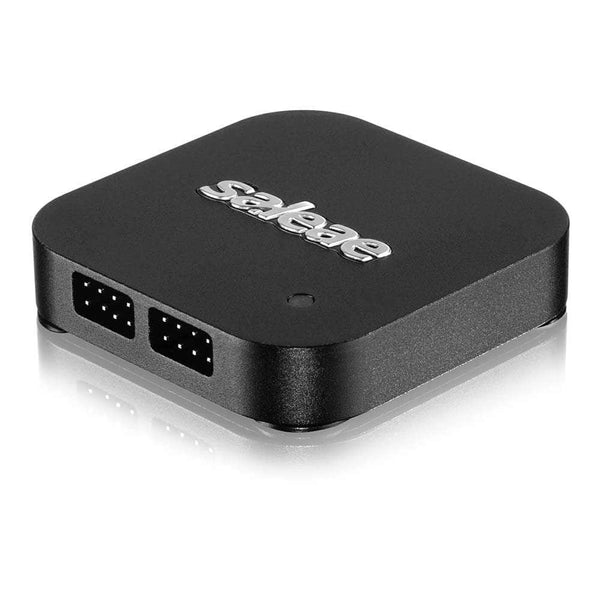
| Saleae Logic 8 | Watch | Asynchronous serial decoder in the Logic 2 software; decodes several UARTs at once | £405 |
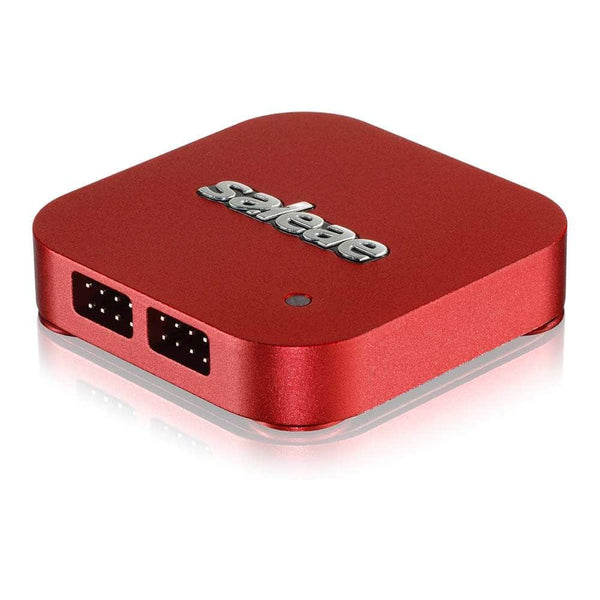
| Saleae Logic Pro 8 | Watch | Higher sample rates for fast baud rates; same decoder | £830 |
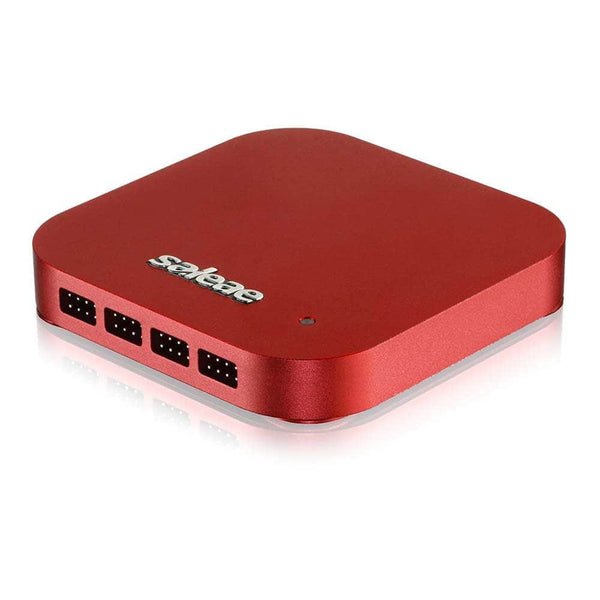
| Saleae Logic Pro 16 | Watch | 16 channels for several links plus control lines | £1,245 |
| Micsig TO Series tablet oscilloscope | Watch | UART decoding as standard, so you see edge quality and decoded characters together | From £520 |
Accessories
- Lineeye LE-5LS 5-Wire TTL Cable With Probes (£90): IC-clip probe leads for the TTL/external I/O port on the LE-3500R, LE-2500R and LE-1500R, and the LE-3500XR and LE-2500XR; on the LE-120SA it fits the external signal I/O port.
Browse every tool in our protocol decoders and logic analysers collections. Tell us the voltage level and baud rate and we will recommend one.
Frequently Asked Questions
What Is the Difference Between UART and RS-232?
UART is the frame format and the hardware block that sends it. RS-232 is an electrical standard for carrying those frames between equipment, with inverted levels of several volts either side of zero. The same UART frame can also travel at logic level or over RS-485.
How Do I Find an Unknown Baud Rate?
Capture the line and measure the shortest pulse, which is one bit time. Divide one by it: 8.68 µs gives 115200 baud, 104 µs gives 9600. Logic analysers and line monitors can also try common rates until the decode makes sense.
Why Do I See Garbage When the Device Boots?
Many chips print boot messages at a different baud rate from the application, or the line floats during reset and the receiver sees false start bits. Capture from power-on with a monitor to see both.
Is UART the Same as USART?
A USART can also run synchronously, with a clock line, as well as in the usual asynchronous mode. In asynchronous mode it behaves exactly like a UART.
Can Several Devices Share One UART Line?
Not at logic level, because only one transmitter can drive a line. For multi-drop networks, use RS-485 transceivers and a protocol such as Modbus RTU that addresses each device.
Where to Start with UART
More Protocols
By John Legg CEng, Director, Debug Store. Updated 3 November 2026.
