
Tag-Connect, LLC
Tag-Connect TC2070-IDC 14-Pin Plug-of-Nails™ IDC Cable
Tag-Connect TC2070-IDC 14-Pin Plug-of-Nails™ IDC Cable
SKU: TC2070-IDC
Couldn't load pickup availability
Key Features
Overview
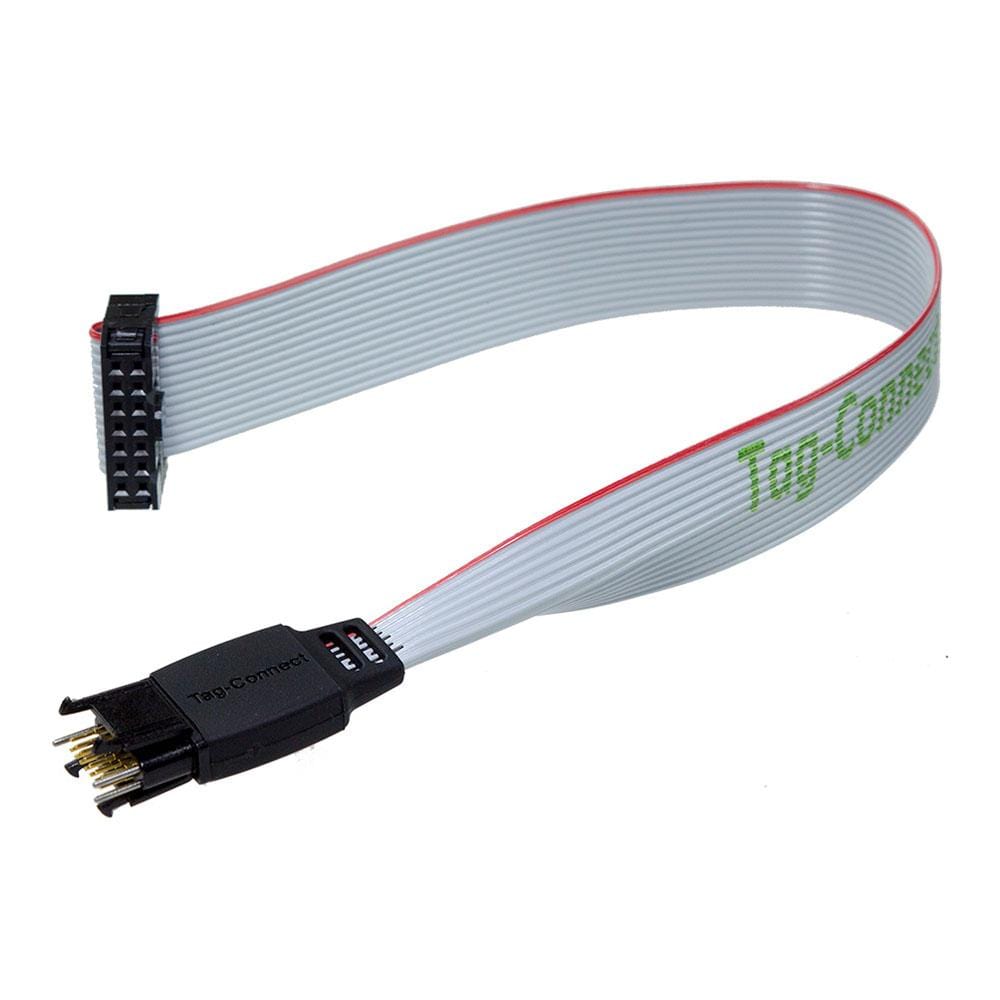
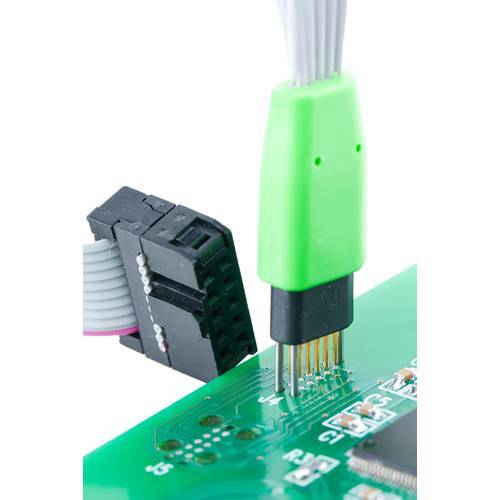
The Tag-Connect TC2070-IDC is a 14-pin Plug-of-Nails™ programming/debug cable with integral alignment legs. It mates directly to a small PCB footprint—no mating header is required—then presents a 2×7 (0.1″) IDC female at the tool end for use with standard 14-pin JTAG connectors and adapters. A short ribbon section (≈200 mm) links the pogo-pin “plug” to the IDC.
Where It Fits
The TC2070 family is commonly used with MSP430, DSPs and other MCUs that expose a 14-pin JTAG/ST-14 interface. If you need the same footprint without the hands-free legs, choose the TC2070-IDC-NL. For ST’s 0.05″ STDC14 ecosystem, see the 0.05″ version TC2070-IDC-050. If you only require SWD on a tiny 6-pin footprint, consider the Cortex-specific TC2030-CTX-NL-STDC14.
Why Consider This Cable?
Compared with fitting a header on every PCB, Tag-Connect eliminates the target-side connector, saving board area and per-unit BOM cost while providing a robust spring-pin interface suitable for development and production. Engineers also value the keyed, repeatable connection and the availability of legged/no-legs variants and accessories for fixtures.
Downloads
Why Engineers Choose The Tag-Connect TC2070-IDC 14-Pin Plug-of-Nails™ IDC Cable
Eliminate Target Headers
Fast, Stable Connection
Works With Existing Tools
Which cable fits your debugger? See our Tag-Connect cable guide.
| General Information | |
|---|---|
Part Number (SKU) |
TC2070-IDC
|
Manufacturer |
|
| Physical and Mechanical | |
Weight |
0.1 kg
|
| Other | |
EAN |
5055383698783
|
Questions and Answers
-
Will It Damage My PCB Pads?
The spring pins are designed for repeated cycles, and the footprint needs no special PCB finish. Use the legged version for stable pressure. For fixtures, use the no-legs cable held in the fixture.
-
How Is This Better Than Fitting a 2×7 Header?
There's no connector on the target, which saves cost and board area, avoids tall components and removes a placement step. This is useful in compact or sealed products. -
Can I Program in Production Without Holding the Cable?
Yes. Use the legged cable for bench work, or mount a no-legs cable in a fixture for hands-free production steps.
-
Is There a 2 mm IDC Option?
Yes. The TC2070 series includes 2 mm IDC variants. Contact us for availability or see the other TC2070 listings in our catalogue. -
What If I Only Need SWD on a Tiny Footprint?
Use a 6-pin Cortex solution such as TC2030-CTX-NL-STDC14 to shrink your pads while staying compatible with STLINK-V3 tools that use the STDC14 connector.
-
What Is “Plug-of-Nails™” and Why Use It?
A spring-pin plug lands on a tiny PCB footprint, so you don't fit a header on each board. It saves board area and per-unit cost, and stands up to repeated use. -
When Should I Choose the No-legs Version?
Use the TC2070-IDC-NL if you mount the cable in a fixture or prefer manual pressure without latching legs. -
I’m Designing for ST’s ST-Link V3 (STDC14). Which Cable?
Use the 0.05″ option TC2070-IDC-050 or consider the compact SWD-only TC2030-CTX-NL-STDC14 to shrink your PCB footprint. -
Does the TC2070-IDC Support 14-Pin Debug Connectors?
Yes, its 14 pogo pins connect to the 2×7 0.1″ IDC end, for debuggers with native 14-pin connectors such as TI MSP430 tools. For UART alongside SWD, the 0.05″ STDC14 path can also expose TX/RX.
-
How Big Is the Footprint and What About Keep-Outs?
The TC2070 family uses a very small pad pattern with non-plated alignment holes (three on the no-legs footprint), and the legged footprint adds leg latch holes; follow the Tag-Connect footprint drawing for pad/NPTH sizing and keep-outs.


No questions match your search.