


Total Phase, Inc
Total Phase Level Shifter Board - löst Probleme mit dem Logikpegel
Total Phase Level Shifter Board - löst Probleme mit dem Logikpegel
SKU: TP240610
Verfügbarkeit für Abholungen konnte nicht geladen werden
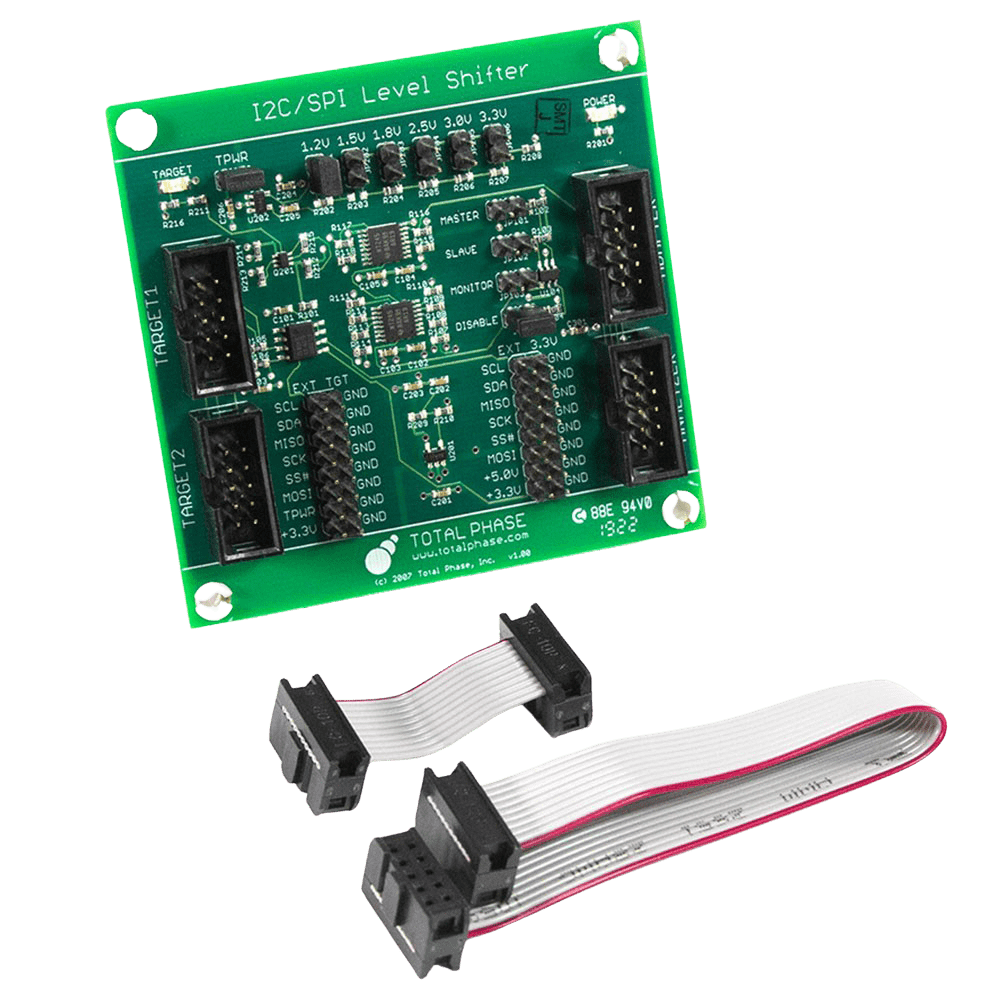
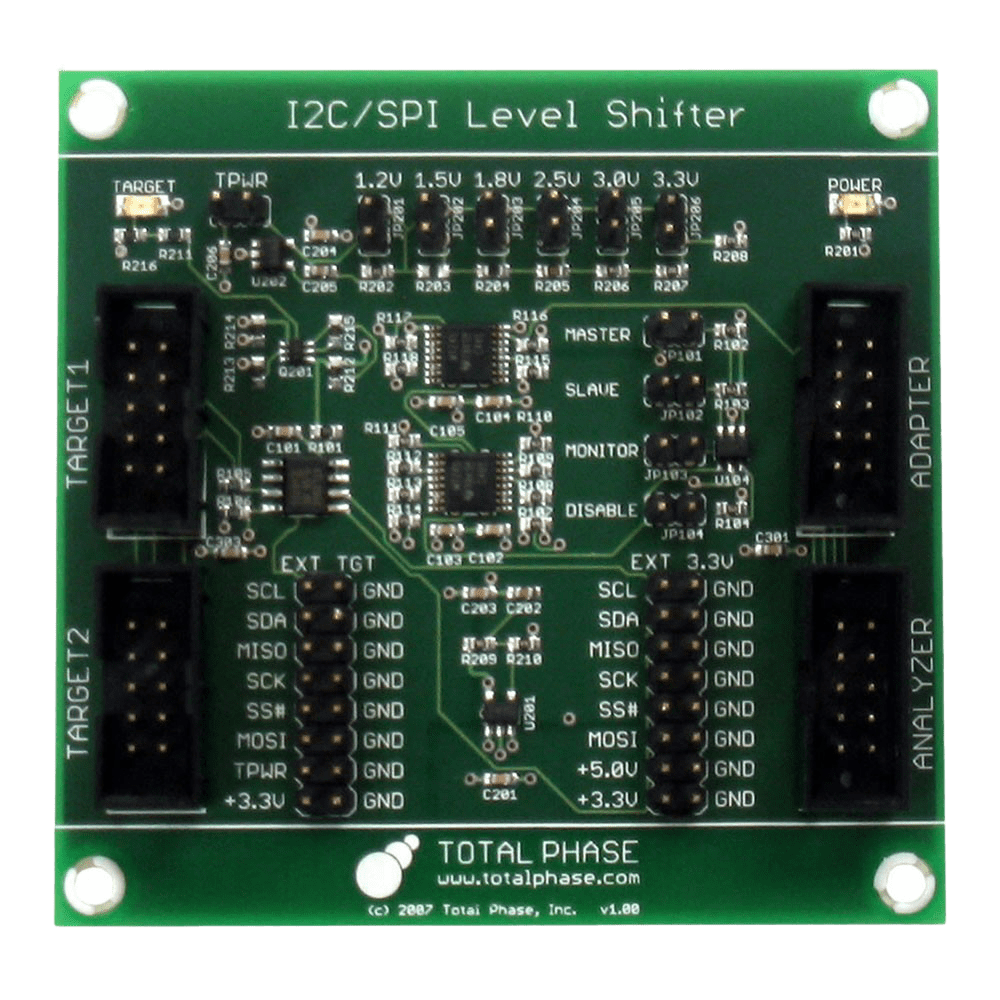
Key Features
Overview
Downloads
Why Engineers Choose The Total Phase Level Shifter Board - löst Probleme mit dem Logikpegel
Multi-voltage Compatibility
Integrated Power Supply
High-Speed Performance
Wir stellen die Level Shifter-Platine vor: Erhöhen Sie Ihre Spannung, steigern Sie Ihre Leistung!
Sind Sie bereit, Ihr Total Phase-Erlebnis zu verbessern? Dann sind Sie bei unserer innovativen Lösung genau richtig: dem Level Shifter Board. Dieses bemerkenswerte Board wurde mit Blick auf Präzision und Innovation entwickelt und ist Ihre Antwort auf nahtlose Spannungspegelverschiebungen.
Entfesseln Sie das wahre Potenzial Ihres Total Phase Aardvark™ I2C/SPI-Hostadapters, Beagle I2C/SPI-Analysators und Cheetah™ SPI-Hochgeschwindigkeits-Hostadapters mit dem Level Shifter Board. Verabschieden Sie sich von Kompatibilitätsproblemen und freuen Sie sich auf unterbrechungsfreie Leistung.
Hauptmerkmale:
- Mühelose Spannungsverschiebung: Transformieren Sie Spannungspegel mühelos von 1,2 V auf 3,3 V. Keine manuellen Anpassungen mehr, keine Kompromisse mehr.
- Präzisionstechnik: Das mit größter Liebe zum Detail gefertigte Level Shifter Board garantiert Genauigkeit und Zuverlässigkeit bei jedem Einsatz.
- Plug-and-Play: Nahtlose Integration in Ihr vorhandenes Setup. Keine komplexen Installationen, keine technischen Probleme.
- Verbessern Sie Ihre Projekte: Egal, ob Sie ein Technikbegeisterter, ein Bastler oder ein Profi sind, das Level Shifter Board ist Ihr Tor zu verbesserten Projekten und besseren Ergebnissen.
Warum sollten Sie sich für die Level Shifter-Platine entscheiden?
Bei Total Phase wissen wir, wie wichtig einwandfreie Kommunikation und optimale Leistung sind. Deshalb haben wir das Level Shifter Board so entwickelt, dass es den höchsten Qualitäts- und Funktionalitätsstandards entspricht.
Lassen Sie sich nicht von Spannungsunterschieden zurückhalten. Bringen Sie Ihre Total Phase-Geräte mit dem Level Shifter Board auf ein neues Niveau. Erleben Sie noch heute die Zukunft der nahtlosen Spannungspegelverschiebung!
Verbessern Sie Ihre Erfahrung. Verbessern Sie Ihre Ergebnisse. Wählen Sie das Level Shifter Board.
Questions and Answers
-
Is the Level Shifter Board Bidirectional?
Only for I2C. I2C lines are translated bidirectionally and automatically. For SPI, set the direction with the MASTER, SLAVE or MONITOR jumper. MDIO can be monitored but not shifted bidirectionally.
-
What Cables Are Included with the Level Shifter Board?
The board comes with a 6-inch 10-pin ribbon cable, a 1.5-inch 10-pin ribbon cable and three configuration jumpers.
-
Can I Use the Level Shifter Board as a Signal Pass-through Without Voltage Translation?
Yes, by setting the voltage jumper to 3.3V, the board can pass signals through without level translation.
-
What Is the Minimum Voltage Level the Board Can Translate To?
The Level Shifter Board can translate down to 1.2V logic levels, which suits low-power microcontrollers and embedded systems.
-
Does the Level Shifter Board Require External Power?
No. The board is powered from the connected Total Phase instrument via the target power feature, which must be enabled in the software.
-
Which Total Phase Instruments Are Compatible with the Level Shifter Board?
The Level Shifter Board works with these Total Phase tools:
-
What Voltage Levels Can the Level Shifter Board Translate To?
The board supports translation to 1.2V, 1.5V, 1.8V, 2.5V, 3.0V, and 3.3V logic levels. Voltage selection is configured via jumper settings or by using the target device's own power supply.
-
Can the Level Shifter Board Provide Power to Target Devices?
Yes. The on-board regulator can power the target at the selected voltage when the TPWR jumper is fitted, for example a low-voltage memory device.
-
What Are the Maximum Communication Speeds Supported?
The Level Shifter Board supports I2C communication up to 800 kHz and SPI/MDIO signalling up to 20 MHz. Actual speeds may vary depending on target device specifications and cable lengths.
-
How Do I Connect Multiple Target Devices to the Level Shifter Board?
The board provides two cross-connected target connectors (TARGET1 and TARGET2) plus external breakout headers. Multiple I2C devices can share the same bus, whilst SPI devices require separate chip select lines.


No questions match your search.