
Hantek Electronic Co Ltd
Hantek-1833C Tragbares LCR-Messgerät bis 100 KHz
Hantek-1833C Tragbares LCR-Messgerät bis 100 KHz
SKU: Hantek-1833C
Verfügbarkeit für Abholungen konnte nicht geladen werden
Key Features
Overview
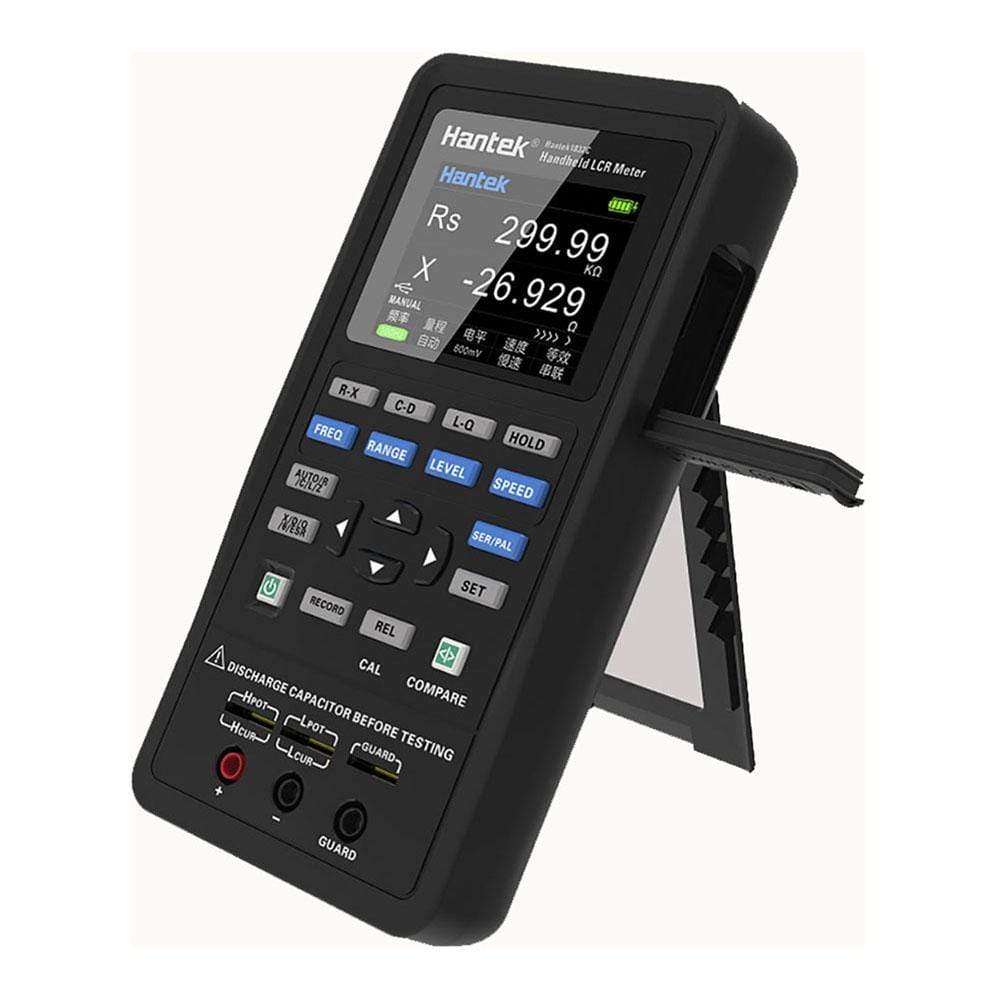
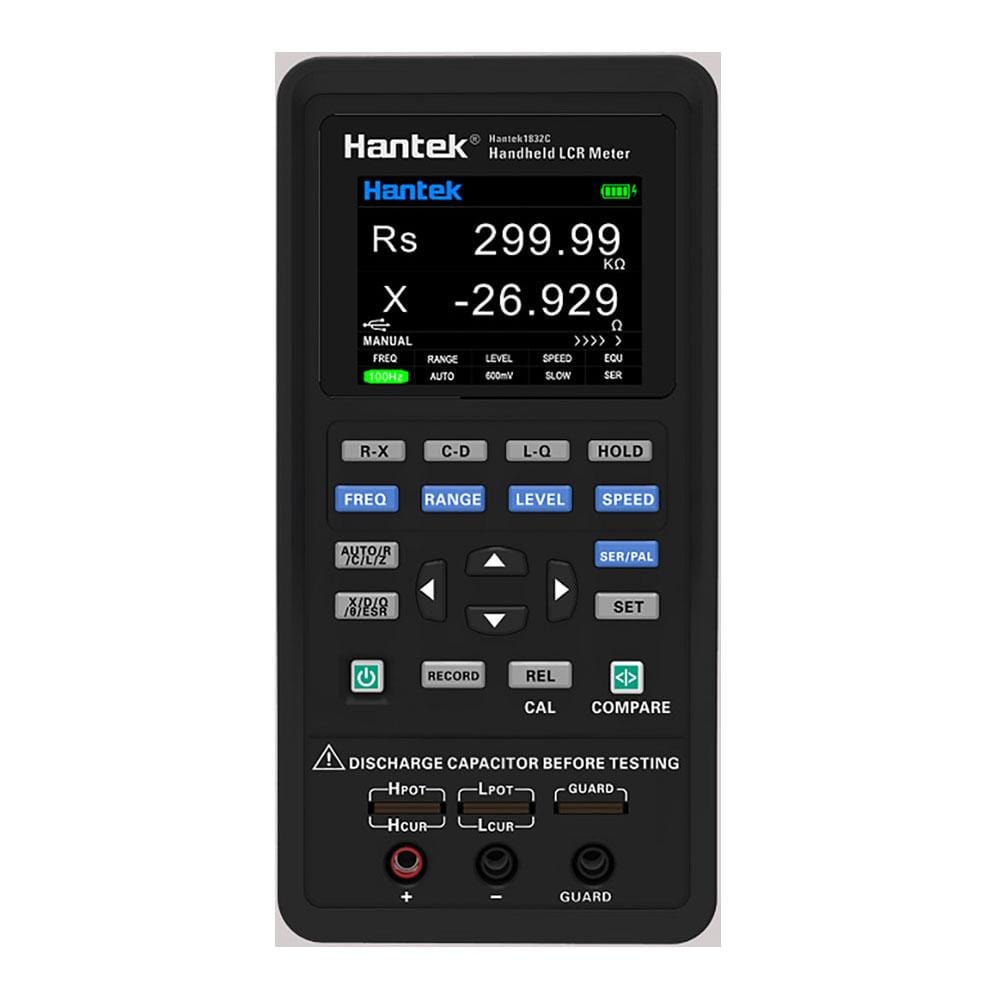
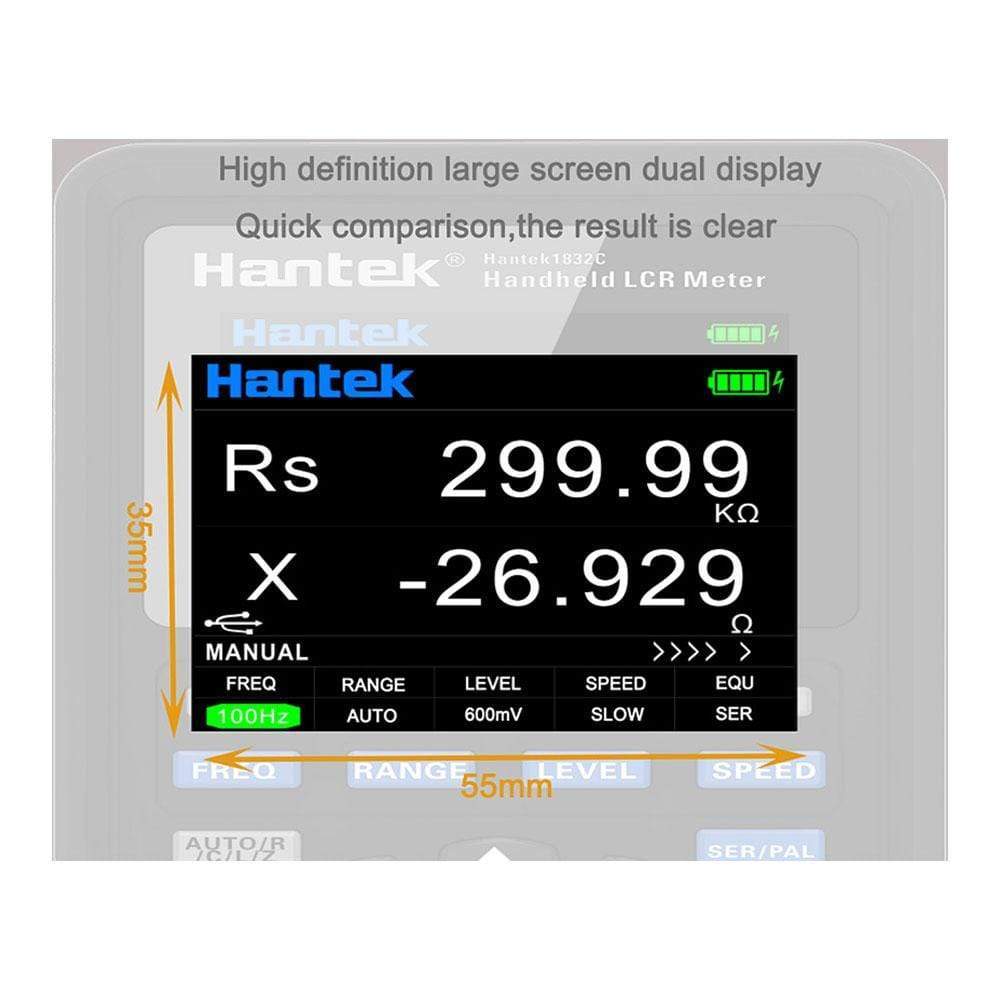
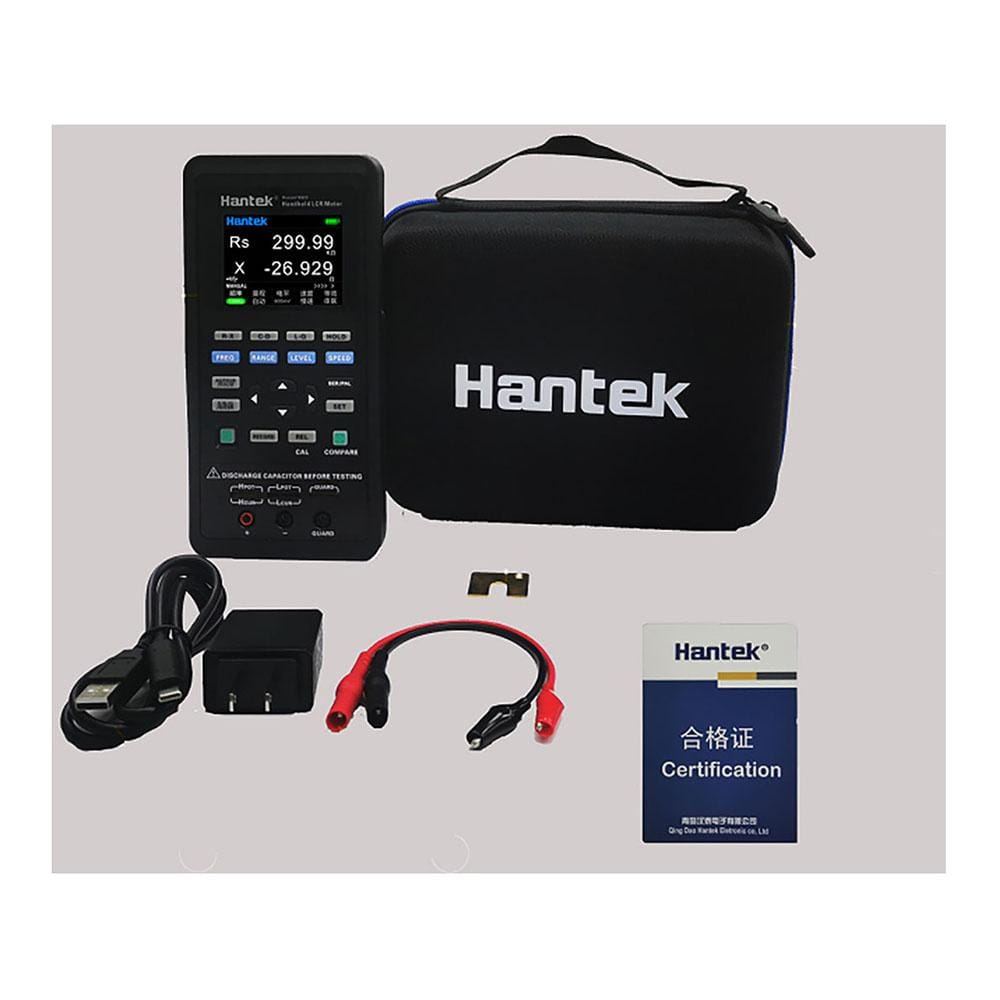
The Hantek-1833C is a handheld LCR meter for characterising passive components across ten selectable test frequencies up to 100 kHz. A bright 2.8-inch TFT presents primary values (L/C/R/Z) together with secondary parameters (X, D, Q, θ, ESR) so you can see losses and reactance at a glance.
Engineers can choose 0.3 Vrms or 0.6 Vrms excitation, switch between series/parallel models, and run open/short calibration to maintain repeatability. For fixturing, the meter supports both 3-terminal and 5-terminal (with guard) connections to reduce leakage and stray capacitance on high-impedance parts. Measurement ranges span up to 2000 H, 20 mF and 20 MΩ with selectable speeds for binning or debug.
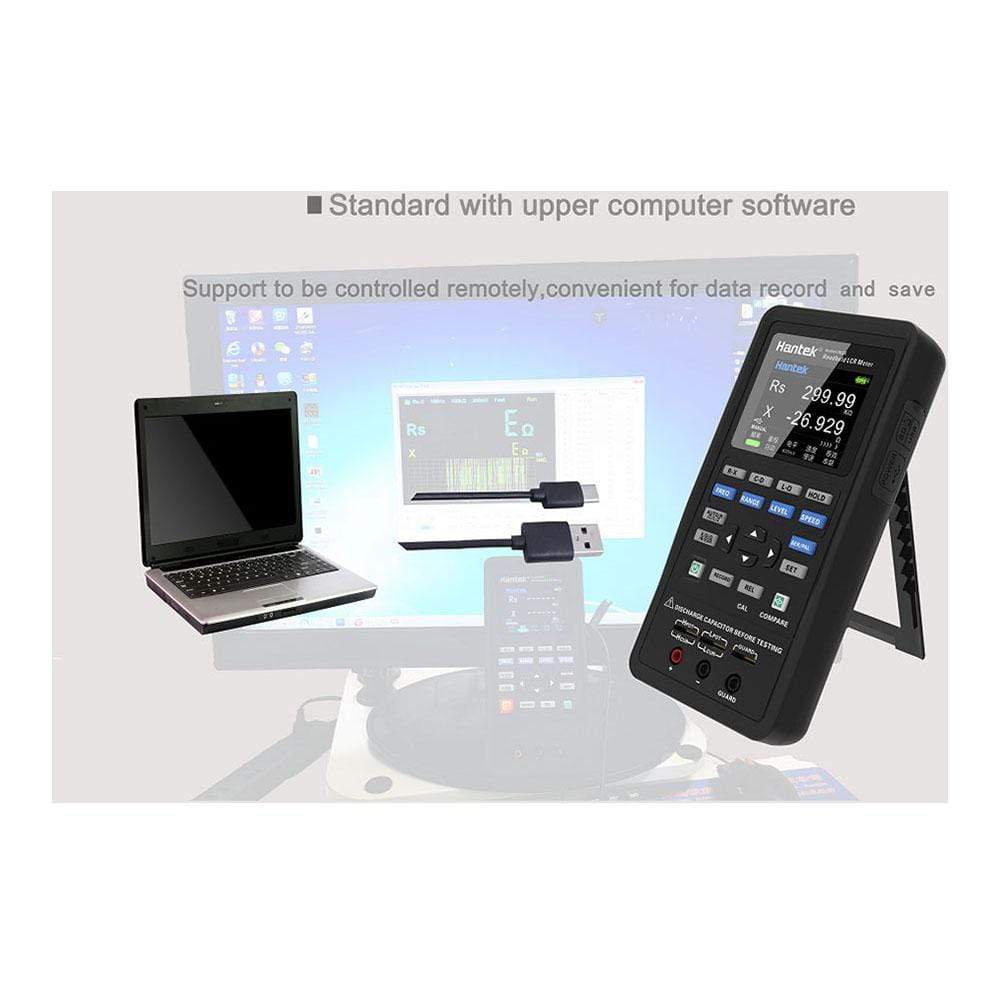
USB “upper-computer” software enables remote control and data logging for reports or incoming inspection. If you need lower maximum frequency, consider the related Hantek-1832C in the same series. For a broader view of impedance tools, see our Hantek LCR Meters collection.
If your workflow demands measurements at realistic operating frequencies with clear visibility of loss mechanisms, the 1833C provides the essentials in a compact, bench-friendly form factor.
Downloads
Why Engineers Choose The Hantek-1833C Tragbares LCR-Messgerät bis 100 KHz
Measure At Application Frequencies
See Losses Instantly
Better Fixturing Options
Das Hantek-1833C ist ein professionelles tragbares LCR-Messgerät. Es wurde für den Einsatz im Labor entwickelt, misst Komponenteneigenschaften präzise und ist zuverlässig.
Das Gerät misst Grundwerte wie Widerstand, Kapazität, Induktivität und Impedanz bei verschiedenen Testfrequenzen. Dies ermöglicht auch die Messung frequenzbezogener Eigenschaften wie ESR und Q.
Das Gerät kann außerdem Werte über einen bestimmten Zeitraum hinweg protokollieren, wodurch sich Werteabweichungen aufgrund von Änderungen der Außentemperatur usw. messen lassen.
| General Information | |
|---|---|
Part Number (SKU) |
Hantek-1833C
|
Manufacturer |
|
| Physical and Mechanical | |
Weight |
1.0 kg
|
| Other | |
EAN |
5055383617128
|
Questions and Answers
-
What Test Levels Are Available?
0.3 Vrms and 0.6 Vrms. These let you avoid over-biasing sensitive dielectrics, or deliberately excite non-linear behaviour when needed. -
What Measurement Ranges Are Available?
Up to 2000 H inductance, 20 mF capacitance and 20 MΩ resistance, covering most lab and production needs. -
Can I Log Data to a PC?
Yes. Hantek's 183X PC software connects over USB (Type-C) for remote control and data recording, useful for reports or incoming inspection. Tolerance checking (GOOD/NG) is done on the meter itself.
-
How Does It Compare with Premium Handheld LCR Meters?
Premium models (such as Keysight and B&K) add higher basic accuracy and wider ecosystems. The 1833C focuses on the essentials: test frequencies up to 100kHz and guarded 3-terminal and 5-terminal connections.
-
What Calibration Features Are Provided?
Open/short calibration routines are available to compensate fixtures and improve repeatability, especially for small SMD components. -
What Is the Maximum Test Frequency on the Hantek-1833C?
100 kHz. It also has ten selectable frequencies, so you can match common datasheet test points or explore frequency response. -
Which Parameters Does the 1833C Display?
Primary L/C/R/Z plus secondary X, D (tan δ), Q, θ and ESR. Primary and secondary values can be shown together on the dual display. -
How Does the 1833C Differ From the 1832C?
Both are in the 183X series. The 1833C tests up to 100kHz with ten frequencies and offers 0.3Vrms and 0.6Vrms test levels; the 1832C stops at 40kHz and has a single 0.6Vrms level. Choose the 1832C if 40kHz and one test level are enough.
-
Does It Support Series and Parallel Equivalent Circuit Modes?
Yes. Hantek suggests series mode for low impedances (below about 100Ω) and parallel mode for high impedances (above about 10kΩ).
-
Is There a Guard Terminal and 5-Terminal Measurement?
Yes. The meter switches between 3-terminal and 5-terminal measurement and has a guard terminal, which helps reduce the effect of leakage and stray capacitance in high-impedance measurements. 5-terminal measurement needs a dedicated fixture.
No questions match your search.