
Array Electronic Co Ltd
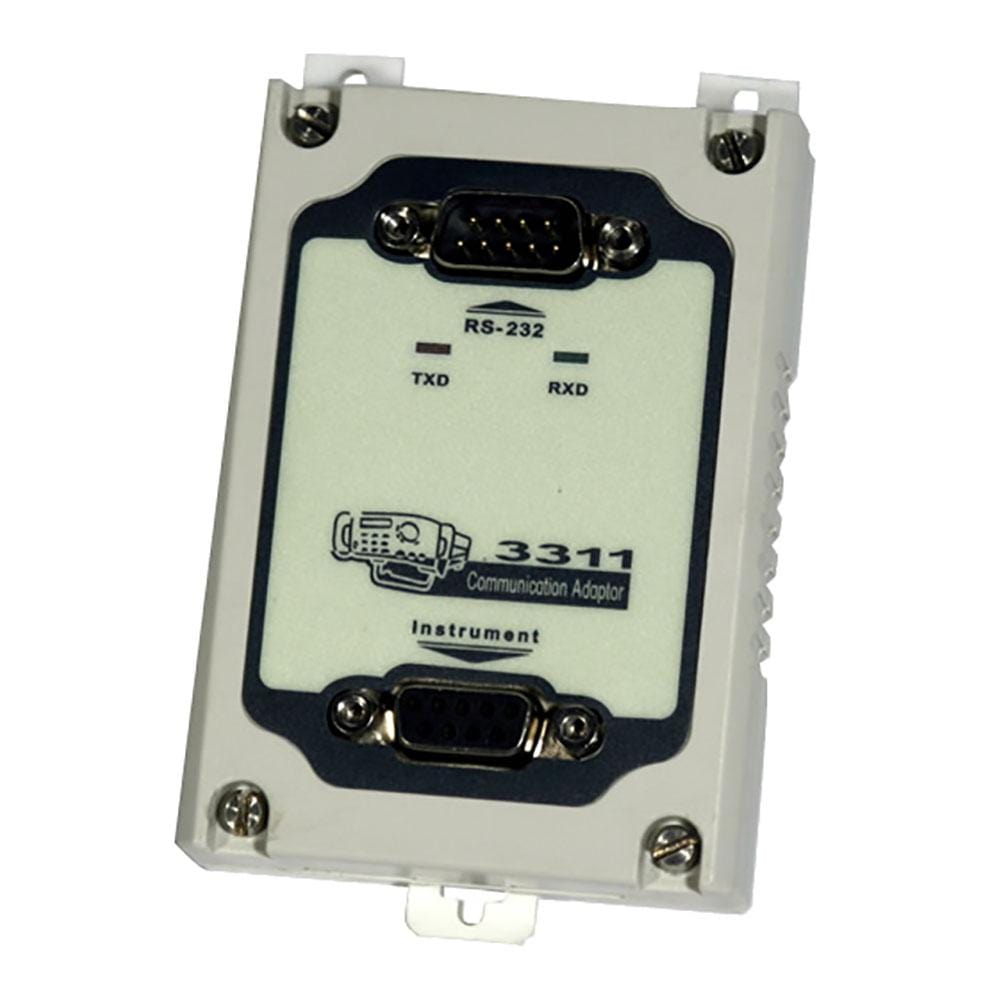
Array 3311 RS-232C-zu-TTL-Adapter
Array 3311 RS-232C-zu-TTL-Adapter
SKU: 3311
Verfügbarkeit für Abholungen konnte nicht geladen werden
Key Features
Overview
Array Electronic 3311 RS-232C to TTL Adapter provides the correct level-shifting to control Array instruments that expose a TTL-level serial port. Use it to connect a PC’s RS-232C port to Array 364X programmable DC power supplies and Array 371X DC electronic loads for SCPI-style automation and logging.
The adapter is recommended in Array user manuals and is used widely in bench automation workflows. If your PC lacks RS-232, consider the USB variant Array 3312 USB-to-TTL Adapter. For multi-drop networks or longer cable runs, see Array 3313 RS-232C-to-RS-485 Converter and 3314 RS-485-to-TTL Converter. For GPIB systems, Array 3315 GPIB Interface is available.
Why consider 3311?
Array’s 364X/371X instruments communicate at TTL levels internally; connecting PC RS-232 directly risks errors. The 3311 ensures signal integrity and correct logic thresholds between your COM port and the instrument, enabling reliable control from Python, LabVIEW, or other serial tools.
Compatibility
Designed for Array 3644A/3645A/3646A power supplies and 3710A/3711A/3715A electronic loads. Typical use: instrument setup, automated sweeps, and long-term logging where a deterministic serial link is preferred.
Downloads
Why Engineers Choose the Array 3311 RS-232C-zu-TTL-Adapter
Recommended Interface For Array Instruments
Fast Integration
Deterministic, Driverless Link
Der Array Electronic 3311-Adapter kann Produkte der Serien 3600/3710A/11A an jedes Gerät anschließen, das mit einer RS-232C-Schnittstelle ausgestattet ist.
| General Information | |
|---|---|
Part Number (SKU) |
3311
|
Manufacturer |
|
| Physical and Mechanical | |
Weight |
0.5 kg
|
| Other | |
EAN |
5055383600618
|
Questions and Answers
-
Can I Script Control From Python or LabVIEW?
Array supplies PC software for its instruments (PowerMS for 364X supplies, ElectronicLoad for 371X loads), and for 364X supplies ActiveX and DLL tools for VB, VC++, Delphi and LabVIEW. Array does not publish a command set for the 364X or 371X, so control from other languages such as Python is not documented.
-
Why Do I Need the 3311 Rather Than a Direct RS-232 Connection?
The instrument's serial port works at TTL levels, while a PC's RS-232C port uses higher voltages. The 3311 translates between the two; a direct connection without translation will not communicate and can damage the ports.
-
What If My PC Has No RS-232C Port?
Use a quality USB-to-RS-232 adapter upstream, or choose the native Array 3312 USB-to-TTL Adapter.
-
Is This Suitable for Multi-Instrument Control?
For one-to-one RS-232 control, use the Array 3311. For multi-drop networks or long distances, RS-485 is better: use the 3313 RS-232C-to-RS-485 converter at the PC and a 3314 at each instrument.
-
How Do I Confirm Communication?
Start Array's PC software (PowerMS for 364X supplies, ElectronicLoad for 371X loads) and check that the COM port, baud rate and address match the settings on the instrument.
-
Will This Adapter Work with My Array 3644A/3645A/3646A PSU?
Yes. It's the recommended RS-232C-to-TTL interface for 364X power supplies. If you prefer USB control, see the Array 3312 USB-to-TTL Adapter.
-
Is It Compatible with Array 3710A/3711A Electronic Loads?
Yes. It provides the RS-232 interface option for 371X loads. For multi-drop, use the Array 3313 RS-232C-to-RS-485 converter with a 3314 RS-485-to-TTL adapter connected to each instrument.
-
What Cable Do I Need Between the PC and the 3311?
Array does not publish cable or pinout details for the 3311. If you get no response, check the TX/RX orientation and try a null-modem cable, or ask us for help.
-
Is Galvanic Isolation Provided?
Yes. Array describes the 3311 as an isolated TTL to RS-232 adaptor. The isolation rating is not published, so if your application needs a specified isolation level, add a rated isolator.
-
What Baud Rates Are Supported?
The instrument offers 4800, 9600, 19200 or 38400 baud, set on the instrument; the 371X loads default to 38400. Array does not document the data format. Keep cable runs short and use shielded RS-232 cables.


No questions match your search.