
Tag-Connect, LLC
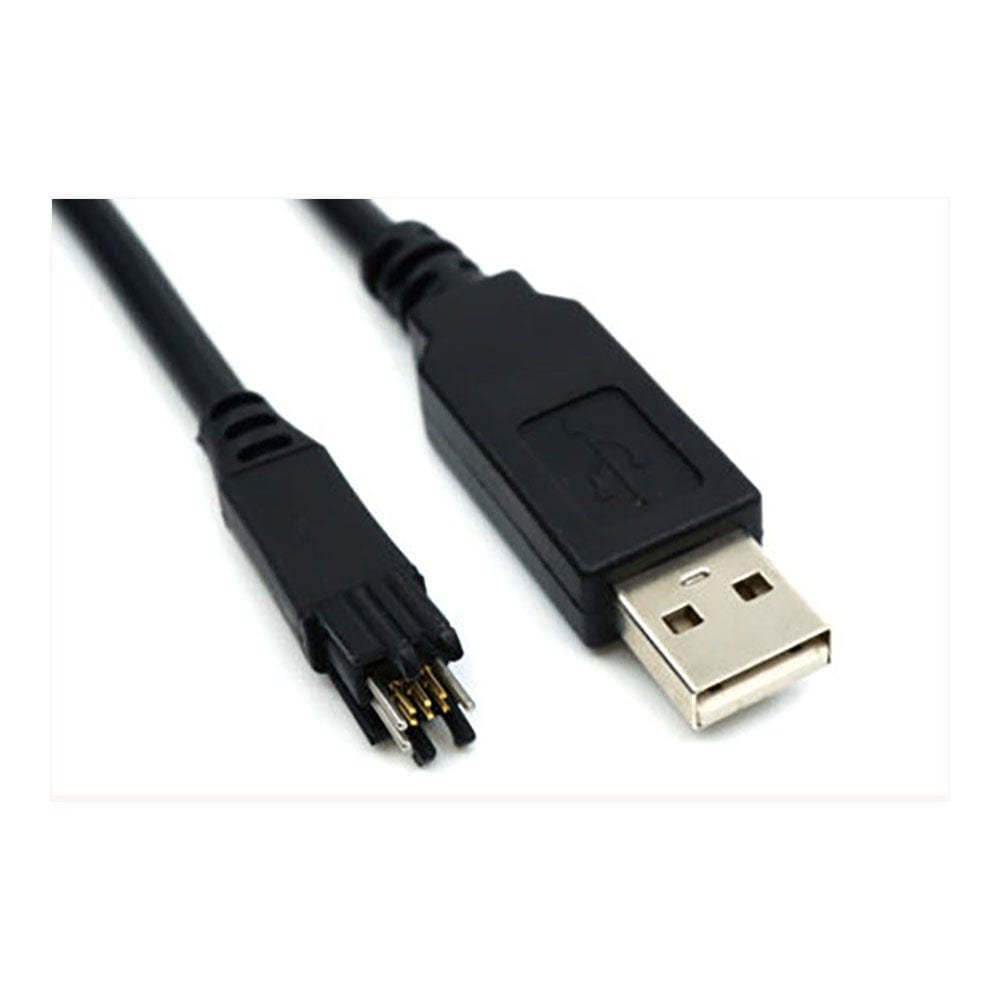
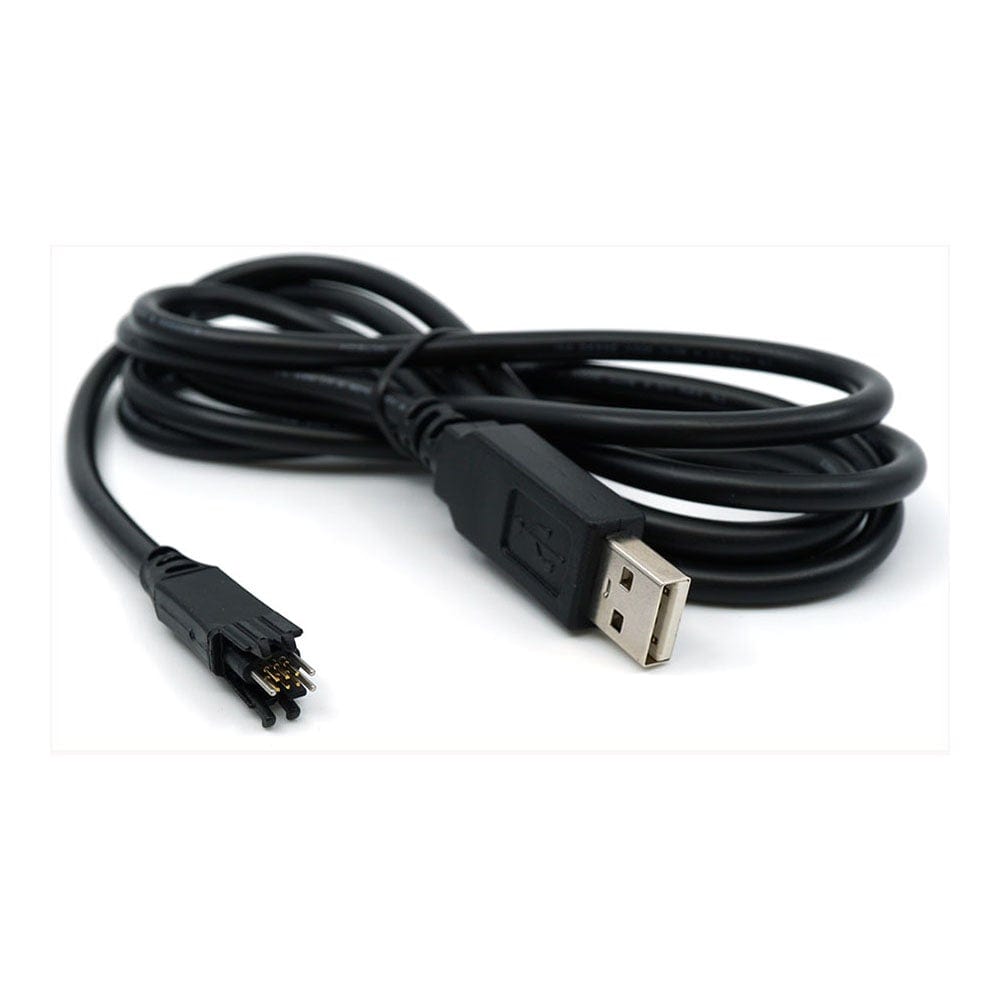
Tag-Connect TC2030-FTDI-C232HD-EDHSP-0 Hi-Speed-USB-Seriell-Kabel, 5-V-Versorgung (mit oder ohne Rastbeine)
Tag-Connect TC2030-FTDI-C232HD-EDHSP-0 Hi-Speed-USB-Seriell-Kabel, 5-V-Versorgung (mit oder ohne Rastbeine)
SKU: TC2030-FTDI-C232HD-EDHSP-0
€116,95 EUR exc tax
Check and Add to Cart
Confirm the price and stock for your selection, set the quantity, then press Add to Cart.
Zahlungsmethoden
- Banküberweisung
Verfügbarkeit für Abholungen konnte nicht geladen werden
Key Features
Overview
The TC2030-FTDI-C232HD-EDHSP-0 is FTDI's C232HD-EDHSP-0 Hi-Speed USB to UART cable with a 6-pin TC2030 Plug-of-Nails head. Its FT232H converter runs the UART at up to 12 Mbaud with 3.3 V signals, and pin 1 (VCC) is a 5 V output from the USB port that can supply up to 450 mA. It suits a serial console, a UART bootloader download or fast logging on a board that takes a 5 V supply and uses 3.3 V logic, with no header fitted.
Choose Legged or No Legs in the options above.
The Legged version clips into leg latch holes in the board and stays put while you work. The No Legs version fits a smaller footprint and suits production programming, test fixtures and bench work with a TC2030-CLIP.
Why Engineers Choose the Tag-Connect TC2030-FTDI-C232HD-EDHSP-0 Hi-Speed-USB-Seriell-Kabel, 5-V-Versorgung (mit oder ohne Rastbeine)
12 Mbaud UART
5 V at 450 mA
Legged or No Legs
3,3-V-UART mit 12 MBaud und 5-V-Versorgung an Pin 1, ohne Stiftleiste
Das TC2030-FTDI-C232HD-EDHSP-0 ist das Hi-Speed-USB-auf-UART-Kabel C232HD-EDHSP-0 von FTDI mit einem 6-poligen TC2030-Plug-of-Nails-Kopf. Sein FT232H-Wandler betreibt den UART mit bis zu 12 MBaud und 3,3-V-Signalen, und Pin 1 (VCC) ist ein 5-V-Ausgang vom USB-Port, der bis zu 450 mA liefert. Es eignet sich für eine serielle Konsole, einen Download über den UART-Bootloader oder schnelles Logging auf einer Leiterplatte mit 5-V-Versorgung und 3,3-V-Logik, ohne Stiftleiste. Die Version ohne Rastbeine ist das TC2030-NL-FTDI-C232HD-EDHSP-0.
Optionen
| Option | Auswahl | Details |
|---|---|---|
| Kopf | Mit Rastbeinen | Rastbeine rasten in Bohrungen der Leiterplatte ein, sodass sich das Kabel selbst hält (TC2030-FTDI-C232HD-EDHSP-0) |
| Kopf | Ohne Rastbeine | Keine Bohrungen für Rastbeine, daher kleinerer Footprint; von Hand halten, mit einem TC2030-CLIP oder in einem Prüfadapter mit einer TC-MOUNT-6-Halterung (TC2030-NL-FTDI-C232HD-EDHSP-0) |
Technische Daten
| Parameter | Wert |
|---|---|
| FTDI-Kabel | C232HD-EDHSP-0, mit FT232H-Wandler im USB-Stecker |
| UART-Signalpegel | 3,3 V (High-Pegel am Ausgang mindestens 2,4 V, typisch 3,14 V; Low-Pegel höchstens 0,4 V) |
| Eingangsschaltschwellen | Low bei 0,8 V oder darunter, High bei 2,0 V oder darüber. Die Signal-Pins sind 5-V-tolerant. |
| VCC an Pin 1 | 5-V-Ausgang, vom USB-Port durchgeschaltet (4,75 V bis 5,25 V), maximal 450 mA. Im USB-Suspend muss die Last unter 2,5 mA sinken. |
| UART-Datenrate | Bis zu 12 MBaud |
| Handshake | RTS und CTS in Hardware oder X-On/X-Off in Software |
| Datenformat | 7 oder 8 Datenbits, 1 oder 2 Stoppbits; ungerade, gerade, Mark-, Space- oder keine Parität |
| USB | USB 2.0 Hi-Speed (480 Mbit/s), Full-Speed-kompatibel; Typ-A-Stecker, busversorgt. Das Kabel fordert vom PC bis zu 500 mA an; das deckt die eigene Elektronik und den Ausgang an Pin 1. |
| Anzeigen | LEDs für Senden und Empfangen |
| Betriebstemperatur (FTDI-Kabel) | -40 °C bis +85 °C |
| Kabellänge | 1,8 m nominal |
| Treiber | FTDI-VCP-Treiber (virtueller COM-Port) für Windows, Mac OS X und Linux sowie D2XX-Treiber für Windows und Linux, kostenlos herunterladbar |
| Lieferumfang | Nur das Kabel. Kein Halteclip und keine Halterung enthalten. Die FTDI-Treiber sind kostenlos herunterladbar. |
Pinbelegung
| TC2030-Pin | FTDI-Signal (Aderfarbe) | Richtung | Funktion |
|---|---|---|---|
| 1 | VCC (rot) | Ausgang | 5 V vom USB-Port, maximal 450 mA |
| 2 | CTS / TMS (braun) | Eingang | Handshake „Clear to Send“ |
| 3 | RXD / TDI (gelb) | Eingang | Empfangsdaten, vom TX Ihrer Leiterplatte |
| 4 | TXD / TCLK (orange) | Ausgang | Sendedaten, zum RX Ihrer Leiterplatte |
| 5 | GND (schwarz) | Masse | Masse |
| 6 | RTS / TDO (grün) | Ausgang | Handshake „Request to Send“ |
Spannung Ihrer Leiterplatte prüfen: Pin 1 (VCC) ist ein 5-V-Ausgang vom USB-Port, die UART-Signale haben aber 3,3 V. Verbinden Sie Pin 1 nicht mit einer 3,3-V-Schiene. Läuft Ihre Leiterplatte mit 3,3 V, lassen Sie das VCC-Pad unbeschaltet oder wählen Sie das TC2030-FTDI-C232HD-DDHSP-0, das an Pin 1 3,3 V liefert. Die Ausgänge des Kabels (TXD und RTS) treiben etwa 3,3 V, eine Leiterplatte mit 5-V-Logik muss 3,3 V also als High-Pegel erkennen. Laut FTDI-Datenblatt sind die Signal-Pins 5-V-tolerant, die Eingänge (RXD und CTS) vertragen also 5-V-Signale. Für 5-V-Signalpegel wählen Sie das TC2030-FTDI-TTL-234X-5V (bis zu 3 MBaud). Für 1,8-V-Logik wählen Sie die 1,8-V-Version des TC2030-FTDI-TTL-232RG.
Die Leitungen CTS, RXD, TXD und RTS tragen auch die Namen TMS, TDI, TCLK und TDO aus der Pin-Tabelle von Tag-Connect für dieses Kabel.
Die übrigen vier Leitungen des FTDI-Kabels (DTR, DSR, DCD und RI) sind nicht mit dem TC2030-Kopf verbunden. Braucht Ihre Leiterplatte DTR an Pin 2 statt CTS, siehe das TC2030-FTDI-C232HD-DTR, das es auch mit diesem Kabel mit 5-V-Versorgung gibt.
PCB-Footprint: der 6-polige Standard-Footprint TC2030. Tag-Connect veröffentlicht getrennte Footprints mit und ohne Rastbeine; der Footprint ohne Rastbeine hat keine Bohrungen für die Rastbeine und braucht weniger Platz. Halten Sie die Kontaktpads frei von Lotpaste und die Sperrfläche frei von Leiterbahnen und Vias.
Federkontakte
In den Dauertests von Tag-Connect halten die Federkontakte weit über 100.000 Steckzyklen.
Für wen
Ingenieure, die eine serielle Verbindung mit 12 MBaud zu einer Leiterplatte mit 5-V-Eingang und 3,3-V-Logik brauchen, mit sechs Pads auf der Leiterplatte statt einer UART-Stiftleiste.
| Ziel | Aufgabe | Anschluss |
|---|---|---|
| MCU, FPGA oder Modul mit 3,3-V-UART | Serielle Konsole, Log-Ausgabe und Kommandozeile | TX, RX und GND, dazu RTS und CTS, wenn Ihre Firmware Hardware-Flusskontrolle nutzt |
| MCU mit UART-Bootloader | Firmware-Download über den seriellen Bootloader | Der PC sieht einen virtuellen COM-Port, sodass das Bootloader-Tool des Herstellers oder ein Terminalprogramm direkt damit arbeitet |
| Leiterplatte mit schnellem UART und 5-V-Eingang | Logging mit hoher Rate, Leiterplatte über das Kabel versorgt | UART bis 12 MBaud; 5 V mit bis zu 450 mA an Pin 1 |
Die FTDI-Kabel im Vergleich
Tag-Connect setzt denselben TC2030-Kopf auf mehrere FTDI-Kabel. Sie unterscheiden sich im Signalpegel, in der Funktion von Pin 1 und in der Datenrate:
| Kabel | FTDI-Kabel | VCC an Pin 1 | UART-Signalpegel | Datenrate | Pin 2 |
|---|---|---|---|---|---|
| TC2030-FTDI-TTL-232R-3V3 | TTL-232R-3V3 | 5-V-Ausgang, 75 mA | 3,3 V | 3 MBaud | CTS |
| TC2030-FTDI-TTL-232R-5V | TTL-232R-5V | 5-V-Ausgang, 75 mA | 5 V | 3 MBaud | CTS |
| TC2030-FTDI-TTL-234X-3V3 | TTL-234X-3V3 | 5-V-Ausgang, 450 mA | 3,3 V | 3 MBaud | CTS |
| TC2030-FTDI-TTL-234X-5V | TTL-234X-5V | 5-V-Ausgang, 450 mA | 5 V | 3 MBaud | CTS |
| TC2030-FTDI-TTL-232RG-VIP | TTL-232RG-VIP | Eingang: Ihre Leiterplatte liefert 1,8 V bis 5,25 V | Folgt dem VCC Ihrer Leiterplatte | 3 MBaud | CTS |
| TC2030-FTDI-TTL-232RG (VREG und VSW) | TTL-232RG-VREG1V8, VREG3V3, VSW3V3, VSW5V | 1,8 V mit 100 mA (VREG1V8), 3,3 V mit 250 mA (VREG3V3), 3,3 V mit 50 mA (VSW3V3) oder 5 V mit 450 mA (VSW5V) | 1,8 V, 3,3 V oder 5 V, je nach Version | 3 MBaud | CTS |
| TC2030-FTDI-C232HD-DDHSP-0 | C232HD-DDHSP-0 (FT232H) | 3,3-V-Ausgang, 250 mA | 3,3 V | 12 MBaud | CTS |
| TC2030-FTDI-C232HD-EDHSP-0 (dieses Kabel) | C232HD-EDHSP-0 (FT232H) | 5-V-Ausgang, 450 mA | 3,3 V | 12 MBaud | CTS |
| TC2030-FTDI-C232HD-DTR | C232HD-DDHSP-0 oder EDHSP-0 (FT232H) | 3,3 V mit 250 mA oder 5 V mit 450 mA | 3,3 V | 12 MBaud | DTR |
Für UART bis 12 MBaud ohne separates Wandlerkabel siehe den TC2030-CIC-FT232H Chip-in-Connector, der den FT232H im Steckerkopf trägt.
Die Versionen im Vergleich
| Teilenummer | Kopf | Am besten für |
|---|---|---|
| TC2030-FTDI-C232HD-EDHSP-0 | Mit Rastbeinen | Entwicklung und Debugging: rastet ein und bleibt freihändig verbunden |
| TC2030-NL-FTDI-C232HD-EDHSP-0 | Ohne Rastbeine | Programmierung in der Fertigung und Prüfadapter oder Arbeiten am Platz mit einem TC2030-CLIP; kleinerer Footprint |
Beide Versionen nutzen dasselbe FTDI-Kabel und dieselbe Pinbelegung; nur der Kopf unterscheidet sich.
Sie brauchen eine andere Schnittstelle? Siehe alle FTDI-Kabel von Tag-Connect oder unser vollständiges Tag-Connect-Kabelsortiment.
| Ordering information | |
|---|---|
| Part number (SKU) | TC2030-FTDI-C232HD-EDHSP-0 |
| Manufacturer | Tag-Connect, LLC |
| EAN | 5055383622658 |
| Warranty | 6 Monate |
- 1 ×Tag-Connect TC2030-FTDI-C232HD-EDHSP-0 cable, in the version you select (Legged or No Legs)
Cable only. No retaining clip or fixture is included. FTDI's drivers are a free download.
Questions and Answers
-
What Is the Tag-Connect TC2030-FTDI-C232HD-EDHSP-0 Used For?
It gives a PC a 3.3 V UART link at up to 12 Mbaud to a board through six pads in the TC2030 footprint, with no header fitted, and it can power the board with 5 V from the USB port on pin 1. Typical jobs are a serial console, a firmware download over a UART bootloader, and fast logging or data transfer that a 3 Mbaud cable cannot keep up with.
-
Are the UART Signals 5 V?
No. The UART signals are 3.3 V; only the supply on pin 1 is 5 V. The cable's outputs (TXD and RTS) drive to about 3.3 V, so a board with 5 V logic must read 3.3 V as a logic high. FTDI's datasheet says the signal pins are 5 V tolerant, so the inputs (RXD and CTS) accept 5 V signals. For 5 V signal levels, choose the TC2030-FTDI-TTL-234X-5V, which runs at up to 3 Mbaud.
-
Can I Power My Board From the Cable?
Yes, if your board takes a 5 V supply. Pin 1 (VCC) is a 5 V output switched through from the USB port, so it follows the port's voltage: FTDI's datasheet gives 4.75 V to 5.25 V and a 450 mA maximum. Use a USB port that can supply 500 mA, such as a PC port or a powered hub, because that figure covers the cable's own electronics as well as your board. The datasheet limits the current to under 2.5 mA while the PC has the USB port suspended, so do not rely on pin 1 to keep a board running when the PC sleeps. If your board has its own supply, leave the VCC pad unconnected.
-
Can I Use It with a 3.3 V Board?
Yes for the signals, but do not connect pin 1. The UART signals are 3.3 V, so they suit a 3.3 V board directly. Pin 1 (VCC) is a 5 V output and must not reach a 3.3 V rail, so leave the VCC pad unconnected and power the board from its own supply. If you want the cable to supply 3.3 V, choose the TC2030-FTDI-C232HD-DDHSP-0.
-
How Does It Differ From the TC2030-FTDI-C232HD-DDHSP-0?
The difference is the supply on pin 1. This cable gives 5 V at up to 450 mA, taken from the USB port; the TC2030-FTDI-C232HD-DDHSP-0 gives 3.3 V at up to 250 mA from its own regulator. Both have 3.3 V UART signals, the same pinout and the same 12 Mbaud top rate. Choose this one when your board needs a 5 V supply from the cable.
-
How Does It Differ From the DTR Version?
On this cable, TC2030 pin 2 carries CTS, so RTS and CTS give hardware flow control. On the TC2030-FTDI-C232HD-DTR, pin 2 carries DTR instead, which some serial bootloaders use to reset the board or start a download. The DTR version is available with this 5 V supply cable. Choose it only if your board's design puts DTR on that pad.


No questions match your search.
