
PECI, SVID and SVI CPU Interfaces
Modern processors talk to their own platform over small sideband buses. PECI (Platform Environment Control Interface) lets a BMC or embedded controller read Intel processor temperatures and settings over one wire. SVID on Intel, and SVI2 and SVI3 on AMD, let the processor tell its core voltage regulator what voltage to deliver, many times a second. When a board fails to power up, throttles or crashes under load, decoding these buses shows whether the processor asked for the right voltage and what temperature it reported.
PECI
PECI is a single-wire bus between Intel processors and a management controller. It is self-clocked: each bit starts with a rising edge, and the width of the high time says whether it is a 0 or a 1, so the bit rate can range widely and the receiver adapts. Signalling is at the processor's low I/O voltage, around 1 V, not 3.3 V. Each processor socket has an address from 30h upwards. Commands include Ping, GetDIB (device information), GetTemp and package configuration reads and writes, and each message ends with a frame check sequence. GetTemp returns the temperature as a negative offset from the processor's throttle point, not in degrees, which surprises engineers reading it for the first time. On recent platforms PECI messages can also travel over eSPI instead of the dedicated wire.
SVID, SVI2 and SVI3
A processor's core voltage is not fixed. As load, frequency and temperature change, the processor sends new voltage identification (VID) codes to its voltage regulator, which adjusts within microseconds. Intel's SVID uses three wires: a clock (VCLK), a bidirectional data line (VDIO) and an alert line (ALERT#) the regulator uses to tell the processor its status has changed, for example that a voltage change has completed or a thermal or current limit has been reached. AMD's SVI2 and its successor SVI3 do the same job with a clock, data and a telemetry line that reports voltage and current back to the processor.
The full specifications are only available from Intel and AMD under non-disclosure agreements, so decoders for these buses usually come from tool vendors who have that access. Ask us before you buy if you need a specific platform generation.
Where These Buses Matter
- Server and workstation bring-up: confirming the regulator follows every VID change at power-on and under load.
- Voltage regulator design: regulator vendors and board designers validating SVID or SVI response, alerts and telemetry.
- Thermal management: BMC firmware reading PECI to drive fans and log temperatures.
- Failure analysis: boards that reset under load, where the capture shows whether the processor requested a voltage the regulator did not deliver.
Common Faults and How to Find Them
| Symptom | Likely Cause | What to Check |
|---|---|---|
| Board will not power up past the regulator stage | Regulator not answering the processor's first SVID or SVI commands | Capture the clock and data from power-good onwards and look for the first commands and responses |
| Crash or reset under heavy load | Regulator slow to follow a VID increase, or reporting a fault on ALERT# | Decode VID changes alongside the core voltage on an analogue channel |
| Fan control wrong or erratic | BMC misreading PECI temperature as absolute degrees | Decode GetTemp responses and compare with the processor's throttle temperature |
| PECI commands time out | Wrong socket address, or signalling level outside the receiver's range | Measure the PECI voltage levels and decode the address byte |
Tools for Analysing PECI, SVID and SVI
Watch tools capture these buses alongside power-good, reset and analogue rail voltages. Use short ground leads and set thresholds for the low signalling voltage, around 1 V for PECI.
| Product | Role | Capability | Price ex VAT |
|---|---|---|---|
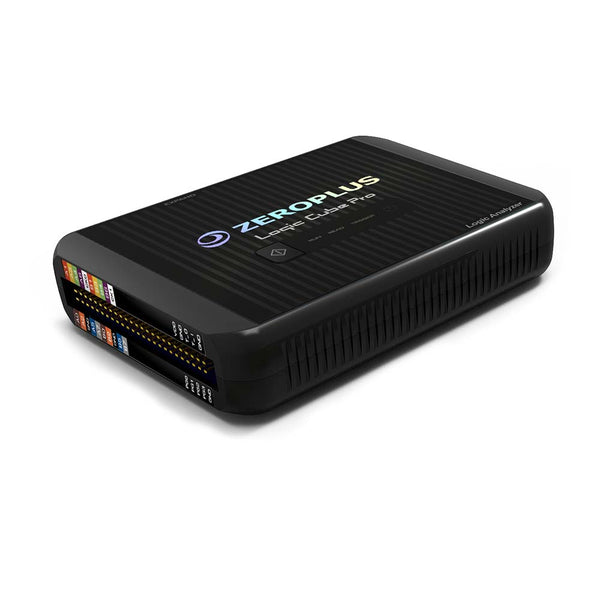
| ZeroPlus LAP-C Pro Series | Watch | Logic analyser with PECI, SVID and AMD SVI2 protocol analysis | €1.157,95 |
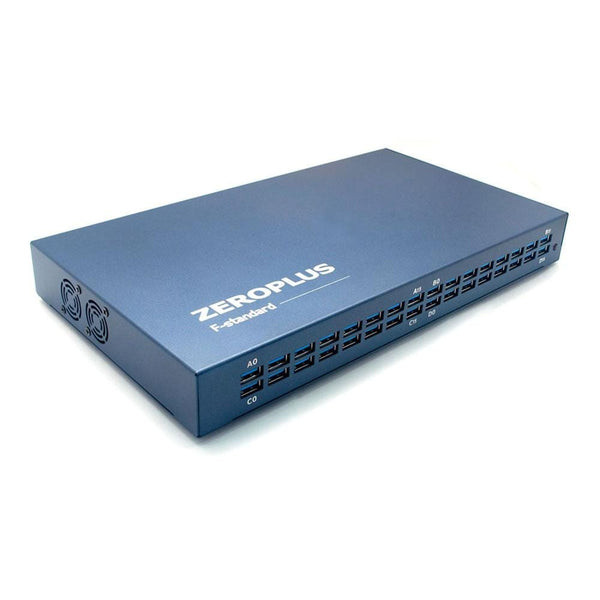
| ZeroPlus LAP-F 40/64-Channel | Watch | 40 or 64 channels with PECI, SVID and AMD SVI2 analysis, room for power sequencing signals; ask us about AMD SVI3, which ZeroPlus supplies only to AMD NDA holders | €1.689,95 |
| Acute TravelLogic 34-Channel | Watch | Logic analyser running Acute's decoder library, which includes PECI; SVID, SVI2 and SVI3 decoders are supplied on request from Acute, and SVID only to customers with an Intel CNDA | €1.453,95 |
| Acute MSO2008E | Watch | Mixed-signal oscilloscope for seeing the core rail and the control bus together; runs Acute's decoders | £1,132.00 |
The regulator's own management interface is usually PMBus: see our SMBus and PMBus guide. Tell us your platform generation and we will confirm decoder support.
Frequently Asked Questions
What Does PECI Stand For?
Platform Environment Control Interface. It is Intel's one-wire bus for a management controller to read processor temperature and other information, and to write some settings, without going through the operating system.
Why Is PECI Temperature Negative?
GetTemp returns how far the processor is below the temperature at which its thermal control circuit starts throttling (TCC activation), as a negative number. Fan control software uses that margin directly. To get degrees, add the processor's throttle temperature, which can be read over PECI too.
Is SVID the Same as PMBus?
No. SVID is a fast, dedicated link from the processor to its voltage regulator for setting the core voltage. PMBus is a general management bus, usually from a BMC, for configuring and monitoring regulators. Many regulators have both.
Can I Get the SVID or SVI Specification?
Only from Intel or AMD, under a non-disclosure agreement as a platform or regulator developer. Tool vendors with access provide decoders, but some release them only to customers who can show their own NDA with Intel or AMD, so ask us before you buy.
What Is the Difference Between SVI2 and SVI3?
Both are AMD serial voltage interfaces between processor and regulator. SVI3 is the newer generation for recent AMD platforms and supports more voltage rails. Check which one your platform uses before choosing a decoder.
Where to Start with PECI, SVID and SVI2/SVI3

More Protocols
By John Legg CEng, Director, Debug Store. Updated 12 November 2026.
