

OMICRON-Lab
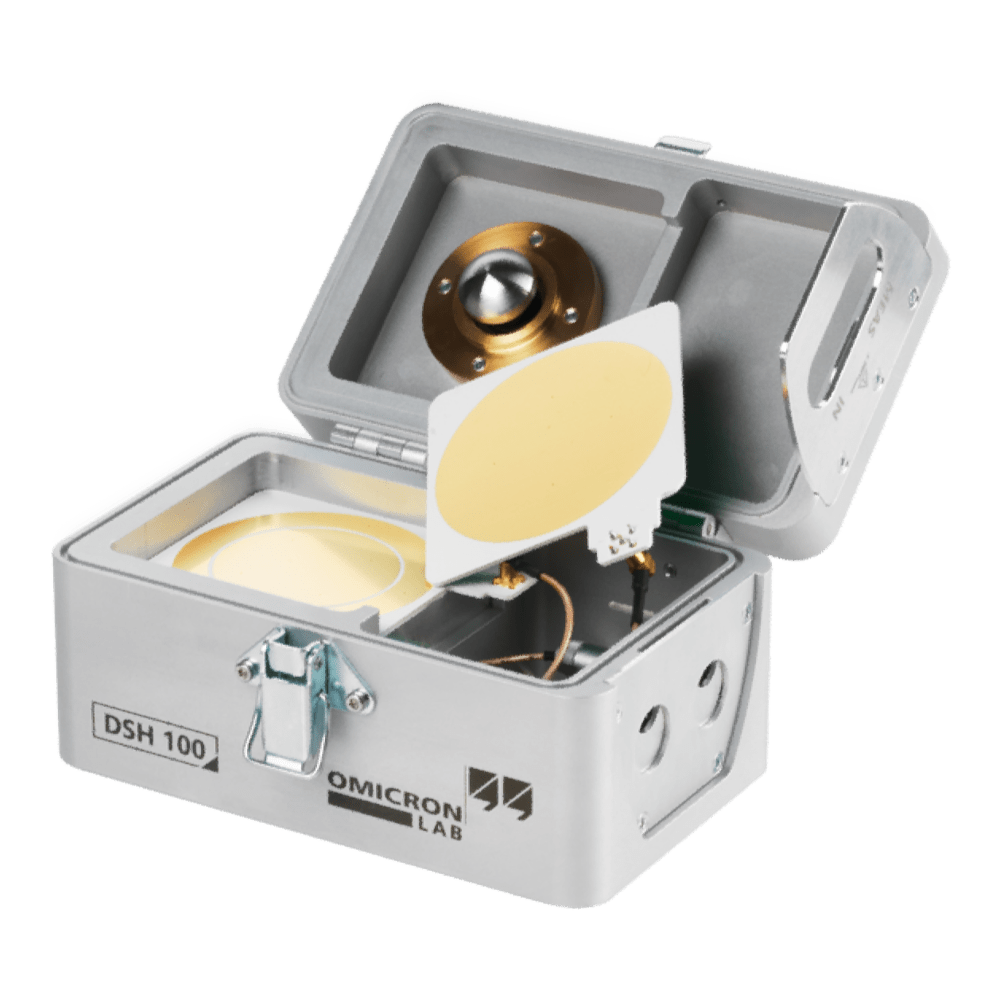
OMICRON-Lab DSH 100 Dielectric Sample Holder
OMICRON-Lab DSH 100 Dielectric Sample Holder
SKU: P0005783
Couldn't load pickup availability
Key Features
Overview
The OMICRON-Lab DSH 100 Dielectric Sample Holder represents cutting-edge technology for comprehensive material characterisation across multiple engineering disciplines. This precision instrument enables accurate analysis of solid dielectric materials including nano-composites, polymers, epoxy resins, insulation papers, glasses, and thin films.
Professional Engineering Solution
Engineered with professional research requirements in mind, the DSH 100 delivers exceptional performance through its innovative parallel plate electrode configuration with integrated guard ring. The system supports measurements across an impressive frequency range of 5 µHz to 5 MHz, accommodating sample thicknesses from 0.1 mm to 20 mm whilst maintaining measurement accuracy to international standards, including ASTM D150 and IEC 62631-2-1.
Versatile Integration Capability
Designed for maximum versatility, the DSH 100 integrates seamlessly with impedance analysers, LCR metres, and the renowned Bode 100 instrument. Its compact design features full metal shielding for measurement precision, coupled with a robust safety interlock mechanism ensuring operational security. The exchangeable electrode design enables analysis of curing processes in materials such as epoxy systems, making it invaluable for advanced materials research.
With its comprehensive temperature range capability (-55°C to +125°C) and professional-grade construction, the DSH 100 provides engineers with reliable, repeatable measurements essential for materials development, quality control, and research applications.
Downloads
Why Engineers Choose The OMICRON-Lab DSH 100 Dielectric Sample Holder
Precision Material Characterisation
Standards Compliance Assurance
Versatile Integration Capability
Questions and Answers
-
How Does the Guard Ring Electrode Configuration Improve Measurement Accuracy?
The integrated guard ring reduces fringing field effects, and stray capacitance is corrected with an air-reference measurement using the supplied spacers. This matters most for low-loss materials and precise permittivity measurements.
-
What Temperature Range Is Supported for Material Testing Applications?
The DSH 100 operates from -55°C to +125°C, so you can characterise materials across a wide temperature range, from low to elevated temperatures.
-
What Frequency and Voltage Range Does the DSH 100 Cover?
The DSH 100 covers 5 µHz to 5 MHz and has a maximum operating voltage of 200 V peak.
-
What Safety Features Are Incorporated in the DSH 100 Design?
The DSH 100 includes:
- a mandatory safety interlock that prevents operation with the housing open
- full metal shielding
- construction designed for operator safety during high-voltage measurements
-
Can the DSH 100 Monitor Epoxy Curing Processes in Real-time?
Yes. The exchangeable electrodes and wide frequency range let the DSH 100 track changes in dielectric properties as epoxy cures from liquid to solid.
-
Which International Standards Does the DSH 100 Comply with for Dielectric Testing?
The DSH 100 supports measurements in accordance with ASTM D150, IEC 62631-2-1 (2018) and IEC 62631-3-1 (2016).
-
What Types of Materials Can the DSH 100 Analyse Effectively?
The DSH 100 is designed for solid dielectric materials used in electronic and electrical applications, including:
- nano-composites
- polymers
- epoxy resins
- insulation papers
- glasses
- thin films
-
What Frequency Range Does the DSH 100 Support for Dielectric Measurements?
The DSH 100 covers 5 µHz to 5 MHz, so you can analyse different polarisation mechanisms and dielectric effects across many frequency decades.
-
Can the DSH 100 Be Used with Different Impedance Analysers Besides the SPECTANO 100?
Yes. Besides the SPECTANO 100, the DSH 100 works with other impedance analysers, LCR meters and the Bode 100 via its LEMO triaxial connectors (an optional triaxial-to-BNC adapter cable is available for the Bode 100 and BNC-equipped LCR meters). The analyser's source must be galvanically isolated.
-
What Sample Sizes and Thicknesses Can the DSH 100 Accommodate?
The DSH 100 takes samples from 50mm x 50mm to 70mm x 70mm, with thickness from 0.1mm to 20mm.

No questions match your search.