
AltoNovus
AltoNovus ΩhmRanger-LCV (TT-OR-01) Low-Compliance Voltage Ohmmeter
AltoNovus ΩhmRanger-LCV (TT-OR-01) Low-Compliance Voltage Ohmmeter
SKU: TT-OR-01
Couldn't load pickup availability
Key Features
Overview
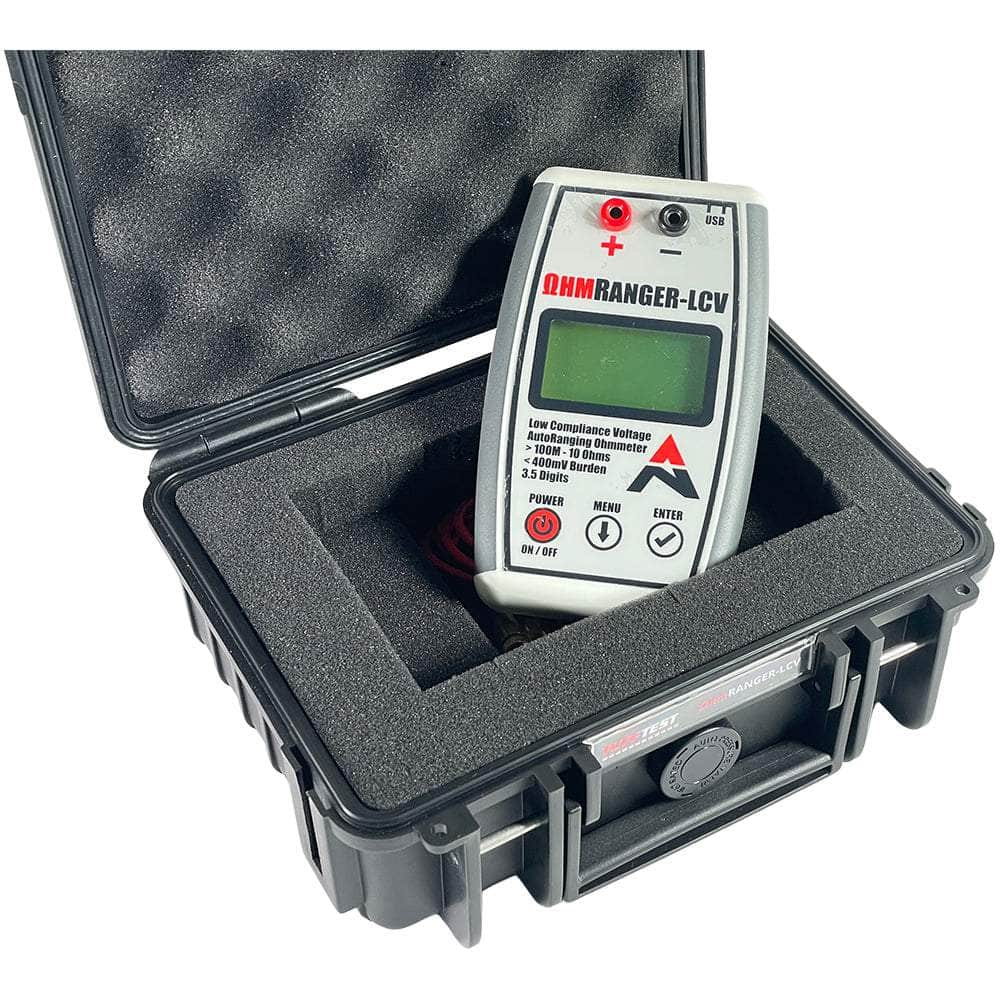
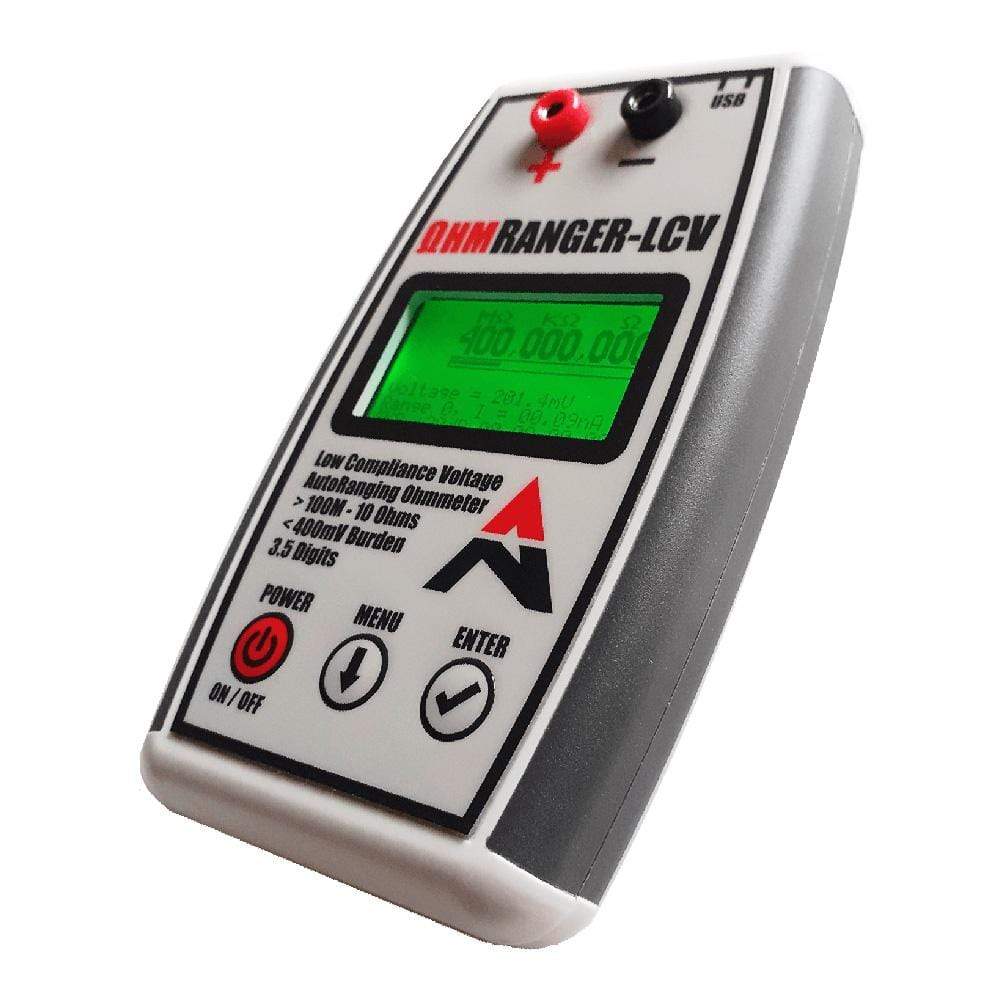
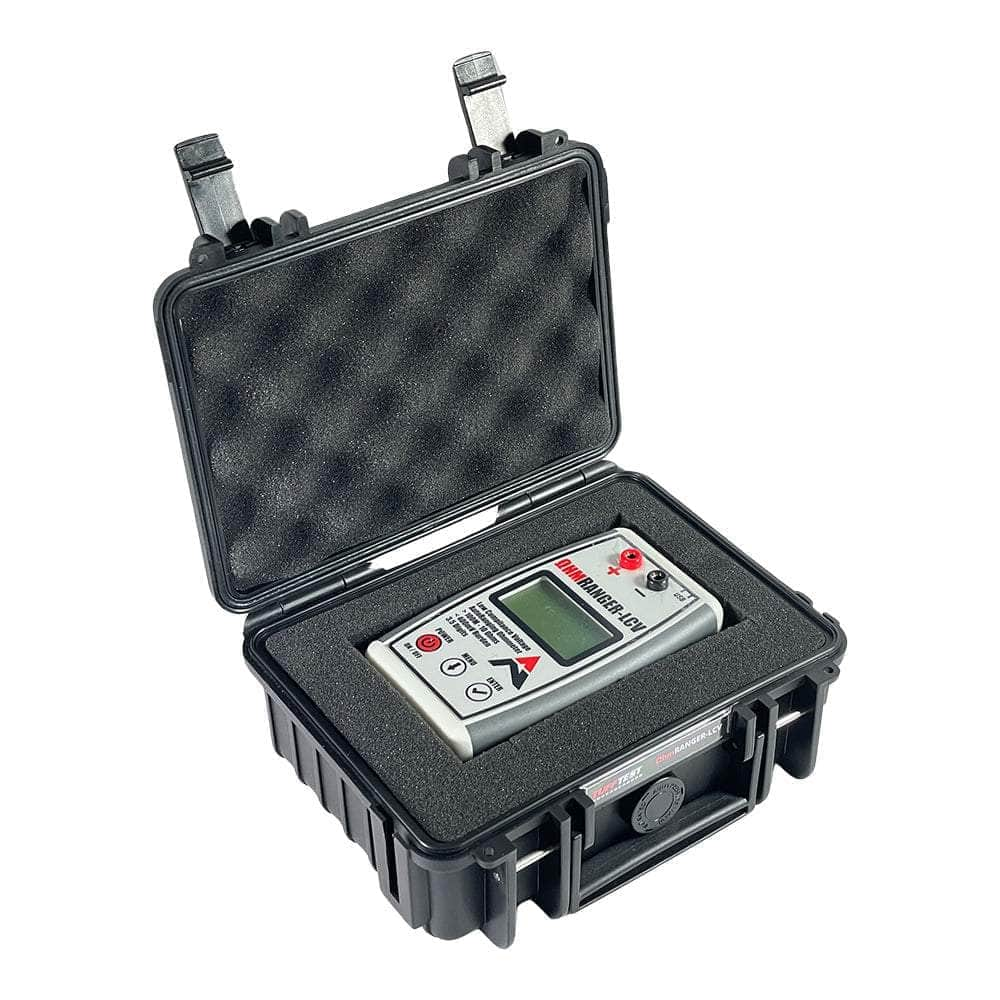
The AltoNovus ΩhmRanger-LCV (OR-01) is a handheld, low-compliance-voltage ohmmeter designed to measure resistance safely on sensitive devices such as Josephson junctions, nanowires and MEMS. It applies a selectable maximum stimulus of approx. 206 mV or 380 mV and limits current to ~30 mA to avoid forward-biasing or damaging delicate structures. Readings span 10 Ω to >100 MΩ.
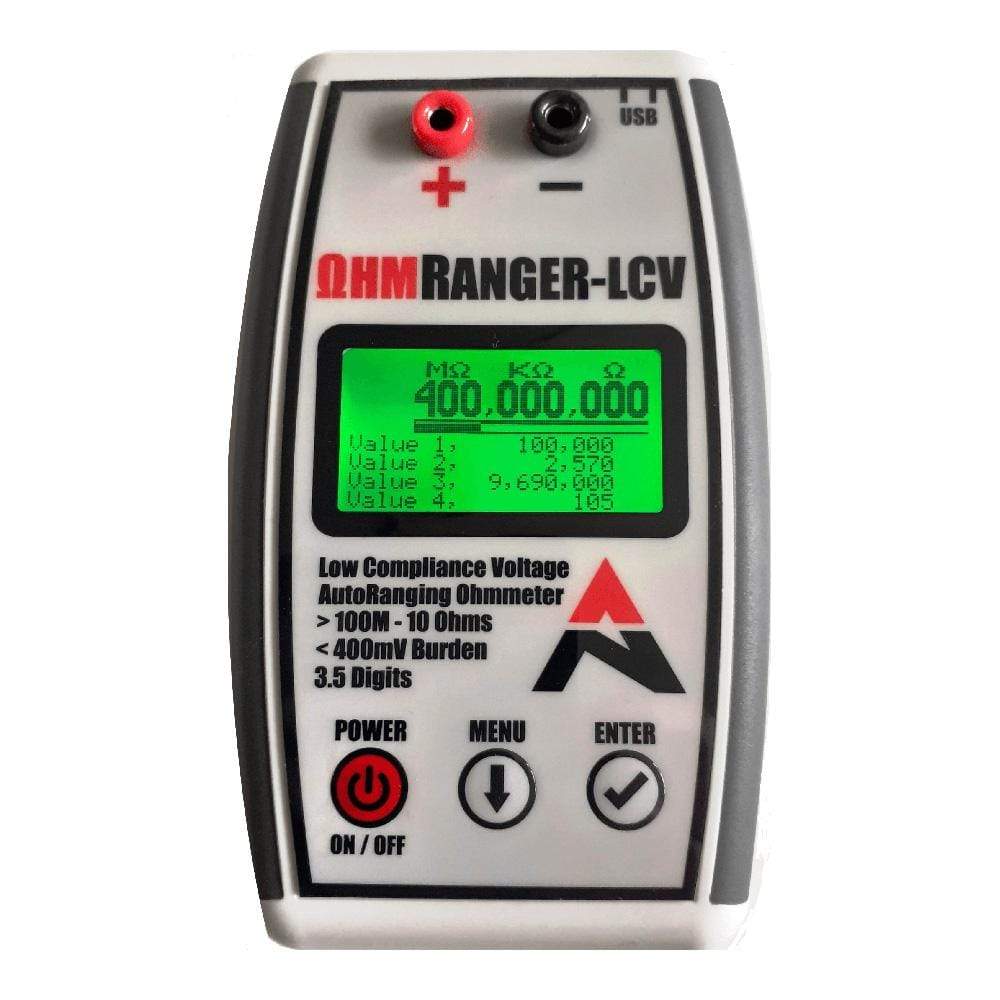
A backlit 128×64 display shows resistance, applied voltage and measured current, plus a Signal-to-Noise Ratio (SNR) indicator with min/max current samples. Readings update about every 400 ms and are built from 160 averaged samples to reduce 50/60 Hz hum. A fully isolated micro-USB port supports SCPI control and data export. Power is via two AA cells for around 150 hours, with auto power-off and adjustable backlight to extend battery life.
Why consider ΩhmRanger-LCV?
Where conventional DMMs may apply 3–10 V across a DUT, ΩhmRanger-LCV’s low-stimulus approach helps protect fragile junctions and cryogenic devices while providing practical, portable measurements. It is a focused alternative to using a benchtop SMU when you need quick, safe resistance checks without complex setup.
Related Products
- Resistance Meter Catalogue
- AltoNovus NanoRanger™ NR-01 Nanoammeter (companion DC current instrument)
- AltoNovus brand overview
Downloads
Why Engineers Choose The AltoNovus ΩhmRanger-LCV (TT-OR-01) Low-Compliance Voltage Ohmmeter
Protect Delicate Junctions
Automate & Log Safely
Faster Stable Readings
Features*
Low stimulus voltages, selectable between approx 380mV or approx 205mV.
- Stimulus voltage at the output terminal is limited by the maximum current supply of approx 20mA.
- Accurate readings from >100M to 10 Ohms.
- A 128 x 64 LCD display gives a wealth of information about your Resistance readings.
- A large display shows MΩ, KΩ, and Ω, all on one line.
- Readings every 400mS, built up from 160 samples and averaged to tune out mains noise (both 50 Hz and 60 Hz).
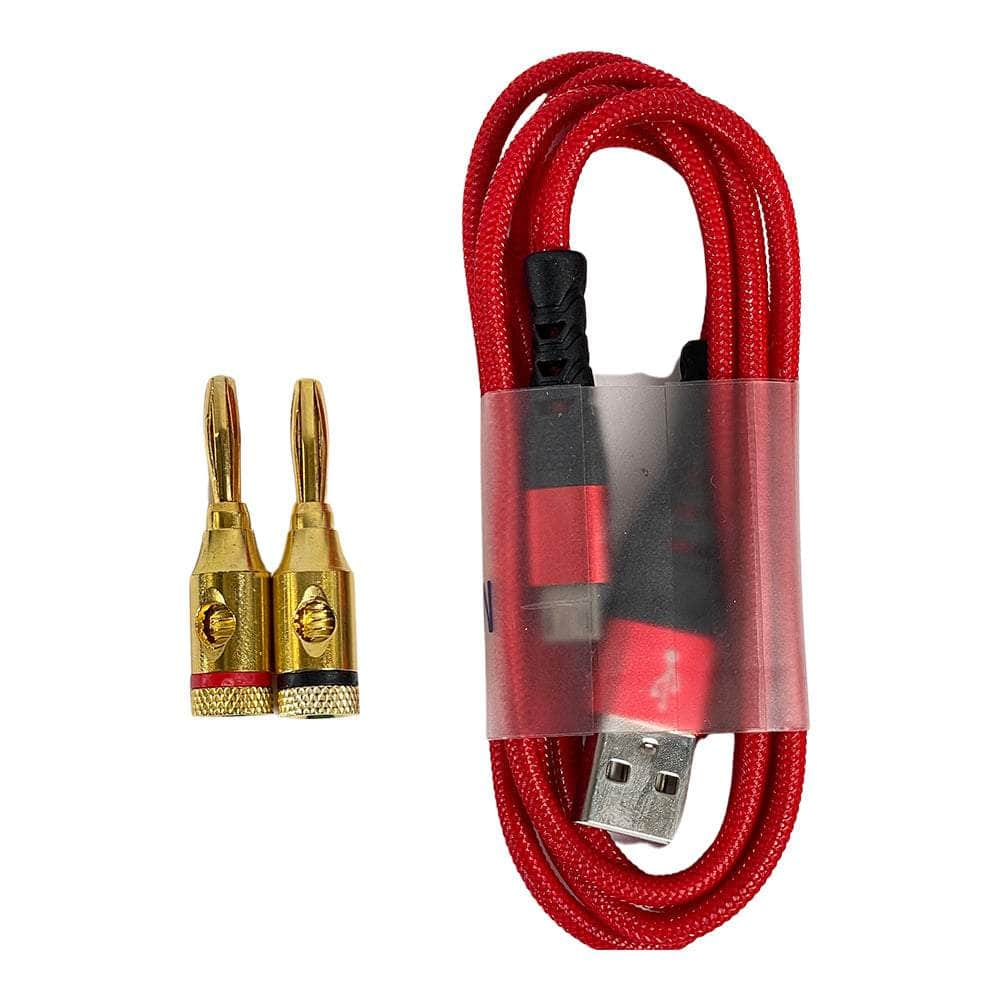
- Fully isolated USB Interface for device control and readings export.
- SNR display indicates noise level on signal.
- On-screen confirmation of stimulus voltage.
- Range Bar movement after every reading shows that ΩhmRanger-LCV™ is operating correctly.
- Range Coverage Bar shows the ranges covered during the measurement.
- User-configurable Auto Power-off timer.
- ΩhmRanger-LCV™ is highly portable with dimensions of 148 x 90 x 30mm.
- 2 x AA batteries should give around 150 hours of operation.
* Features may be subject to change.
A Real Customer Need - Met
The Josephson Junction is the Quantum Computer's equivalent of a 'transistor'. Although it is delicate, the ΩhmRanger-LCV™ can measure its resistance without risking its integrity.
D-Wave Systems, the Quantum Computing systems and services company, needs to measure the resistance of their Josephson Junctions. Working closely, a prototype Low Compliance Voltage Ohmmeter was quickly developed and the design was subsequently refined through testing and practical lab use. The result is the ΩhmRanger-LCV™, the low compliance voltage ohmmeter, scheduled for general release in October 2021.
On completion of test and evaluation, D-Wave commented;
"The AltoNovus ΩhmRanger-LCV turned an error-prone measurement into a simple measurement ..... a valuable addition to our work building quantum computers."
"The fundamental element in D-Wave's unique product is a Josephson Junction - this is the "transistor" in a quantum computer. In practice, these devices are extremely sensitive and easy to damage. Measuring the resistance with a standard multimeter will destroy the Josephson Junction.
The AltoNovus ΩhmRangerLCV turned an error-prone measurement into a simple measurement. The low compliance voltage ensures that the device under test never sees a stimulus above 400mV. The ΩhmRanger-LCV measures a wide resistance range, and the upper end of the range (400MOhm) ΩhmRanger-LCV makes it simple. This, in addition to a nice group of features, including a quality metric - signal-to-noise, continual indication of the stimulus voltage, and a cute mode for measuring microscopic pins while looking through a microscope, makes this device a valuable addition to our work building quantum computers."
| General Information | |
|---|---|
Part Number (SKU) |
TT-OR-01
|
Manufacturer |
|
| Physical and Mechanical | |
Weight |
0.3 kg
|
| Other | |
EAN |
5055383620371
|
Questions and Answers
-
Can I Automate Measurements or Log Data to a PC?
Yes. A fully isolated micro-USB port accepts SCPI-format commands for control and data export into scripts or logging tools. AltoNovus describes the command set as SCPI compatible with limited functionality, not fully SCPI compliant.
-
How Long Does the Instrument Run on Batteries?
Typical operation exceeds 150 hours on two AA cells, helped by an auto power-off timer and backlight control.
-
Is This a Replacement for an SMU (e.g. Keysight B2900, Keithley 2400)?
No. SMUs source/measure with flexible sweeps but are larger and costlier. ΩhmRanger-LCV is a focused, portable low-stimulus ohmmeter for safe resistance checks.
-
Does the USB Isolation Help Measurement Accuracy?
Yes. AltoNovus isolates the USB interface to prevent interference. Isolation also reduces ground loops and PC-coupled noise that would otherwise corrupt low-level measurements, which matters when the test current is down to nanoamps across high resistances.
-
What Certifications and Operating Conditions Apply to the ΩhmRanger-LCV?
It is certified UKCA, CE and FCC compliant. The operating environment is 0 to 50 °C, 10 to 90% RH non-condensing.
-
What Does “Low Compliance Voltage” Mean on the ΩhmRanger-LCV?
It limits the maximum voltage applied to the DUT to approximately 206 mV or 380 mV, depending on the setting. That reduces the risk of junction damage compared with multimeters, which apply several volts.
-
Why Use the ΩhmRanger-LCV for Josephson Junctions and Other Sensitive Devices?
These devices can be damaged by higher stimulus voltages. ΩhmRanger-LCV's low-stimulus design lets you check resistance without exceeding ~400 mV.
-
What Resistance Range Does It Cover?
From 10 Ω to greater than 100 MΩ, suitable for contacts, thin films, sensors and wiring.
-
How Fast Are Readings and How Is Noise Handled?
Displays update about every 400 ms and average 160 samples to reduce 50/60 Hz mains hum for stable results.
-
What Is the SNR Readout For?
It quantifies noise on the signal and shows minimum/maximum current during a reading, helping diagnose pickup and optimise fixturing and shielding.
No questions match your search.