
SEGGER Microcontroller GmbH
SEGGER J-Link PLUS Classic – USB JTAG/SWD Debug Probe
SEGGER J-Link PLUS Classic – USB JTAG/SWD Debug Probe
SKU: 8.08.28
Payment methods
- Bank transfer
Couldn't load pickup availability
Key Features
Overview
Overview
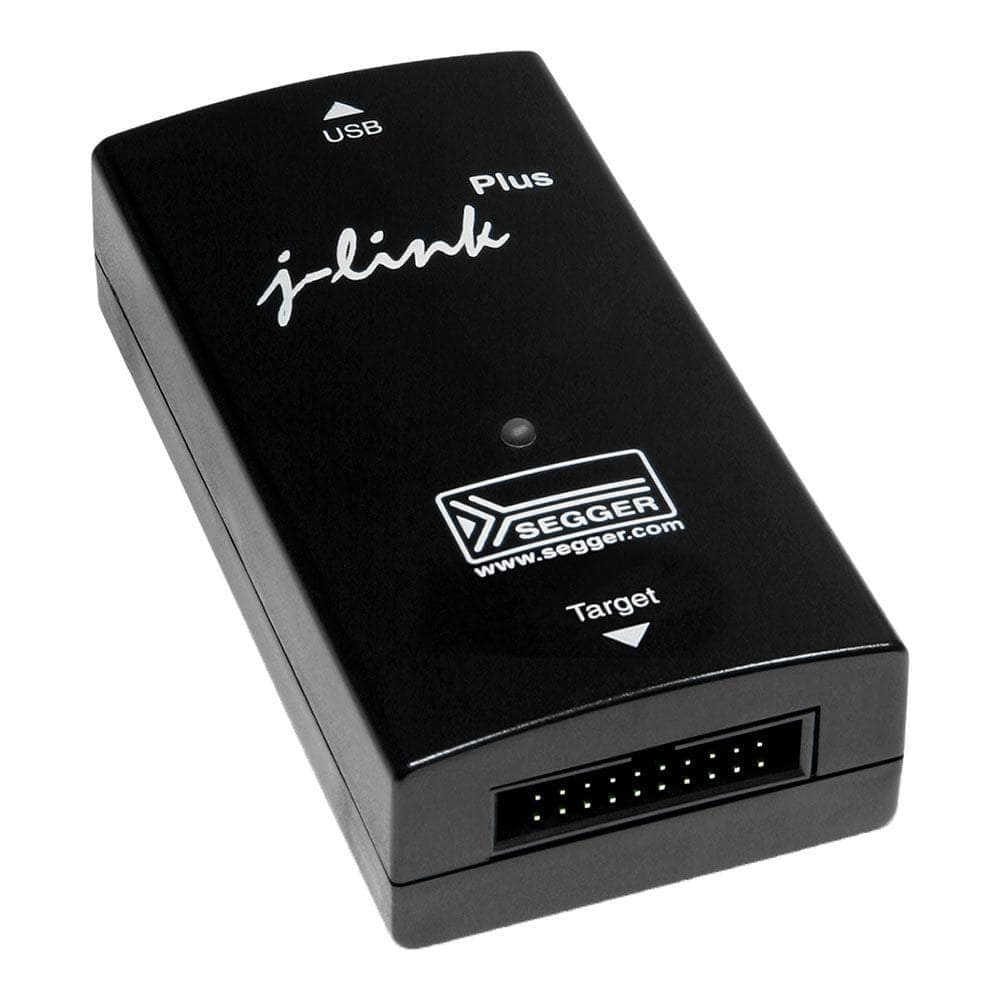
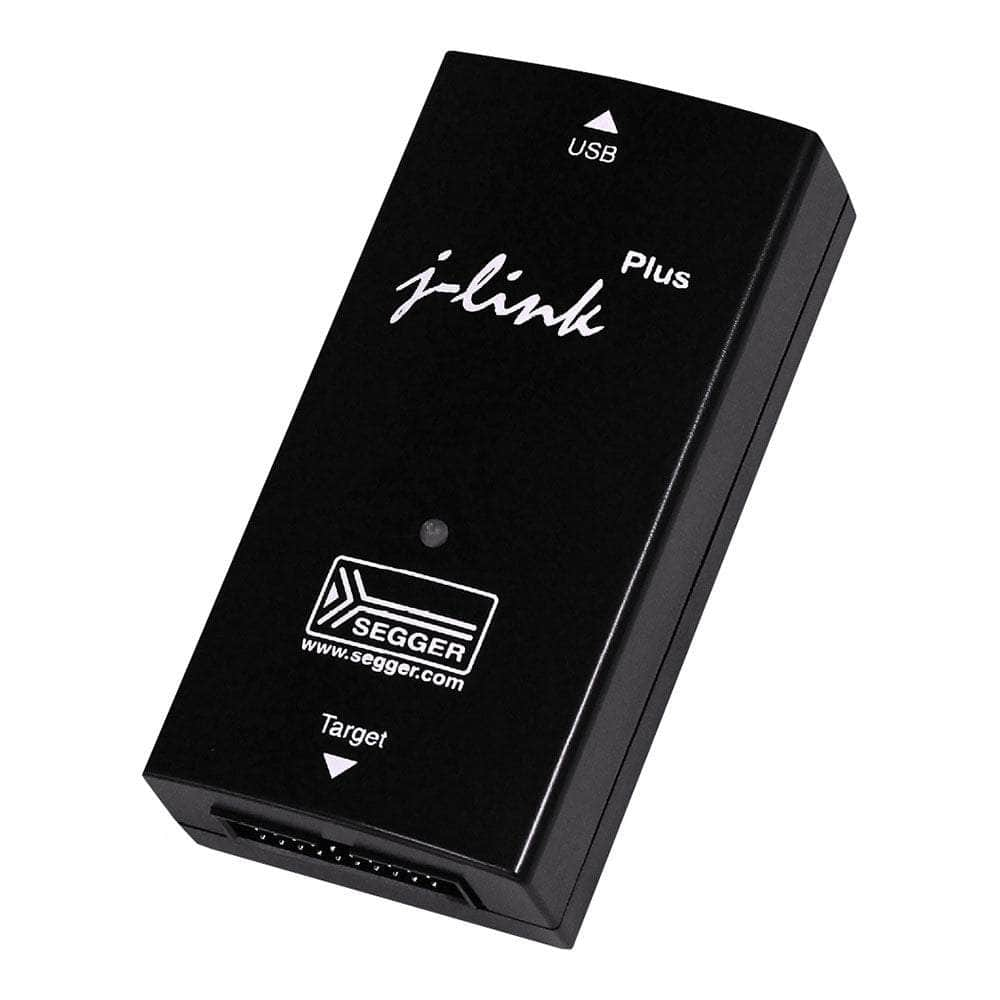
The J-Link PLUS Classic is SEGGER's USB JTAG/SWD debug probe with licences for J-Flash, Unlimited Flash Breakpoints, Ozone and RDI included. It debugs Arm Cortex-M, Cortex-A and Cortex-R, RISC-V, Renesas RX and Microchip PIC32 targets at 1.2V to 5V, with up to 15 MHz target interface speed and download speeds up to 1 MB/s, and supports RTT, SWO and VCOM. The J-Link PLUS Compact has the same functionality in a 46mm x 46mm x 17mm housing; for 50 MHz and 4 MB/s see the J-Link ULTRA+ (J-Link Ultra).
How It Connects
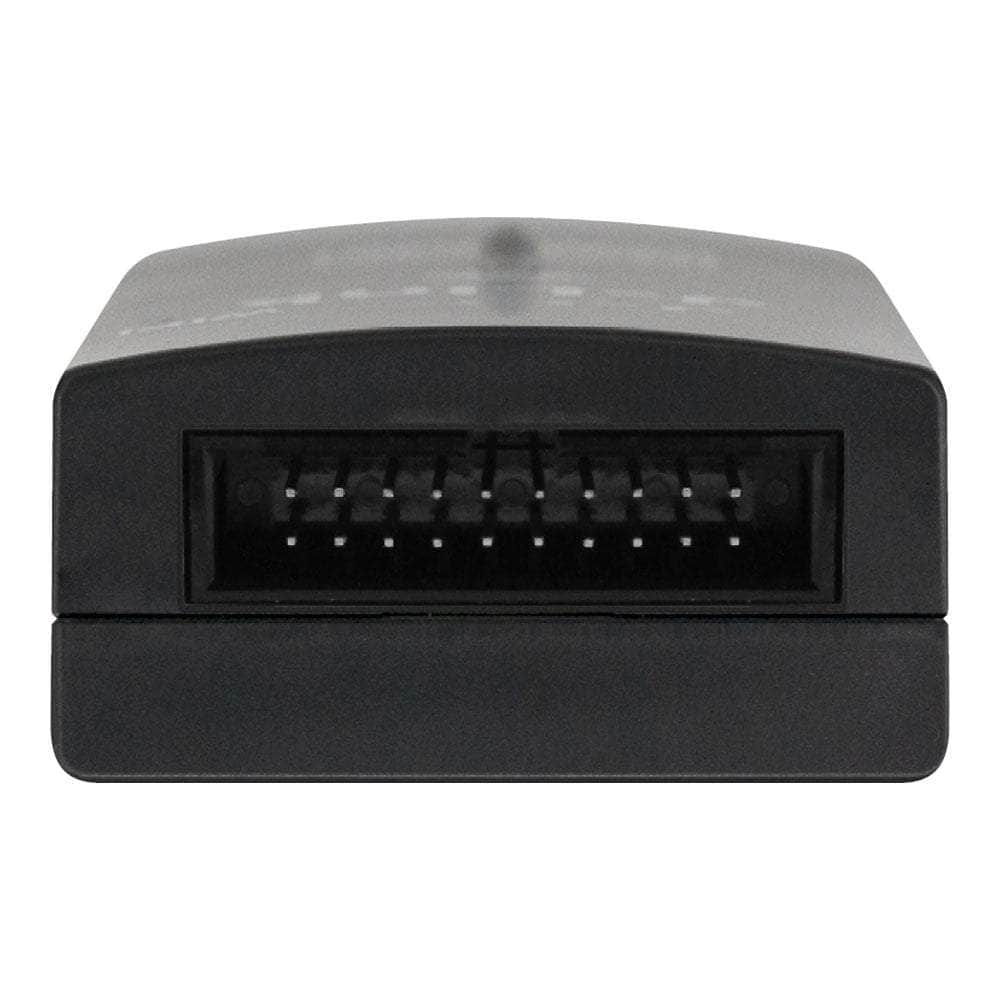
This J-Link uses SEGGER's standard 20-pin 0.1" (2.54 mm) JTAG/SWD connector, used on every J-Link except the J-Link EDU mini. For SWD you need VTref (pin 1), SWDIO (pin 7), SWCLK (pin 9), nRESET (pin 15) and GND (pin 4), plus SWO (pin 13) if you want trace output. Full JTAG, SWD, cJTAG and SPI pin tables, and the adapters for 10-pin 0.05" Cortex Debug headers: SEGGER J-Link 20-pin connector pinout.
Downloads
User Manuals
Application Notes
 SEGGER AN00016 Analyzing HardFaults on Cortex-M CPUsSEGGER application note on finding the cause of HardFaults on Cortex-M devices using a HardFault handler and a debugger to...
Details
 SEGGER AN08005 Using RTT on Cortex-A/R Based DevicesSEGGER application note on using Real Time Transfer (RTT) with J-Link on Cortex-A and Cortex-R devices.
Details
 SEGGER AN00021 Connecting J-Link to STM32 Discovery BoardsSEGGER application note on connecting a J-Link to STM32 Discovery evaluation boards in place of the on-board ST-LINK.
Details
Software
Why Engineers Choose the SEGGER J-Link PLUS Classic – USB JTAG/SWD Debug Probe
Standardise Across Projects
Debug From Flash Reliably
Production Ready Today
The SEGGER J-Link PLUS Classic (part number 8.08.28) is a USB JTAG/SWD debug probe with a 1.2V to 5V target interface, up to 15 MHz target interface speed and download speeds up to 1 MB/s. It shares the J-Link BASE electrical specification and adds licences for J-Flash, Unlimited Flash Breakpoints, Ozone and RDI, so one desktop probe covers firmware debug from flash and small-batch flash programming. It suits firmware bring-up on Arm Cortex, RISC-V, Renesas RX and Microchip PIC32 targets where a USB host connection is all you need.
J-Link PLUS Licences Included on the Probe
The J-Flash licence is preinstalled on the probe, so there is nothing to activate. J-Flash programs internal and external flash without an IDE. Unlimited Flash Breakpoints lets you set breakpoints in flash beyond the number of hardware breakpoints the core provides. Ozone, SEGGER's standalone debugger, and the RDI licence complete the pack. Monitor-mode debugging is supported on ARMv7-M and ARMv8-M cores.
USB JTAG/SWD Debug Probe for 1.2V to 5V Targets
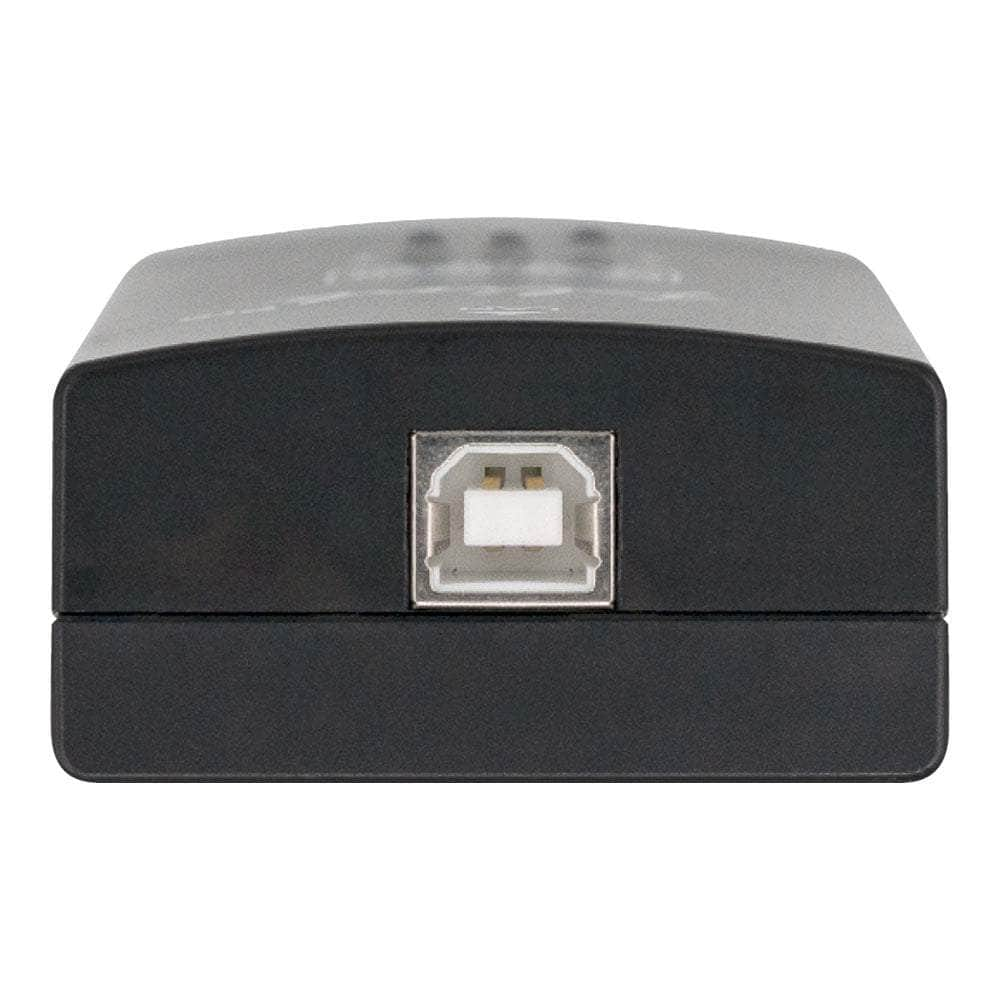
The host link is USB 2.0 Hi-Speed over a USB Type B connector, and the probe is USB powered. On the target side it uses the standard J-Link 20-pin 0.1" connector; pin assignments and adapter options are in our SEGGER J-Link 20-pin connector pinout guide. Supported debug interfaces are JTAG, cJTAG, SWD, SWD multi-drop, SWO, SPI, Microchip ICSP, Renesas FINE and Silicon Labs C2. The probe can supply the target with 5V at up to 300mA from the USB rail.
Supported Cores, RTT and VCOM
SEGGER's supported cores list for J-Link PLUS covers Arm Cortex-M0 to Cortex-M85, Cortex-A and Cortex-R, legacy ARM7 to ARM11, RISC-V cores from SiFive, Andes, Codasip and Nuclei, Renesas RX, Microchip PIC32, Silicon Labs EFM8 and Cadence Tensilica Xtensa. Real Time Transfer (RTT) moves data between the running target and the host over the debug connection. Where a UART is available, VCOM bridges it to a virtual COM port using pins 5 (J-Link Tx) and 17 (J-Link Rx) of the 20-pin connector, when debugging over SWD.
Software and IDE Compatibility
J-Link software is free of charge. The software runs on Windows (x86-64 and Arm64), Linux (x86-64 and Arm64) and macOS (x86-64 and Apple Silicon). SEGGER lists support in SEGGER Embedded Studio, Eclipse, IAR EWARM, Keil MDK-ARM, STM32CubeIDE, MCUXpresso and Visual Studio Code, among others. Multiple J-Links can run from one PC, each identified by its serial number.
What Is in the Box
J-Link PLUS Classic probe, 20-pin 0.1" ribbon cable and a USB cable.
Specifications
| Host interface | USB 2.0 Hi-Speed, USB Type B |
|---|---|
| Target connector | JTAG/SWD 20-pin, 0.1" (2.54mm) |
| Supported debug interfaces | JTAG, cJTAG, SWD, SWD multi-drop, SWO, SPI, Microchip ICSP, Renesas FINE, Silicon Labs C2 |
| Target interface voltage (VIF) | 1.2V to 5V |
| Current drawn from VTref | Less than 25µA |
| Target supply | 5V (derived from USB), max. 300mA |
| Target interface speed | Max. 15 MHz |
| SWO sampling frequency | Max. 30 MHz |
| Download speed | Up to 1 MB/s |
| Power supply | USB powered, max. 50mA plus target supply current |
| Included licences | J-Flash (preinstalled), Unlimited Flash Breakpoints, Ozone, RDI |
| Dimensions (without cables) | 100mm x 53mm x 27mm |
| Weight (without cables) | 70g |
| Operating temperature | +5°C to +60°C |
| Storage temperature | -20°C to +65°C |
| Relative humidity | Max. 90% rH, non-condensing |
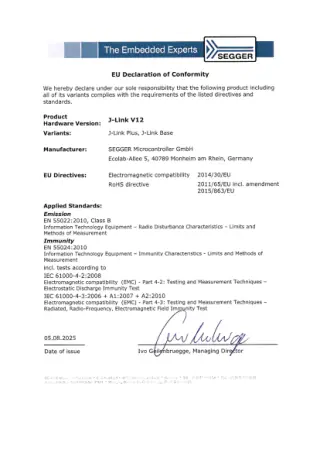
| EMC | EN 55022, EN 55024 |
| Host OS | Windows and Linux (x86-64, Arm64); macOS (x86-64, Apple Silicon) |
Limitations
- USB only. For Ethernet access choose the J-Link PRO, or the J-Link PRO PoE for Power over Ethernet.
- Download speed is up to 1 MB/s and target interface speed up to 15 MHz; the J-Link ULTRA+ and PRO models reach up to 4 MB/s and 50 MHz.
- No ETM trace on Cortex-M (use SEGGER J-Trace) and no QSPI target interface.
- VCOM is available only when debugging over SWD.
- If you only need debug without the licences, the J-Link BASE Classic shares the same hardware specification; BASE owners can add the licences with the J-Link Upgrade BASE to PLUS.
J-Link PLUS Classic Compared with ULTRA+ and PRO
| Model | Host interface | Download speed | Target interface speed | Ethernet | Power over Ethernet | Supported cores | Price ex VAT |
|---|---|---|---|---|---|---|---|
| J-Link PLUS Classic (this product) | USB 2.0 Hi-Speed | Up to 1 MB/s | Up to 15 MHz | No | No | Arm Cortex-M/A/R, RISC-V, Renesas RX, PIC32, EFM8 | €828,95 |
| J-Link ULTRA+ (J-Link Ultra) | USB 2.0 Hi-Speed | Up to 4 MB/s | Up to 50 MHz | No | No | Arm Cortex-M/A/R, RISC-V, Renesas RX, PIC32, EFM8 | €1.092,95 |
| J-Link PRO | USB 2.0 Hi-Speed and 100 Mbit/s Ethernet | Up to 4 MB/s | Up to 50 MHz | Yes | No | Arm Cortex-M/A/R, RISC-V, Renesas RX, PIC32, EFM8 | €1.381,95 |
| J-Link PRO PoE | USB 2.0 Hi-Speed and 100 Mbit/s Ethernet | Up to 4 MB/s | Up to 50 MHz | Yes | Yes, IEEE 802.3af | Arm Cortex-M/A/R, RISC-V, Renesas RX, PIC32, EFM8 | €1.657,95 |
Typical Applications
Source-level debug of STM32 or NXP Kinetis code running from flash, with more breakpoints than the Cortex-M FPB provides. Programming batches of boards with J-Flash between pilot builds, without buying a separate programming licence. RTT logging during firmware bring-up on a Cortex-M33 or RISC-V board with no free UART.
Choose the ULTRA+ instead if download time or a 50 MHz interface clock matters.
Order the J-Link PLUS Classic for €828,95 ex VAT. Check your part number against SEGGER's supported devices list, or ask us for a formal quotation. See the full range in our SEGGER J-Link debug probes collection.
Frequently Asked Questions
Does the J-Link PLUS Classic Support ETM Trace?
No. It supports SWO, and ETB and MTB where the target implements them. Instruction trace over ETM needs a SEGGER J-Trace probe.
Answered by John Legg, Director, Debug Store
Last reviewed: 30 October 2026
| Ordering information | |
|---|---|
| Part number (SKU) | 8.08.28 |
| Manufacturer | SEGGER Microcontroller GmbH |
| EAN | 5055383614820 |
| Warranty | 12 months |
| Shipping weight | 0.5 kg |
- 1 ×J-Link PLUS Classic debug probe
- 1 ×USB cable
- 1 ×20-pin ribbon cable, 2.54 mm (0.1 in) pitch, 18 cm
Questions and Answers
-
Can J-Link PLUS Power My Target?
Yes, via the power pin on the 20-pin ARM header, which has overload protection. Dedicated adapters are available for a fixed 5 V or adjustable supply.
-
Is a Virtual COM Port Available?
Yes. VCOM can be enabled to bridge a target UART over USB during SWD sessions, reducing extra cabling.
-
Can I Script Production Programming?
Yes. Use J-Flash and command-line tools to integrate verification and logs into automated build/test stations.
-
What Is the Difference Between the Classic vs Compact?
The Classic and the Compact have identical function. Choose the housing that best fits your bench or fixture space.
-
What’s the Typical Interface Speed?
PLUS typically runs up to 15 MHz JTAG/SWD with fast RAM download rates, sufficient for most Cortex-M workflows.
-
Does the J-Link PLUS Classic Support RISC-V?
Yes, J-Link software supports RISC-V in the J-Link family. For this model, check your device on SEGGER’s supported-devices list.
-
What IDEs Are Supported?
Supported IDEs include these, among others:
- Keil MDK
- IAR Embedded Workbench
- SEGGER Embedded Studio
- Eclipse/GDB-based environments
-
How Does PLUS Differ From BASE?
PLUS includes licences for Unlimited Flash Breakpoints and J-Flash, which BASE lacks. That makes PLUS the better choice for flash-based debugging and production programming.
-
How Does PLUS Compare with J-Link PRO or ULTRA+?
The J-Link PRO and ULTRA+ add higher interface clocks, faster SWO capture (100 MHz), power measurement on the ULTRA+ and, on the PRO, Ethernet. Neither offers ETM instruction trace; that needs a J-Trace. PLUS covers most day-to-day debug and programming tasks.
-
How Does PLUS Compare with Keil ULINKpro?
ULINKpro is a Keil product, so refer to Keil for its specification. J-Link PLUS focuses on fast JTAG/SWD, broad IDE support and bundled licences, and does not provide ETM instruction trace (that needs a J-Trace).


No questions match your search.
