

Micsig
Micsig SigOFIT Optical-Fibre Isolated Probe - High Bandwidth Galvanic Isolation for Power Electronics
Micsig SigOFIT Optical-Fibre Isolated Probe - High Bandwidth Galvanic Isolation for Power Electronics
SKU: MOIP200P
Couldn't load pickup availability
Key Features
Overview
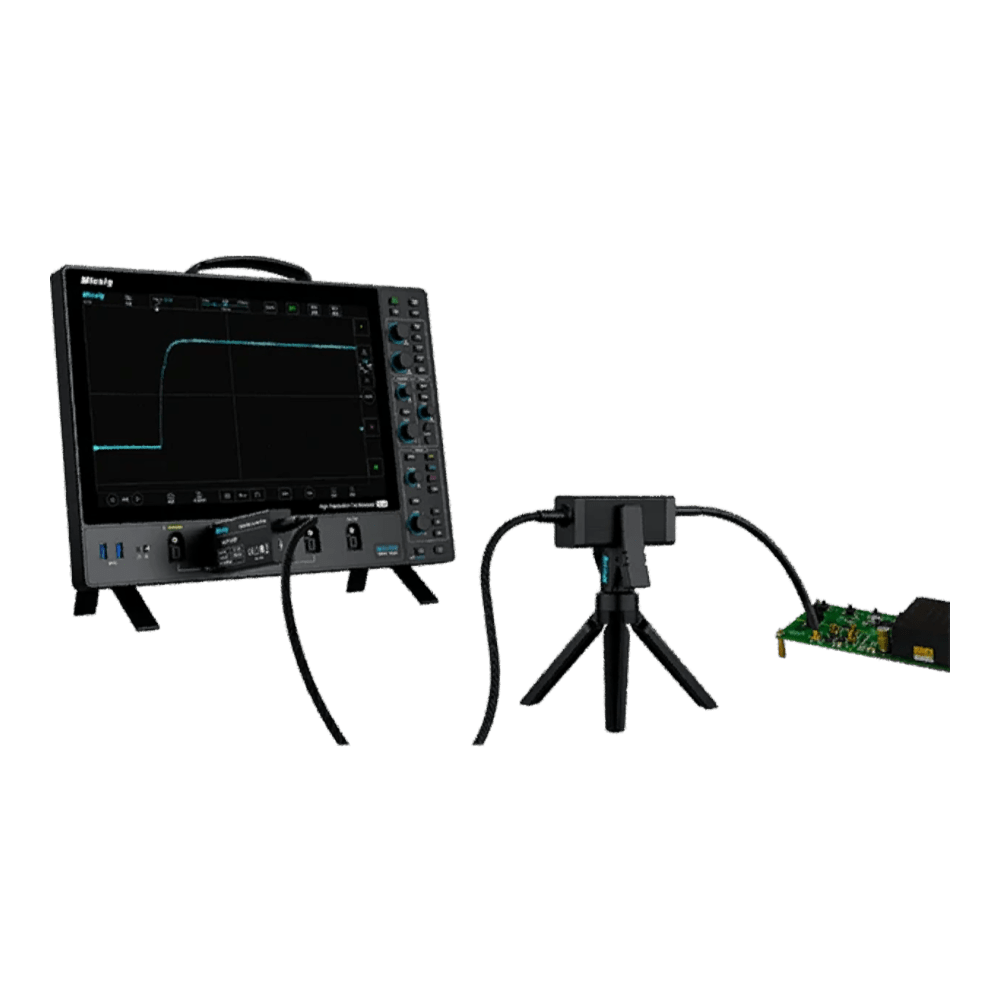
The Micsig SigOFIT optical-fibre isolated probe is a cutting-edge measurement tool for professional electronic engineers. Utilising exclusive SigOFIT™ technology, this probe offers unparalleled signal fidelity and isolation performance. With a bandwidth of DC-1GHz and a common mode voltage of 85kVpk, it unveils the true nature of signals in high-voltage, high-frequency applications.
Boasting an impressive CMRR of up to 180dB, the SigOFIT probe suppresses common-mode noise, making it ideal for testing third-generation semiconductors like SiC and GaN devices. Its low input capacitance of 1pF minimum ensures safe testing of sensitive components. The probe's wide measurement range, from ±0.01V to ±6250V, coupled with its high accuracy (DC gain accuracy ≤1%), makes it versatile for various applications, including motor drive design, power converter testing, and EMI troubleshooting.
Engineered for efficiency, the SigOFIT probe features rapid response times and AutoZero functionality, completing in less than a second. Its optical isolation technology, powered by fibre, enables continuous testing for up to 365 days without battery concerns. This probe is an essential tool for engineers seeking precise, reliable measurements in challenging electronic environments.
Downloads
Why Engineers Choose the Micsig SigOFIT Optical-Fibre Isolated Probe - High Bandwidth Galvanic Isolation for Power Electronics
Superior Signal Integrity
Enhanced Safety
Future-Proof Technology
| General Information | |
|---|---|
Part Number (SKU) |
MOIP200P
|
Manufacturer |
Micsig
|
| Physical and Mechanical | |
Weight |
1.0 kg
|
| Other | |
EAN |
5055383619313
|
Questions and Answers
-
Is the SigOFIT Probe Compatible with My Existing Oscilloscope?
Yes, if your oscilloscope has BNC inputs that can be set to 50Ω input impedance. Micsig says the probe works with oscilloscopes from all brands and names none, so check your scope's input setting. Normal use needs no special software.
-
Does the SigOFIT Probe Work with Any Oscilloscope?
It works with any oscilloscope that has BNC inputs at 50Ω input impedance. Micsig doesn't publish a comparison with other isolated probes, so compare the datasheets for isolation and bandwidth against your own requirements.
-
What Safety Considerations Apply When Using the SigOFIT Probe in High-voltage Environments?
Follow proper high-voltage safety procedures even though the probe is galvanically isolated: wear appropriate PPE, use isolated test fixtures and follow local electrical safety regulations.
-
Can the SigOFIT Probe Measure Both AC and DC Components Simultaneously in Power Converter Circuits?
Yes. The probe is DC-coupled with low-frequency response down to DC, so it measures both switching transients and DC bias levels in power electronic circuits.
-
What Maintenance Is Required for the Optical Fibre Cable and How Robust Is It for Laboratory Use?
Handle the fibre cable carefully and keep to its minimum bend radius of 8cm. It's designed for laboratory use, but protect it from sharp bends, crushing and excessive tension.
-
How Does the SigOFIT Probe Compare with Traditional Differential Probes?
Optical isolation gives the SigOFIT 180dB CMRR at DC. CMRR falls with frequency, to between 108dB and 122dB at full bandwidth depending on the model. The probe suppresses the common-mode interference that corrupts measurements in high-voltage switching circuits.
-
Can the SigOFIT Probe Safely Measure Gate Signals on High-side GaN and SiC MOSFETs?
Yes, for gate signals on high-side devices. The probe is fully galvanically isolated and has very short coaxial leads, with tip capacitance of about 1 to 4pF depending on the tip. The low capacitance suits fast-switching wide bandgap semiconductors.
-
Which SigOFIT Model Should I Choose for My Application Bandwidth Requirements?
Choose by signal frequency. This is our guide; Micsig lists GaN and SiC as applications but doesn't match them to models:
- MOIP200P (200MHz) or MOIP350P (350MHz): basic power supplies
- MOIP500P (500MHz): most SiC applications
- MOIP1000P (1GHz): high-frequency GaN circuits and advanced power converters
-
How Does the Auto-calibration Feature Work and How Often Is Calibration Required?
Short-press the calibration button and the probe zero-calibrates, which usually takes under one second, and the connection can stay in place. Micsig says to press it before taking final readings, and that real-time optical power compensation means no manual calibration is needed during testing.
-
What Attenuator Tips Are Available, and How Do I Select the Correct One?
Attenuator tips range from 20:1 to 10000:1 (availability depends on model). Choose the lowest attenuation ratio that your signal range allows, for the best resolution and signal-to-noise ratio.
No questions match your search.