


Lipowsky Industrie Elektronik GmbH
Lipowsky Baby-LIN-3-MB LIN/CAN Bus Simulator
Lipowsky Baby-LIN-3-MB LIN/CAN Bus Simulator
SKU: 8001060
Couldn't load pickup availability
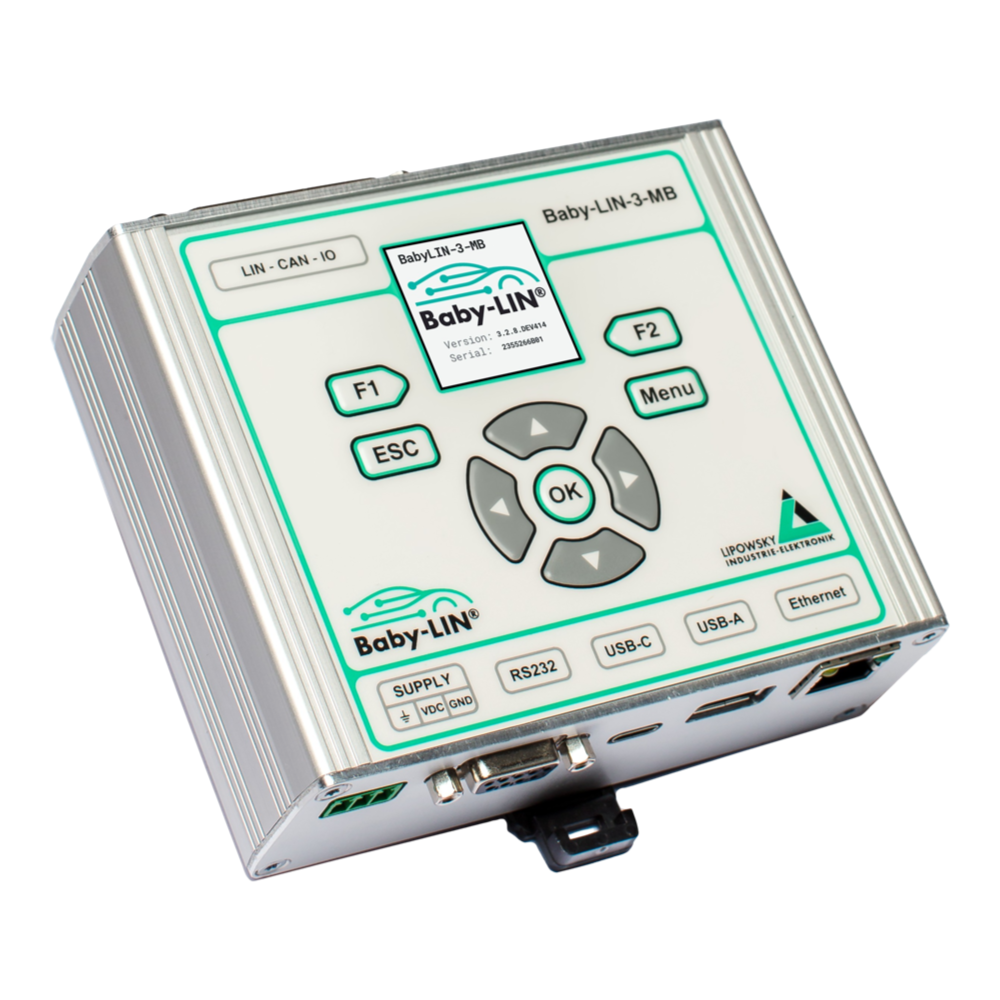
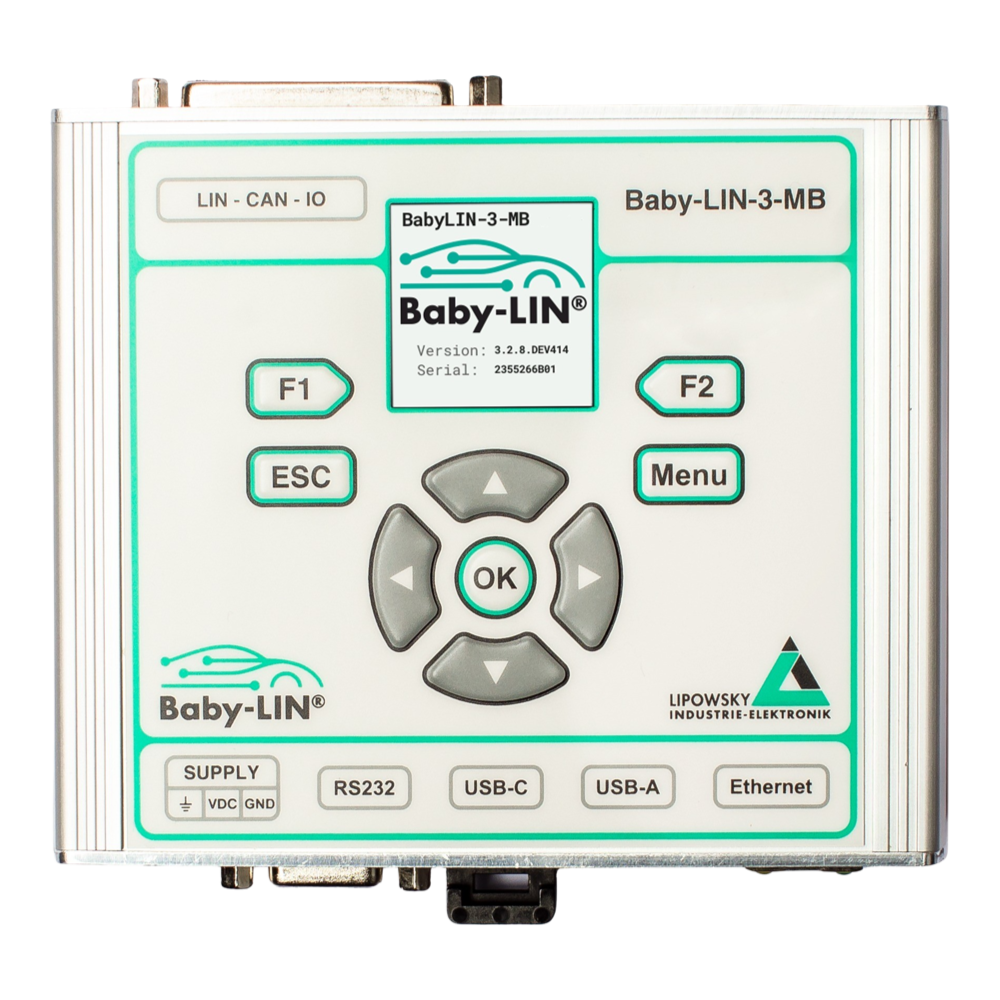
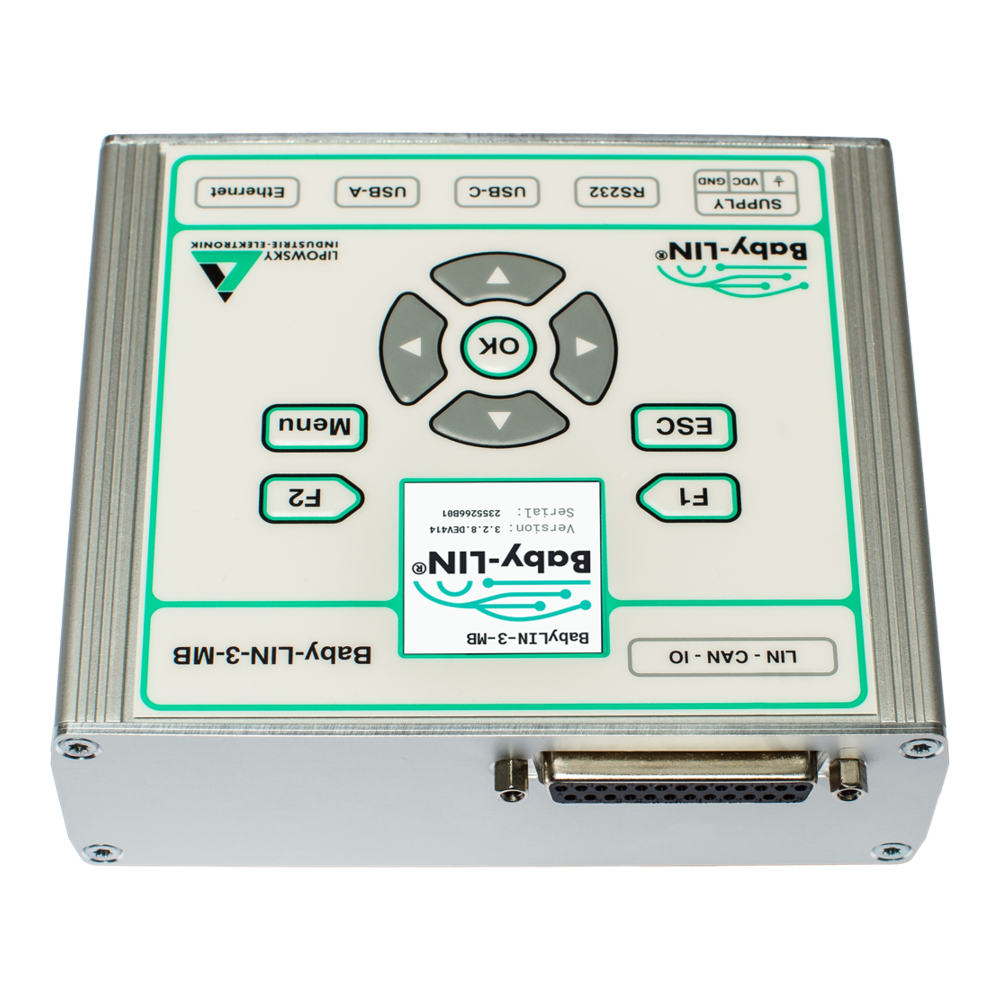
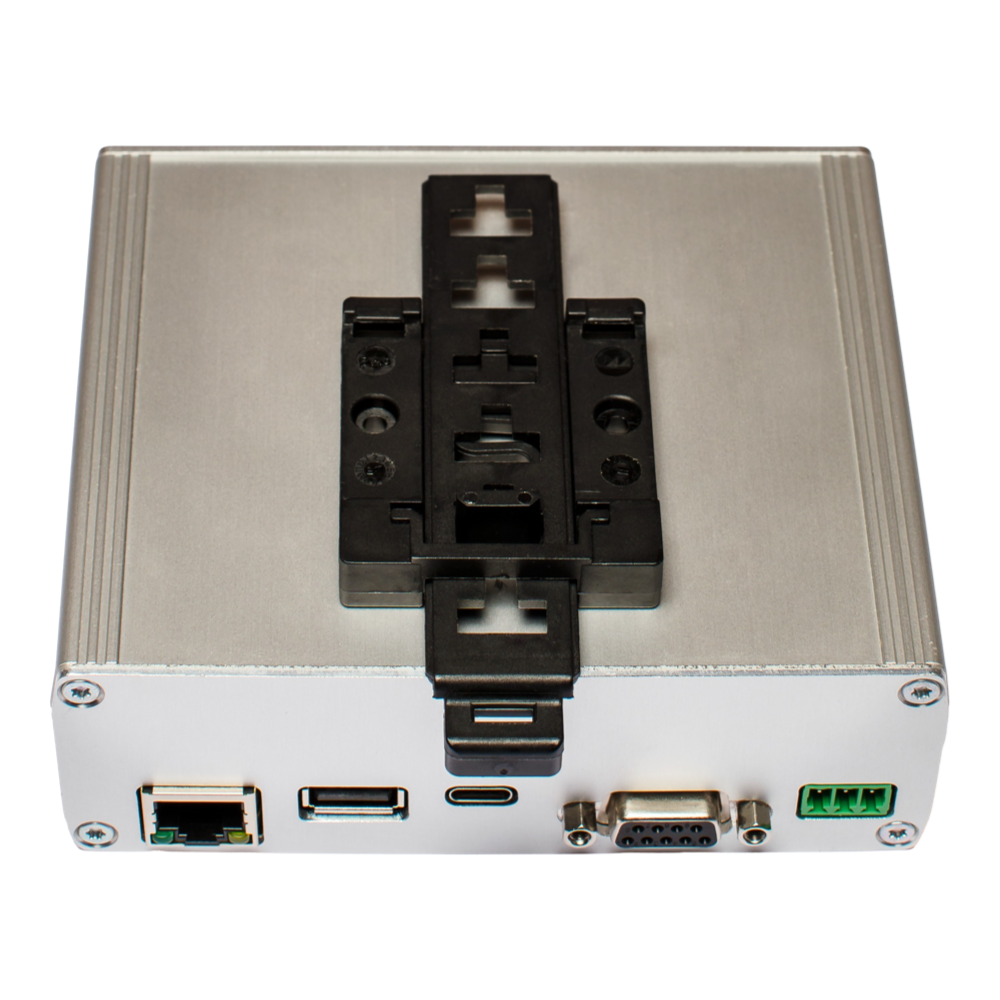
Key Features
Overview
Next-Generation LIN and CAN Bus Simulator for Professional Engineering Applications
The Lipowsky Baby-LIN-3-MB represents the latest evolution in automotive and industrial bus simulation technology, building upon the proven foundation of the Baby-LIN-MB-II series. This advanced simulation system combines comprehensive LIN and CAN protocol support with enhanced digital I/O capabilities and revolutionary remote maintenance features designed for Industry 4.0 environments.
Supporting all LIN bus versions up to 2.2 and CAN high-speed protocols including CAN-FD, the Baby-LIN-3-MB eliminates the need for additional expansion modules by incorporating four PWM-capable outputs with integrated current measurement directly into the base unit. The integrated 1.54-inch display and nine-button keypad simplify device setup and standalone operation, whilst galvanic isolation ensures signal integrity and safety in demanding test environments.
Revolutionary Testrun Mode and Remote Capabilities
The standout feature is the innovative Testrun Mode, enabling true standalone SDF-based operation with a web-based user interface. This advancement allows engineers to deploy automated test sequences without PC connectivity, perfect for endurance testing and end-of-line applications. The integrated Ethernet interface supports comprehensive remote maintenance capabilities, including SDF upload, log file download, parameter changes, and firmware updates - all accessible from anywhere for Industry 4.0 compliance.
Ideal for PLC coupling, restbus simulation, control unit testing, and gateway applications between LIN and CAN networks, the Baby-LIN-3-MB delivers professional-grade performance with data logging functionality at 100% bus workload. The system operates from 8-50V supply voltage and includes an integrated UPS to prevent data loss during power interruptions.
The Baby-LIN-3-MB is also available in related variants including the Baby-LIN-3-Single for basic LIN applications and the Baby-LIN-3-Dual for dual-channel requirements.
Downloads
Why Engineers Choose The Lipowsky Baby-LIN-3-MB LIN/CAN Bus Simulator
Comprehensive Testing Solution
Industry 4.0 Ready
Professional Reliability
| General Information | |
|---|---|
Part Number (SKU) |
8001060
|
Manufacturer |
|
| Physical and Mechanical | |
Weight |
1.0 kg
|
| Other | |
EAN |
5055383603626
|
Questions and Answers
-
Can the Baby-LIN-3-MB Function as a Gateway Between Different Bus Systems?
Yes. The device can act as a gateway between LIN and CAN networks, transferring data and converting protocols between them. This is useful for integrating legacy LIN devices into CAN-based architectures or for testing hybrid systems.
-
What Data Logging Capabilities Does the Baby-LIN-3-MB Provide?
The device can log at 100% bus workload. An integrated UPS prevents data corruption during power interruptions, and you can access log files remotely via the Ethernet interface for analysis and troubleshooting.
-
What Does the Baby-LIN-3-MB Integrate in One Unit?
The Baby-LIN-3-MB integrates LIN, CAN, digital I/O and remote maintenance in a single unit, and includes the LINWorks software suite at no additional cost. CAN support is enabled with paid activation codes.
-
What Makes the Baby-LIN-3-MB Suitable for Production Lines?
The Baby-LIN-3-MB offers PLC-ready RS-232 and Ethernet interfaces, web-based remote maintenance and an integrated UPS, in a production-focused design.
-
What Networks Does Baby-LIN-3-MB Support?
LIN 1.2 to 2.2, CAN High-Speed and CAN-FD, plus K-Line. Each CAN channel is enabled with a paid activation code.
-
What Digital I/O Capabilities Are Included in the Baby-LIN-3-MB?
The base unit has up to 7 digital inputs and 5 digital outputs, expandable to 11 inputs and 9 outputs with ExPORT-LIN modules. 4 of the outputs offer PWM, with integrated measurement of their combined current. In many applications this removes the need for extra I/O expansion modules and lets you drive discrete elements such as lamps and actuators directly.
-
What LIN and CAN Protocols Does the Baby-LIN-3-MB Support?
The Baby-LIN-3-MB supports:
- all LIN bus versions from 1.2 to 2.2
- CAN high-speed (ISO 11898-2)
- CAN-FD
- K-Line
The CAN channels are enabled with paid activation codes. LIN bus voltage is 8-26VDC, at speeds up to 115,200 baud, above the standard 20kbaud specification for specialised applications.
-
How Does the Testrun Mode Enhance Testing Capabilities?
Testrun Mode lets the device run standalone, using SDF-based control with a web-based user interface. Automated test sequences run without a PC connected, which suits endurance testing, production line testing and unattended operation where continuous PC supervision is impractical.
-
Can the Baby-LIN-3-MB Operate Without a PC Connection?
Yes. The Baby-LIN-3-MB can run completely standalone from pre-programmed SDF files. You can configure and monitor it directly with the integrated 1.54-inch display and nine-button keypad. Remote access is also possible via the Ethernet interface for Industry 4.0 applications.
-
What Makes the Baby-LIN-3-MB Suitable for Industry 4.0 Environments?
Its integrated Ethernet interface supports remote maintenance:
- SDF file upload
- log file download
- parameter changes
- firmware updates
This allows remote monitoring and control from anywhere, supporting automated manufacturing and testing workflows.
-
How Does Galvanic Isolation Benefit Professional Applications?
Galvanic isolation between the interface groups and the supply prevents ground loops, reduces electrical interference and makes connecting to vehicle networks or industrial systems safer. Some channels share a ground: the two LIN channels share one, while CAN2 is isolated separately from the other buses.
-
What Is the Advantage of Integrated Current Measurement on PWM Outputs?
The four PWM-capable outputs have integrated measurement of their combined current, so you can test and control discrete elements such as lamps, motors and actuators directly. You can detect faults that change the total current, such as a short circuit or open load, without additional measurement equipment. Faults cannot be isolated to an individual output.
No questions match your search.