


LinkBone
LinkBone 15-Way BNC Switch - Remote Signal Routing for Test Automation
LinkBone 15-Way BNC Switch - Remote Signal Routing for Test Automation
SKU: LB-SW-BNC-01
Couldn't load pickup availability
Key Features
Overview
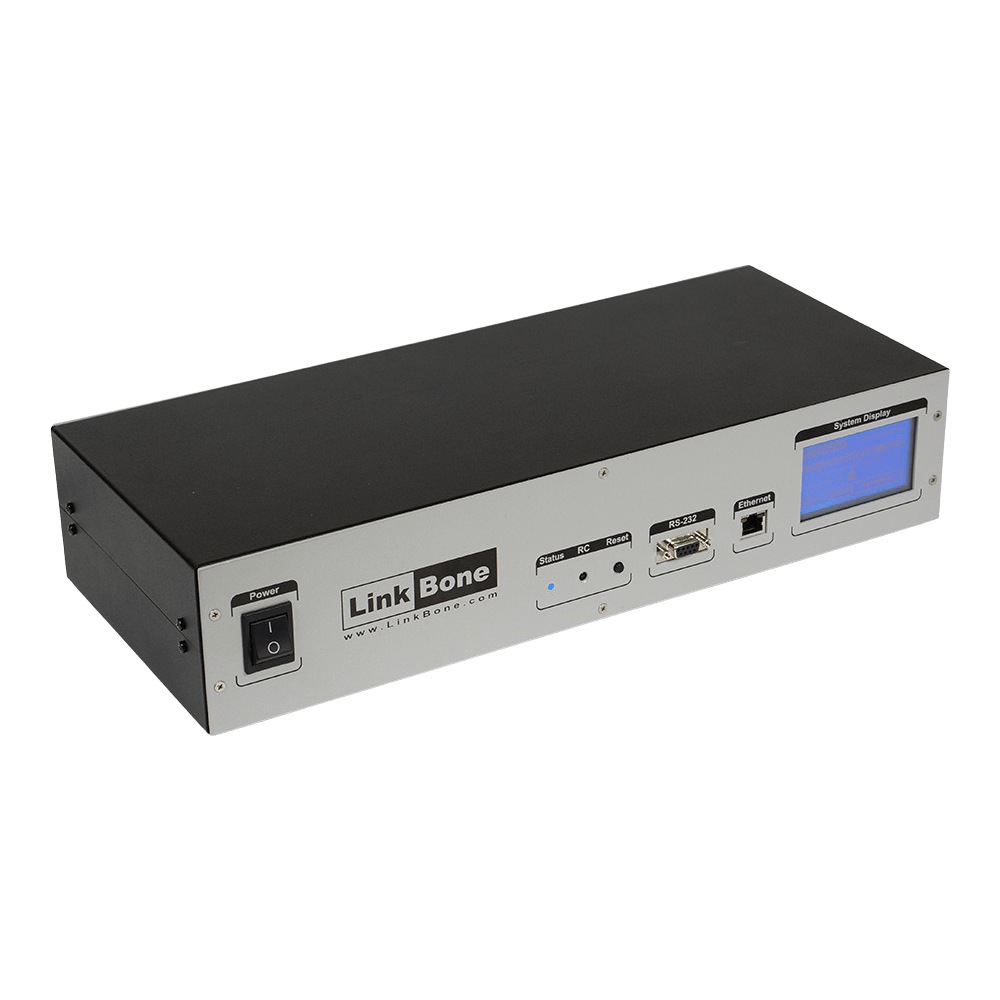
The LinkBone 15-Way BNC Switch transforms signal routing in test automation environments by providing bidirectional switching between a common port and fifteen individual channels. Built for professional applications, this device supports both analog and digital signals across a DC to 50MHz bandwidth with excellent signal integrity.
Each port switch state operates independently, allowing flexible configuration as either a traditional 1-to-15 multiplexer or supporting multiple simultaneous connections. The device handles demanding electrical requirements with ±24V voltage capability and 1.5A current rating per port, making it suitable for diverse test scenarios from video and audio to complex high-amplitude signals.
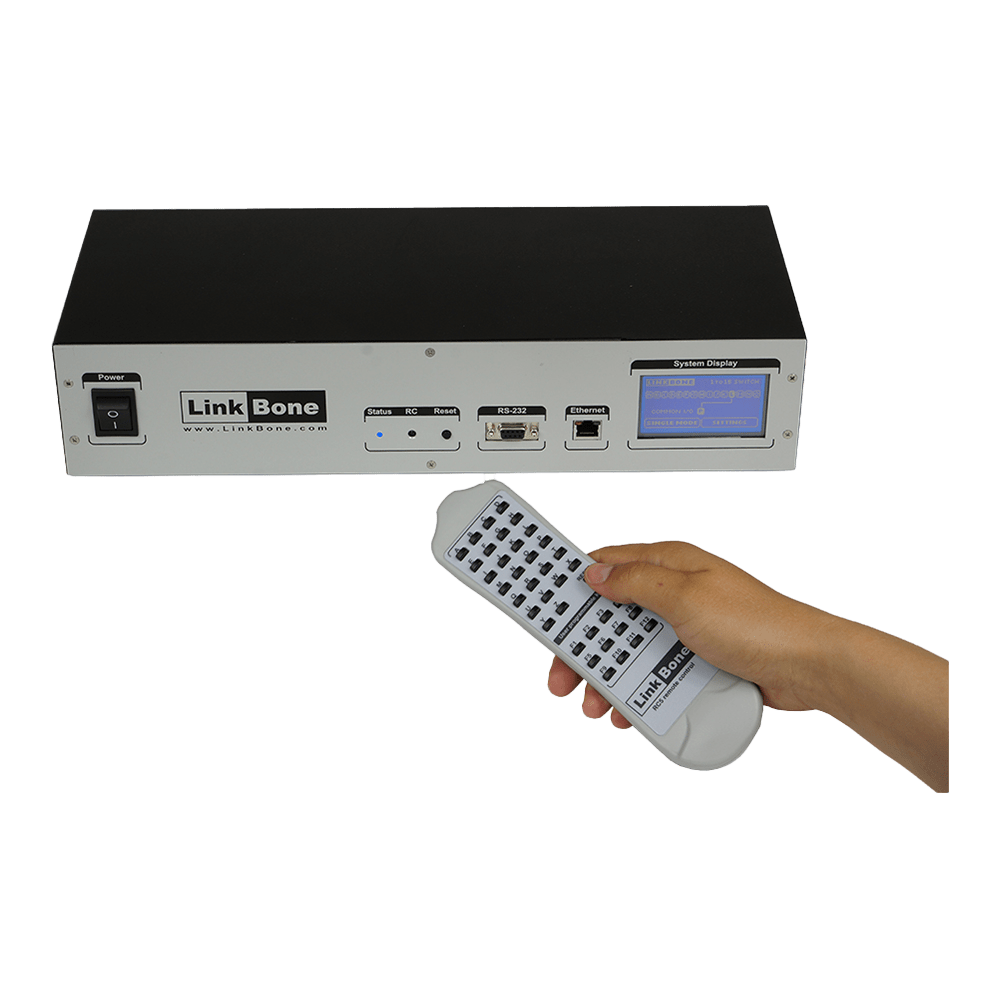
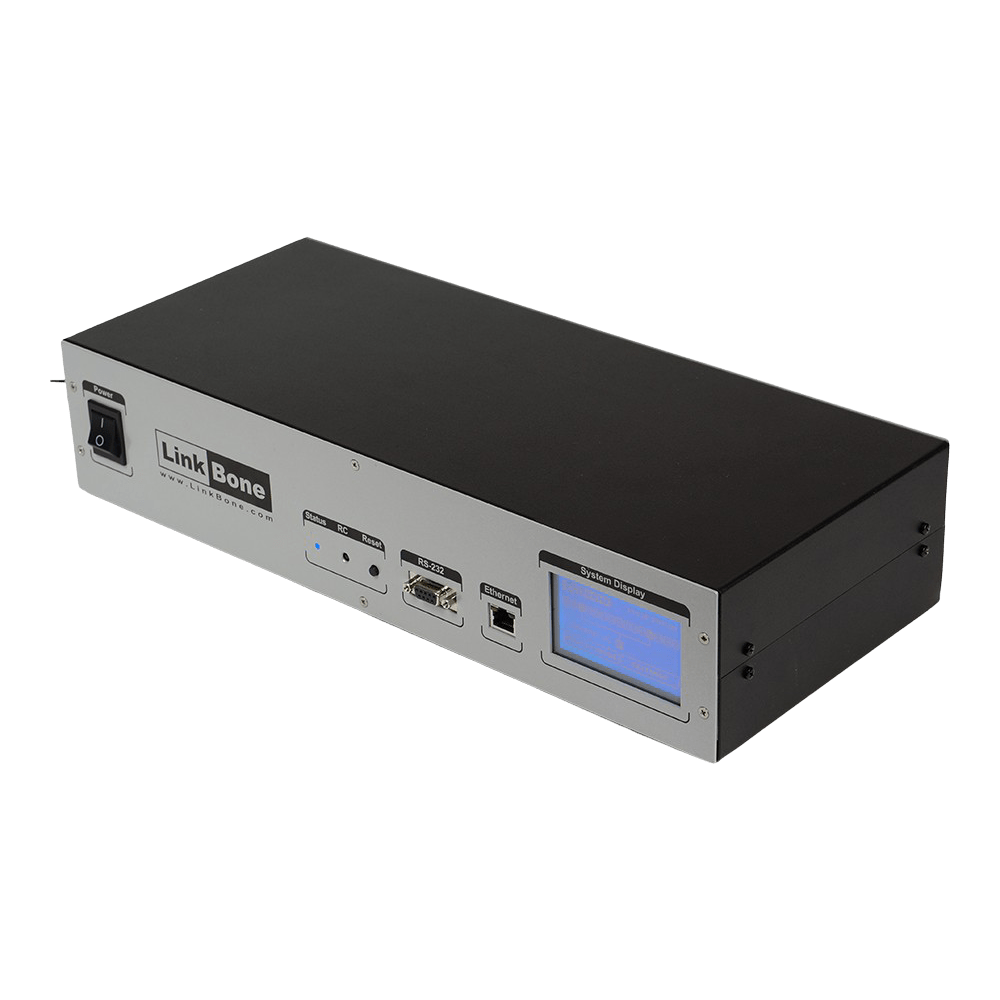
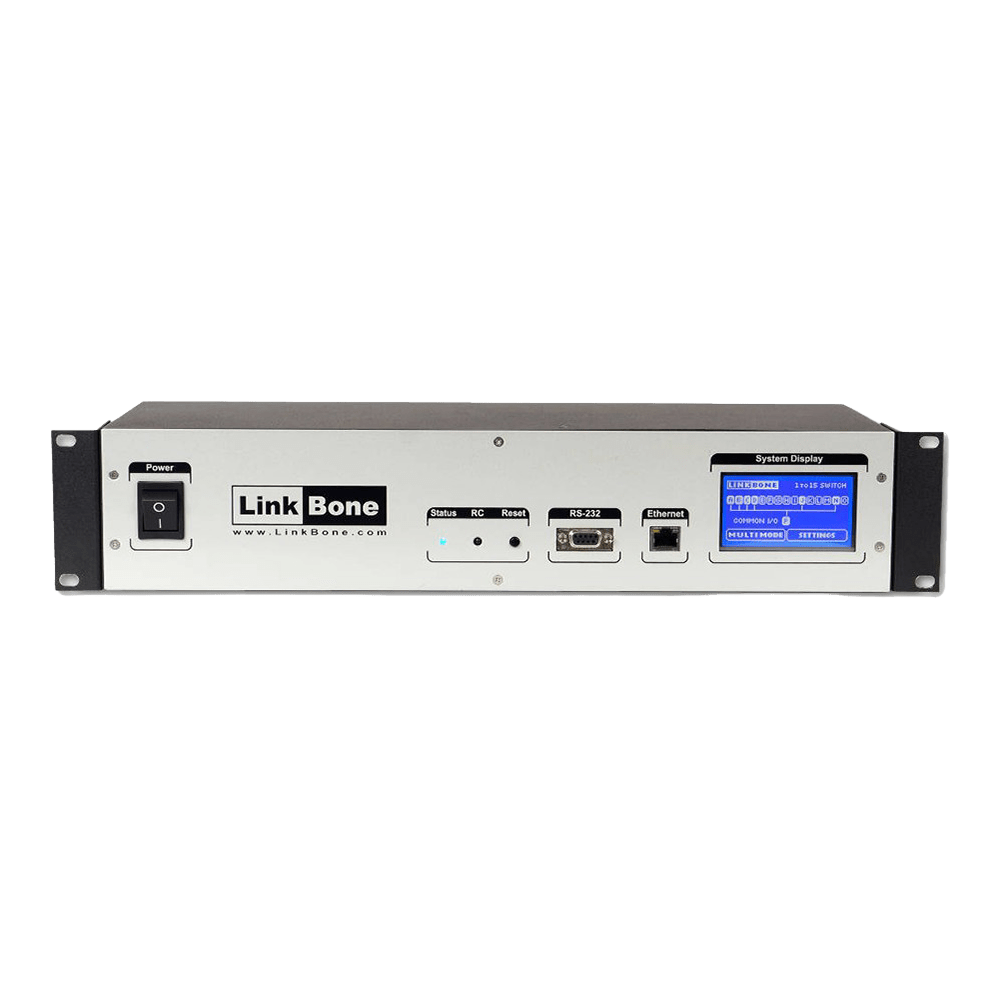
Three control interfaces provide operational flexibility: built-in Ethernet web server for remote management, RS-232 serial for PLC integration, and RC5 infrared remote for manual operation. The 19-inch rack mounting system ensures professional installation compatibility. Related products include the LinkBone Dual 15-Way BNC Multiplexer for applications requiring parallel signal paths.
Downloads
Why Engineers Choose The LinkBone 15-Way BNC Switch - Remote Signal Routing for Test Automation
Multi-Point Testing
Test Automation
Signal Integrity
Professional Signal Switching for Test Automation
The LinkBone 15-Way BNC Switch delivers versatile analog and digital signal routing capabilities for demanding test and measurement applications. This rack-mountable multiplexer provides precise signal switching between a common port and fifteen individual ports, enabling efficient test automation workflows.
Operating Modes
Single-Mode Operation
In single-mode, only one of the A to O ports can simultaneously connect to the common port P, functioning as a classic analog multiplexer/demultiplexer. This ensures signal isolation and prevents crosstalk between channels.
Multi-Mode Operation
Multi-mode removes connection limits, allowing multiple ports to connect to port P simultaneously. This flexibility supports complex test scenarios requiring parallel signal routing.
Control Options
Wiring Quick-Start
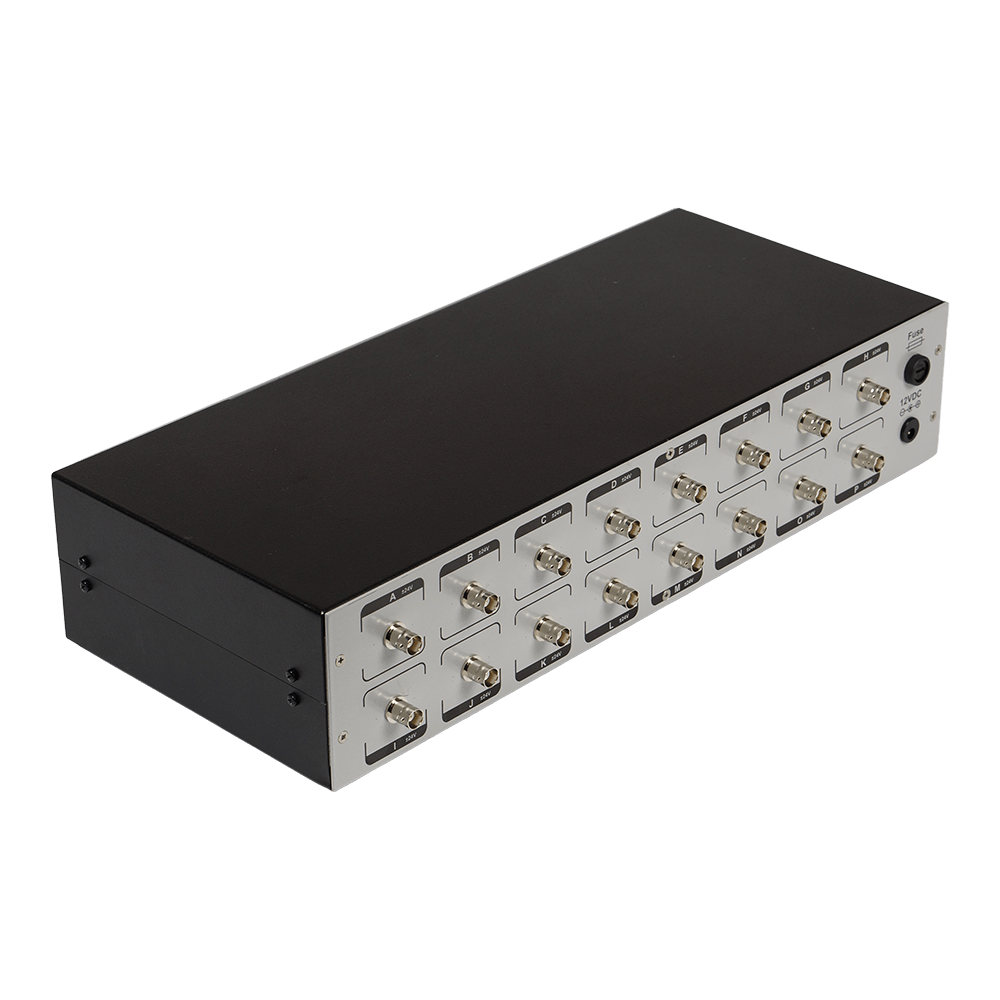
The P port serves as the common connection point. Connect your signal source or measurement instrument to port P, then route test signals through any of the fifteen A-O ports.
| Connection Type | Pin Assignment | Function |
|---|---|---|
| BNC Centre Pin | Signal | Carries analog/digital signals bidirectionally |
| BNC Shield | Ground | Provides signal return path and shielding |
Technical Specifications
| Parameter | Specification |
|---|---|
| Bandwidth | DC to 50MHz |
| Voltage Range | ±24V |
| Current Rating | 1.5A per port |
| Impedance | 50Ω |
| Switching Life | 100 million cycles |
Professional Applications
Ideal for oscilloscope multi-point testing, signal generator routing, automated production testing, and laboratory measurement systems requiring reliable signal switching.
Questions and Answers
-
What Connectors Does the Device Use?
All signal connections are standard 50Ω BNC connectors. The centre conductor carries the signal and the shield provides the ground return and RF shielding.
-
Can Multiple Ports Be Active Simultaneously?
Yes, in multi-mode. You can connect several A-O ports to the common port P at the same time for signal distribution. Connected ports share one node.
-
What's the Expected Switching Life of the Relays?
The internal switching elements are rated for over 100 million switching cycles (mechanical life), so they suit production test and laboratory use.
-
How Is the Device Powered?
It runs from a 12V DC external power supply with an EU plug (included). Standby consumption is minimal.
-
What Mounting Options Are Available?
The device comes with 19-inch rack mounting profiles and screws for standard rack installation. It can also be used on a bench with the included rubber feet.
-
What's the Difference Between Single-mode and Multi-mode Operation?
In single-mode, only one A-O port can connect to the common port P at a time, like a traditional multiplexer. Multi-mode removes this limit, so several ports can connect to P at once. Connected ports share one node.
-
Can I Control the Switch Remotely Over a Network?
Yes. The built-in Ethernet interface offers HTTP web server control and a Telnet command interface. You can control switch positions from anywhere on your network.
-
What Types of Signals Can the Switch Handle?
Analogue and digital signals from DC to 50MHz (-3dB, typical), including video and audio. Fast clock edges lose harmonics above 50MHz. It handles up to ±24V and 1.5A per port.
-
Is the Signal Routing Bidirectional?
Yes, all signal routing is bidirectional. Connect sources to port P and route to ports A-O, or connect sources to A-O and route to P.
-
How Do I Integrate This with Automated Test Equipment?
Use the RS-232 serial interface or the Ethernet interface (Telnet) to control the switch from a test controller. It accepts a simple text command set over RS-232 or Telnet, so it's easy to add to test sequences.
No questions match your search.