
Hantek Electronic Co Ltd
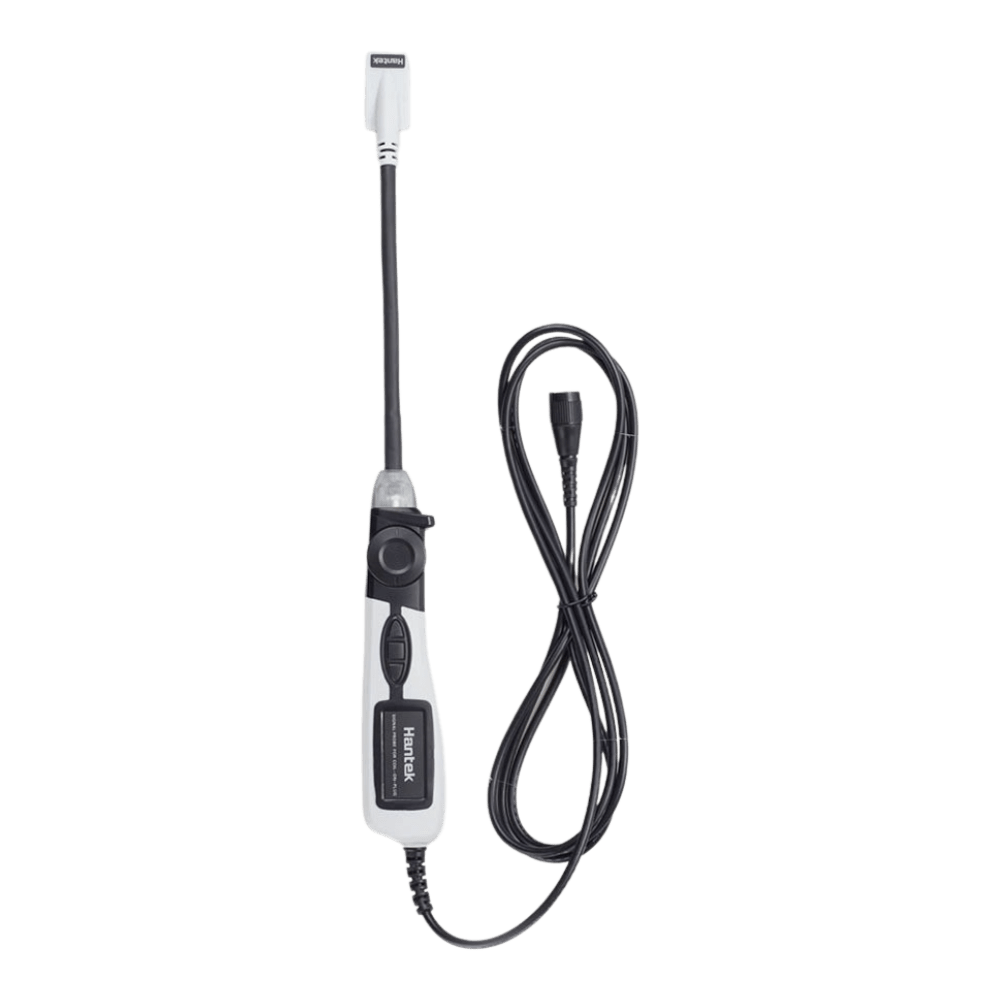
Hantek HT25COP Coil-on-Plug und Signalsonde
Hantek HT25COP Coil-on-Plug und Signalsonde
SKU: HT25COP
Verfügbarkeit für Abholungen konnte nicht geladen werden
Key Features
Overview
Downloads
Why Engineers Choose The Hantek HT25COP Coil-on-Plug und Signalsonde
Non-Intrusive Diagnostics
Professional Accuracy
Versatile Compatibility
Mit der Hantek HT25COP Zündspule und Signalsonde können Sie die Zündwellenform eines Automotors problemlos erfassen. Die Zündwellenform ist ein Fenster, durch das wir sehen können, was in den Verbrennungskammern des Motors passiert ist.
- Dadurch wird festgestellt, ob die Zündkerzen ausgetauscht oder gereinigt werden müssen.
- Funktioniert der Kraftstoffeinspritzer in einem elektronischen Kraftstoffeinspritzsystem einwandfrei?
- Liegt ein Problem mit einem Kompressionsverlust vor?
- Ist der Funkenabstand der Zündkerzen zu klein?
- Ist die Zündkerzenelektrode verformt?
- Gibt es zu viel Ölverschmutzung oder Kohlenstoffablagerungen auf den Zündkerzen?
- Ist die Isolierung der Zündkerze beschädigt?
- Liegen Probleme mit der Fahrzeugbatterie vor?
| General Information | |
|---|---|
Part Number (SKU) |
HT25COP
|
Manufacturer |
Hantek Electronic Co Ltd
|
| Physical and Mechanical | |
Weight |
0.5 kg
|
| Other | |
EAN |
5055383608881
|
Questions and Answers
-
Is the Probe Suitable for Hybrid and Electric Vehicles?
Hantek designs the HT25COP for petrol engines with coil-on-plug ignition and does not state hybrid or electric vehicle suitability. A fully electric vehicle has no ignition system to test. On a hybrid's petrol engine, follow the vehicle manufacturer's high-voltage safety procedures.
-
How Do I Interpret Abnormal Waveform Patterns?
Hantek states that the ignition waveform can show spark plug wear, fouling and insulation problems, and shows an example misfire waveform. Hantek publishes no reference firing voltages or burn times for this probe. As general practice, compare each cylinder's waveform with the others and with the vehicle manufacturer's data.
-
Can the Probe Be Used for Injector Testing?
Not directly. Hantek states that the ignition waveform can help judge whether a fuel injector is working, but the HT25COP is an ignition probe, not an injector sensor. To see injector current, use a current clamp.
-
What Safety Precautions Are Necessary During Testing?
- Do not use the probe if the sensor plate's insulation shows signs of damage.
- Keep the probe and leads away from moving belts and fans, and from hot surfaces.
- Never touch coil terminals while the engine is running.
Standard automotive electrical safety practices apply.
-
How Does This Compare to More Expensive Diagnostic Probes?
Hantek publishes no comparison with other makers' probes. The HT25COP has a sensor plate on a bendable arm that sits directly on the ignition coil, and a built-in LED work light.
-
What Ignition Systems Is the HT25COP Compatible With?
It is for coil-on-plug (COP) ignition systems, where the sensor plate can be placed on the coil. For ignition systems with high-voltage leads, Hantek's HT25 clip-on ignition probe is the matching accessory.
-
Does the HT25COP Require Specific Oscilloscope Settings?
Hantek publishes no settings for the HT25COP. The ignition presets on Hantek's 2D82 automotive oscilloscope name the HT25 and HT308 probes, not the HT25COP, so set the scope up manually: start from your scope's secondary ignition settings and adjust the timebase and trigger level until you see a stable firing line.
-
How Does the Probe Attach to the Ignition Coil?
There is no wired connection to the coil; the probe uses a sensor plate. Place the plate against the coil housing and the probe picks up the coil's field as it fires. The arm can be bent to position the plate at various angles.
-
Can This Probe Detect Misfires and Timing Issues?
Misfires, yes: Hantek shows an engine misfire waveform captured with the HT25COP. A misfiring cylinder shows a reduced or missing firing line compared with the others. Hantek does not claim ignition timing measurement for this probe.
-
What's the Difference Between This and Primary Ignition Testing?
Secondary testing shows actual spark formation and combustion chamber conditions. Primary testing only shows coil switching. Secondary waveforms reveal spark plug condition, mixture strength and combustion quality, which primary testing can't detect.
No questions match your search.