
Picotest
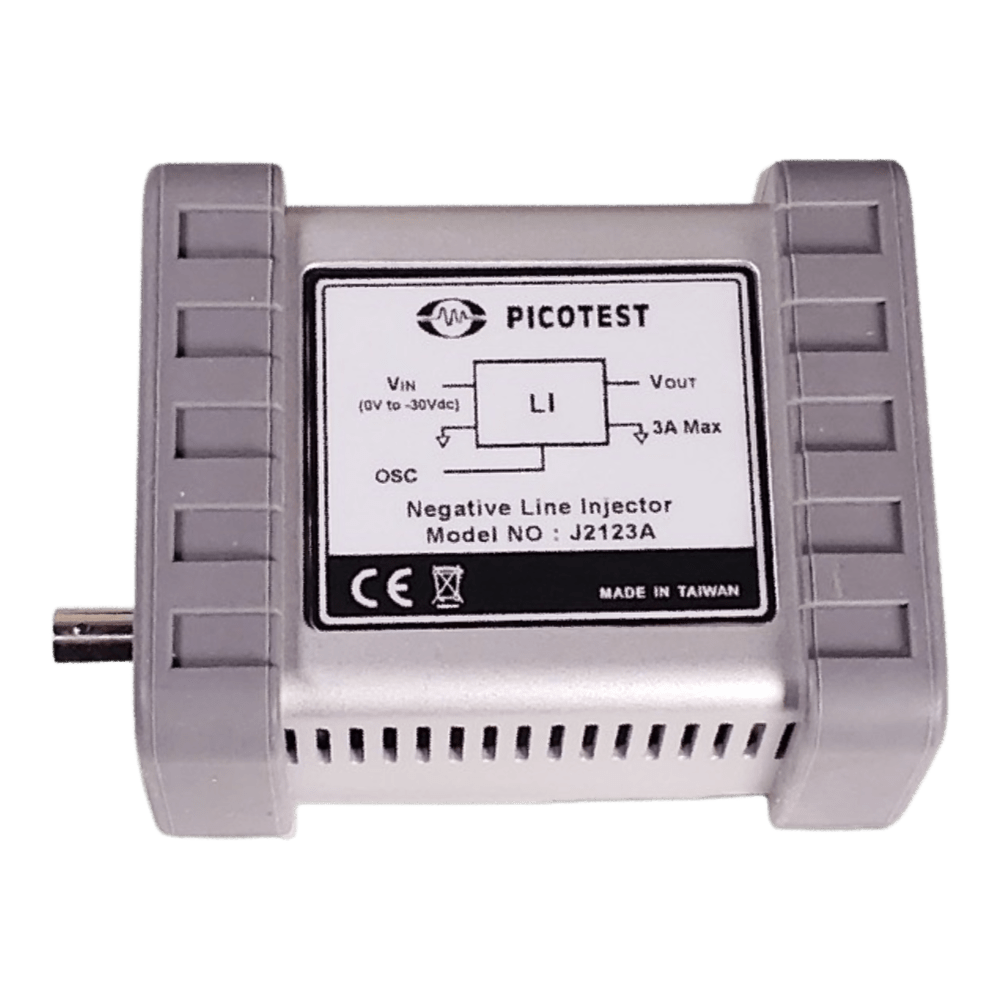
Picotest J2123A PSRR-Injektor mit negativer Spannung
Picotest J2123A PSRR-Injektor mit negativer Spannung
SKU: J2123A
Verfügbarkeit für Abholungen konnte nicht geladen werden
Key Features
Overview
Downloads
Why Engineers Choose the Picotest J2123A PSRR-Injektor mit negativer Spannung
Dual-Supply System Testing
Audio Amplifier Validation
Precision Reference Circuits
Questions and Answers
-
Can I Measure Input Impedance with the J2123A?
Yes. With a current probe, the J2123A enables input impedance measurements of negative voltage power supplies and DC-DC converters. This is useful for stability analysis and EMI filter design in negative voltage systems.
-
What Safety Precautions Should I Observe When Using the J2123A?
Never exceed the absolute maximum ratings: -50V DC+AC combined, 3A continuous current. Keep it within its 0 to 50 °C operating range. Ground the unit properly and use suitable personal protective equipment when working with high voltages.
-
How Does the J2123A Compare to Using Injection Transformers?
The J2123A handles DC current without saturating. Injection transformers are intolerant of DC current: even 5mA or less can greatly reduce signal capacity or saturate them, and higher currents can damage them, so the J2123A is the right tool for PSRR measurements.
-
What Test Equipment Do I Need in Addition to the J2123A?
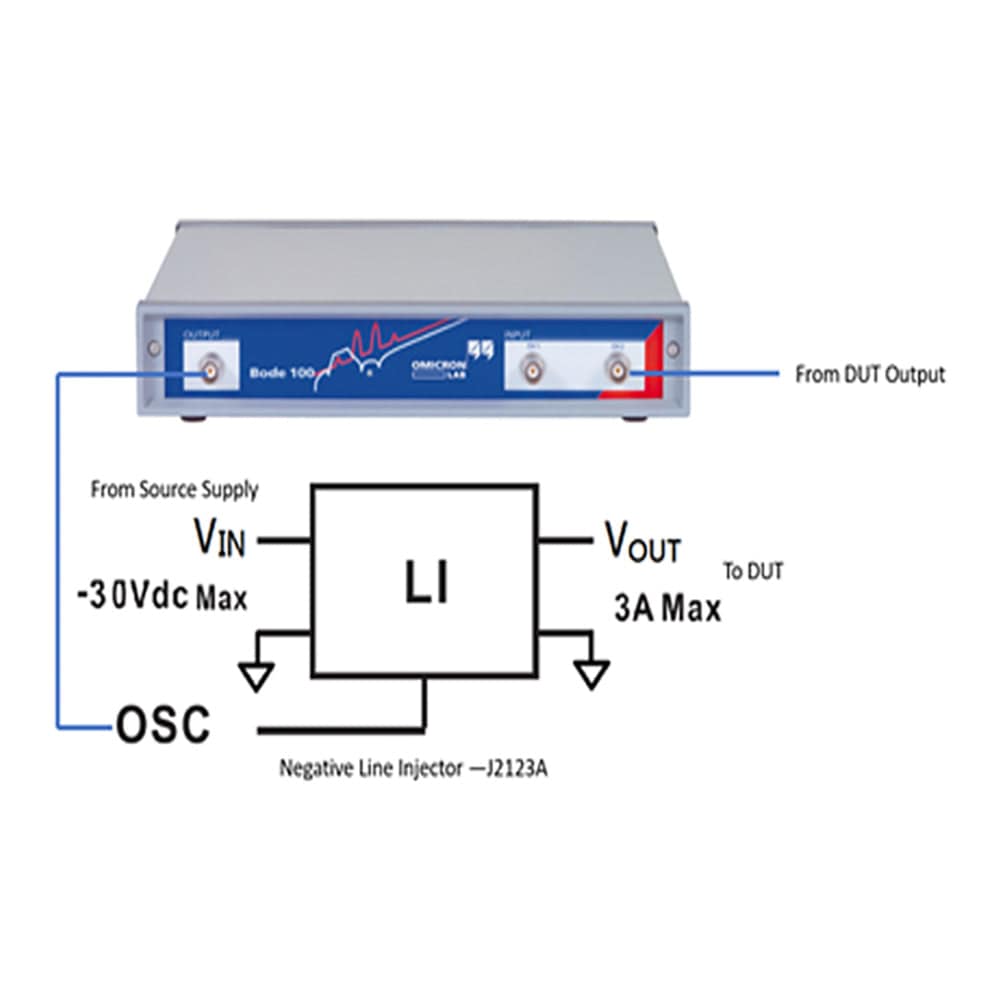
You need a network analyser or signal generator for modulation, a negative voltage power supply and suitable cables. Optional extras are current probes for impedance measurements and a remote sense circuit based on Picotest's J2120A reference design for better voltage regulation.
-
Is the J2123A Suitable for Production Testing Environments?
Yes. The passive design is reliable, the wide frequency range covers most product requirements, and it gives consistent measurements under repeated use, as production quality control needs.
-
What Makes the J2123A Different From the J2120A Line Injector?
The J2123A is designed for negative voltage systems and has polarised internal components. The J2120A handles positive voltages. The J2123A has lower current capacity (3A vs 5A) and a wider usable frequency range (10Hz to 50MHz, against 10Hz to 10MHz for the J2120A). It suits lower-power negative rails up to 30 VDC.
-
Can I Use the J2123A with Standard Laboratory Power Supplies?
Yes, but check polarity. The ground terminal must be more positive than the negative supply terminal. Many power supplies can give a negative output by reversing their connections.
-
What Happens If I Connect the Polarity Incorrectly?
The J2123A contains a polarised internal capacitor that reverse voltage will permanently damage. Always check that the return jack (ground) is more positive than the MINUS SUPPLY connection before applying power.
-
How Do I Compensate for the Voltage Drop Across the J2123A?
Use remote sensing if your power supply supports it, or adjust the supply voltage manually to allow for the drop. The drop follows V(I) = 2.312 × I^0.055 + 0.090I. Alternatively, use a remote sense circuit based on Picotest's J2120A reference design, with capacitor polarities adapted for negative supplies.
-
What Modulation Sources Work with the J2123A?
Any network analyser or signal generator with a suitable output level. The J2123A accepts -20dBm to +10dBm signals through its 50Ω modulation input. Popular choices include the OMICRON Lab Bode 100, Keysight E5061B and Rohde & Schwarz ZNB series.


No questions match your search.