


LinkBone
LinkBone 15-Wege-BNC-Schalter
LinkBone 15-Wege-BNC-Schalter
SKU: LB-SW-BNC-01
Verfügbarkeit für Abholungen konnte nicht geladen werden
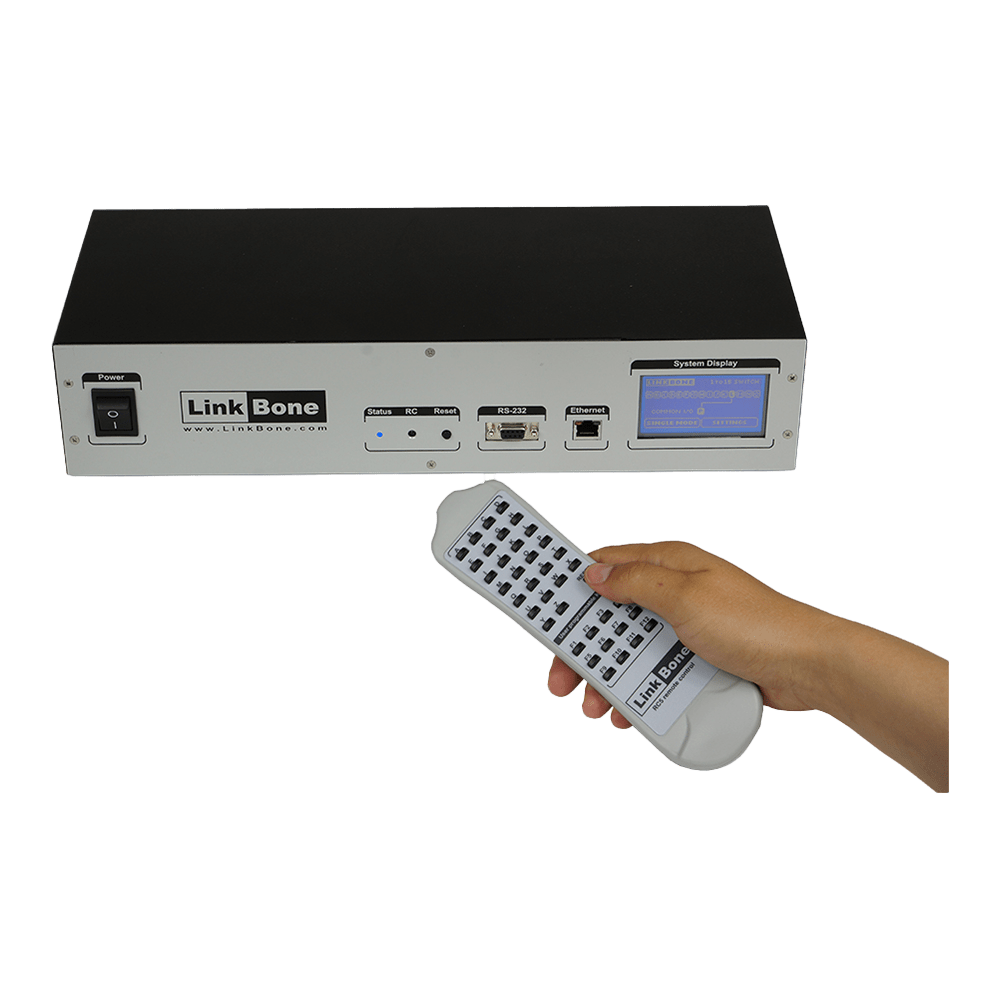
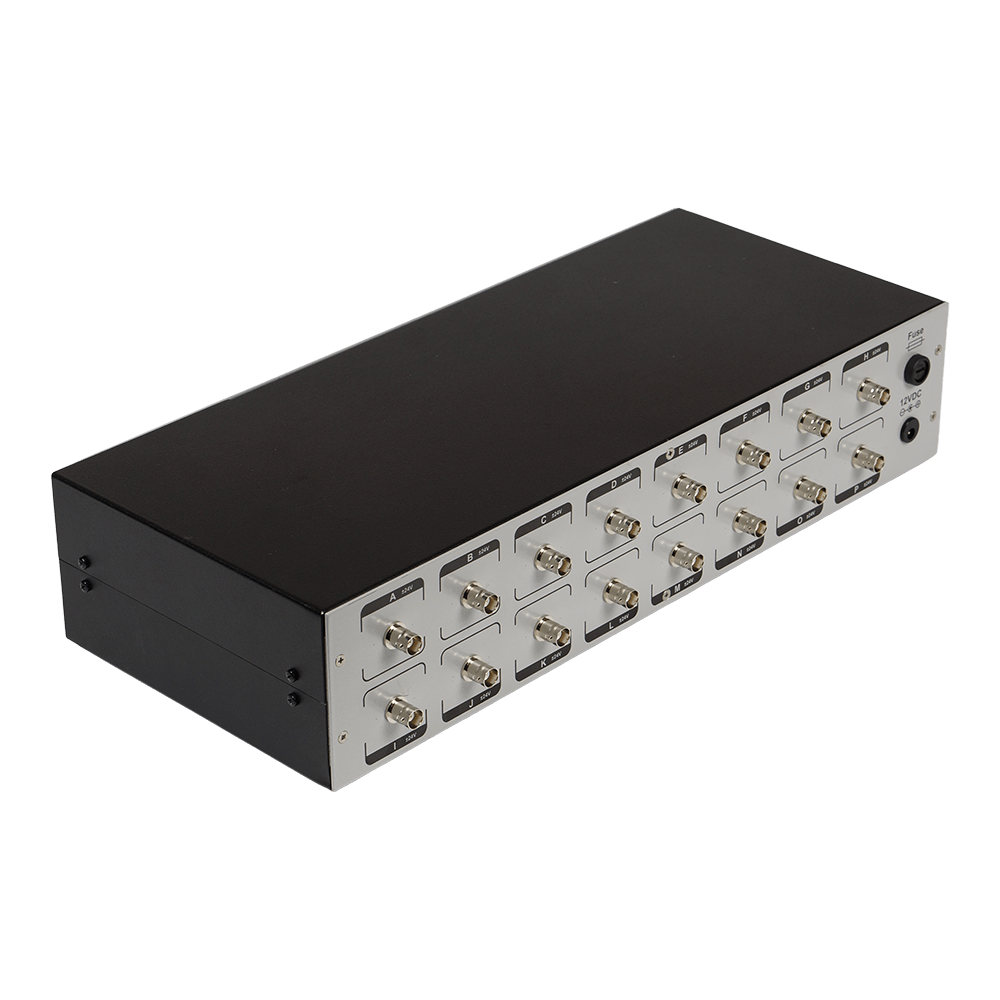
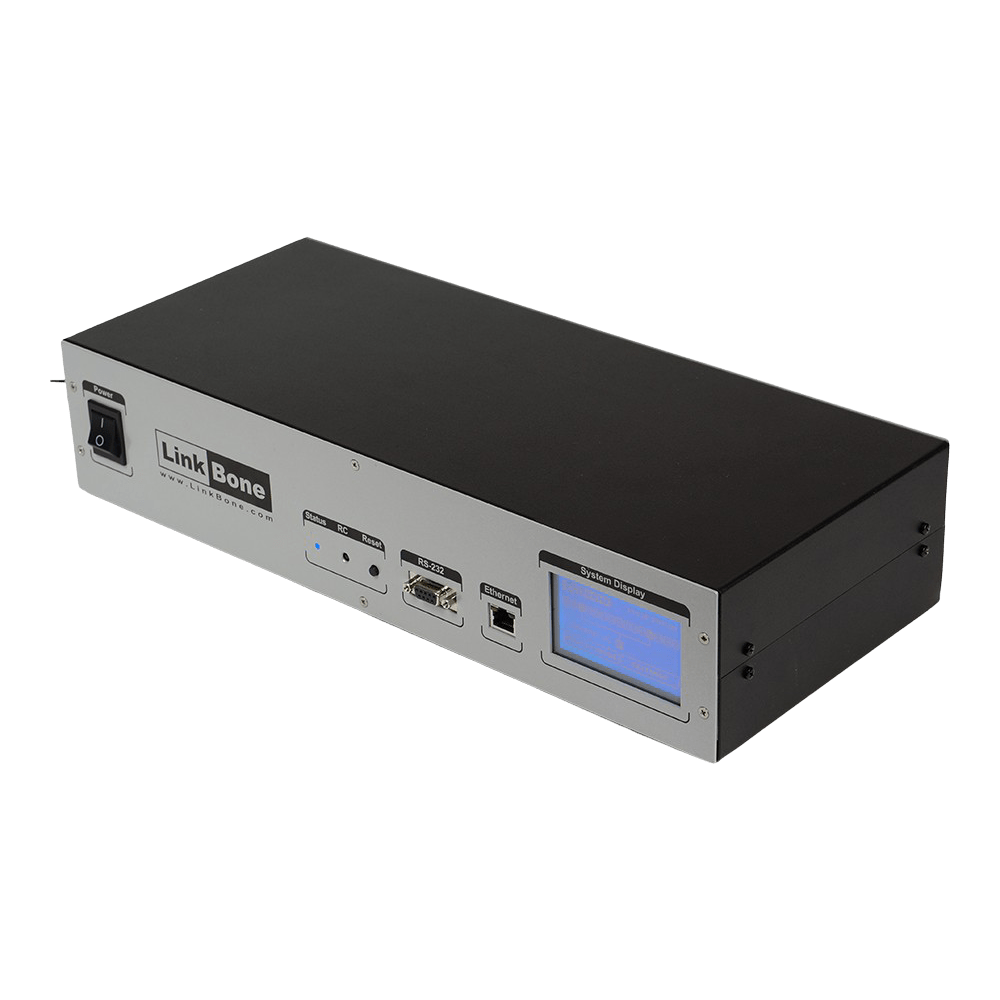
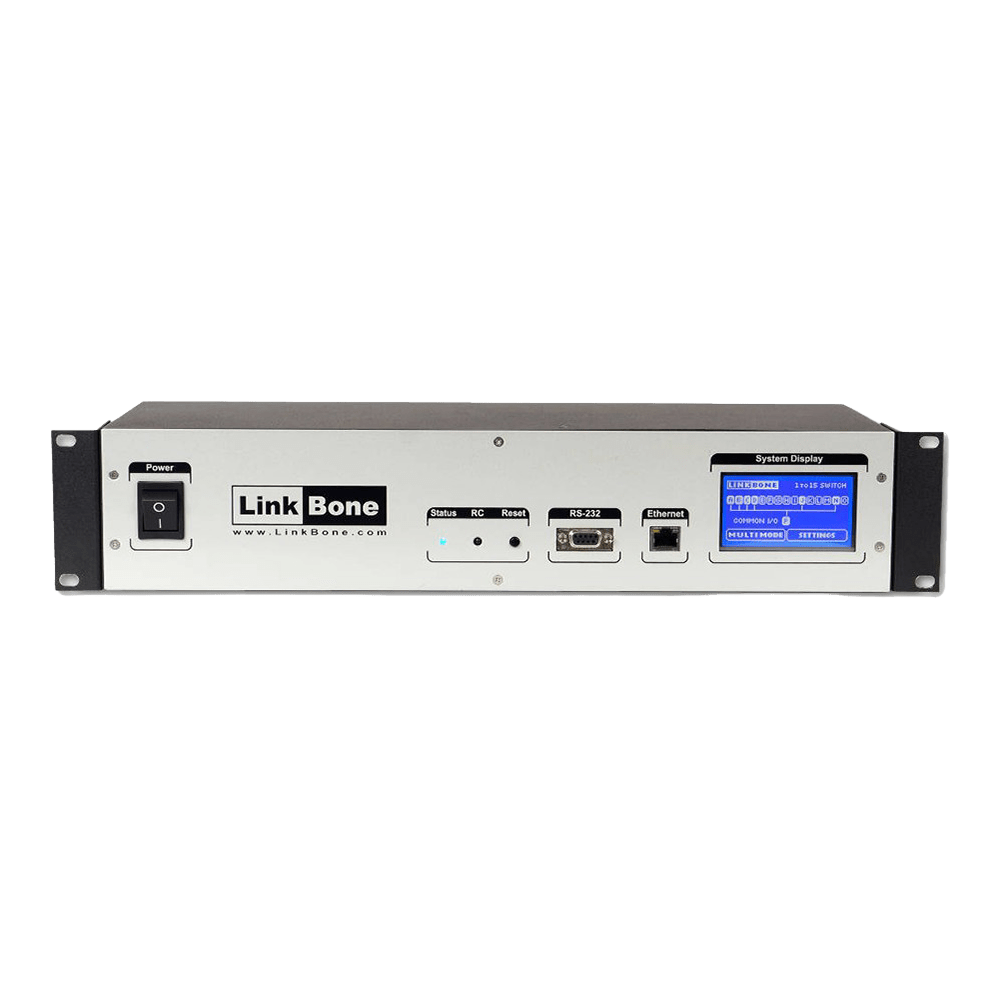
Key Features
Overview
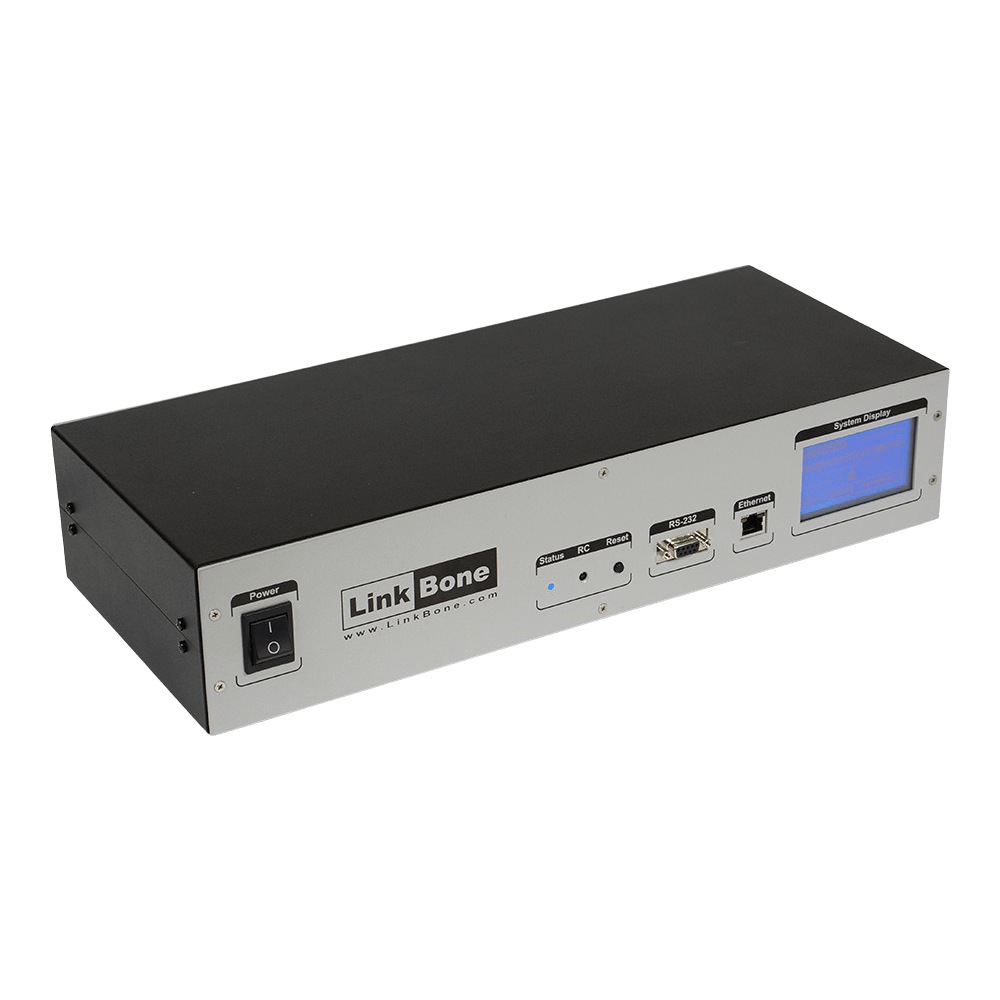
The LinkBone 15-Way BNC Switch transforms signal routing in test automation environments by providing bidirectional switching between a common port and fifteen individual channels. Built for professional applications, this device supports both analog and digital signals across a DC to 50MHz bandwidth with excellent signal integrity.
Each port switch state operates independently, allowing flexible configuration as either a traditional 1-to-15 multiplexer or supporting multiple simultaneous connections. The device handles demanding electrical requirements with ±24V voltage capability and 1.5A current rating per port, making it suitable for diverse test scenarios from video and audio to complex high-amplitude signals.
Three control interfaces provide operational flexibility: built-in Ethernet web server for remote management, RS-232 serial for PLC integration, and RC5 infrared remote for manual operation. The 19-inch rack mounting system ensures professional installation compatibility. Related products include the LinkBone Dual 15-Way BNC Multiplexer for applications requiring parallel signal paths.
Downloads
Why Engineers Choose The LinkBone 15-Wege-BNC-Schalter
Multi-Point Testing
Test Automation
Signal Integrity
Verbessern Sie Ihre Signalrouting-Funktionen mit dem leistungsstarken LinkBone 15-Wege-BNC-Switch. Dieser vielseitige analoge Multiplexer/Switch bietet eine nahtlose Lösung zum Umschalten digitaler und analoger Signale über eine Vielzahl von Ports.
Der LinkBone 15-Wege-BNC-Switch ermöglicht die unabhängige Steuerung des Schaltzustands jedes Ports und ermöglicht so eine effiziente Signalweiterleitung zwischen dem gemeinsamen Port und den fünfzehn A- bis O-Ports. Egal, ob Sie einen einzelnen Port oder mehrere Ports gleichzeitig verbinden müssen, dieser Switch erfüllt Ihre spezifischen Anforderungen.
- Müheloses und präzises Wechseln zwischen verschiedenen Signalquellen
- Perfekt für die Mess- und Testautomatisierung sowie verschiedene Anwendungen
Der LinkBone 15-Wege-BNC-Switch wurde entwickelt, um den Anforderungen vielfältiger Signalverarbeitungsanforderungen gerecht zu werden und ist Ihre Lösung für Anwendungen von Video und Audio bis hin zu komplexen Signalen mit unterschiedlichen Amplituden und Frequenzen.
Steuern Sie den BNC-Switch ferngesteuert über die Ethernet-Schnittstelle oder entscheiden Sie sich für erweiterte Steuerungsoptionen wie eine serielle RS-232-Verbindung oder Telnet-Textbefehle. Darüber hinaus ermöglicht die mitgelieferte Infrarot-Fernbedienung RC5 manuelles Umschalten auf Knopfdruck für zusätzlichen Komfort.
Sehen Sie sich dieses Produkt in Aktion in einem Informationsvideo an:
Questions and Answers
-
What Connectors Does the Device Use?
All signal connections are standard 50Ω BNC connectors. The centre conductor carries the signal and the shield provides the ground return and RF shielding.
-
Can Multiple Ports Be Active Simultaneously?
Yes, in multi-mode. You can connect several A-O ports to the common port P at the same time for signal distribution. Connected ports share one node.
-
What's the Expected Switching Life of the Relays?
The internal switching elements are rated for over 100 million switching cycles (mechanical life), so they suit production test and laboratory use.
-
How Is the Device Powered?
It runs from a 12V DC external power supply with an EU plug (included). Standby consumption is minimal.
-
What Mounting Options Are Available?
The device comes with 19-inch rack mounting profiles and screws for standard rack installation. It can also be used on a bench with the included rubber feet.
-
What's the Difference Between Single-mode and Multi-mode Operation?
In single-mode, only one A-O port can connect to the common port P at a time, like a traditional multiplexer. Multi-mode removes this limit, so several ports can connect to P at once. Connected ports share one node.
-
Can I Control the Switch Remotely Over a Network?
Yes. The built-in Ethernet interface offers HTTP web server control and a Telnet command interface. You can control switch positions from anywhere on your network.
-
What Types of Signals Can the Switch Handle?
Analogue and digital signals from DC to 50MHz (-3dB, typical), including video and audio. Fast clock edges lose harmonics above 50MHz. It handles up to ±24V and 1.5A per port.
-
Is the Signal Routing Bidirectional?
Yes, all signal routing is bidirectional. Connect sources to port P and route to ports A-O, or connect sources to A-O and route to P.
-
How Do I Integrate This with Automated Test Equipment?
Use the RS-232 serial interface or the Ethernet interface (Telnet) to control the switch from a test controller. It accepts a simple text command set over RS-232 or Telnet, so it's easy to add to test sequences.
No questions match your search.